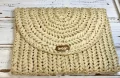
🧢 Beautiful ✨ Detailed πŸ’ Adorable

Textured Raffia Clutch Crochet Pattern

Textured Raffia Clutch Crochet Pattern
4.1β˜…Rating
3-5 HoursTime Needed
1.8KMade This
βœ‚οΈ

Intermediate Level

Ideal for those with basic crocheting experience, featuring slightly more advanced stitches and techniques to expand your skills.

⏱️

Quick Craft

Fits nicely into a free afternoon β€” 2 to 5 hours of focused, enjoyable crocheting.

✨

Stylish Touch

An elegant detail to elevate any look, combining traditional techniques with contemporary design sensibilities.

About This Textured Raffia Clutch Crochet Pattern

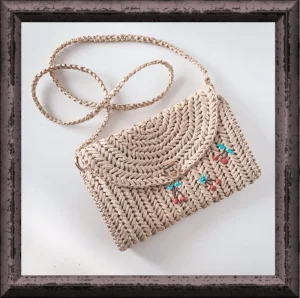
Textured Raffia Clutch Crochet Pattern crochet pattern - detailed view

This gorgeous clutch is the ultimate summer accessory. It makes a stunning handmade gift for birthdays or holidays, and looks incredibly high-end when paired with a breezy linen dress.

Why You'll Love This Textured Raffia Clutch Crochet Pattern

I fell head over heels for this pattern because of the incredible herringbone textureβ€”it looks like intricate weaving but is surprisingly simple to master. There is something so satisfying about working with raffia to create a functional, durable piece of fashion that you can actually wear out and about.

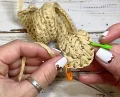
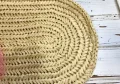
Textured Raffia Clutch Crochet Pattern step 1 Textured Raffia Clutch Crochet Pattern step 2 Textured Raffia Clutch Crochet Pattern step 3 Textured Raffia Clutch Crochet Pattern step 4

Switch Things Up

I still remember the first time I worked with raffia yarn. I was so used to soft cottons and cozy wools that the papery texture felt completely alien in my hands! But once I got into the rhythm of this gorgeous herringbone stitch, I was absolutely hooked. There is a rustic, beachy elegance to raffia that you just cannot replicate with any other fiber.

My biggest tip for this project is to take your time and let your stitches breathe. If you pull too tightly, the herringbone loses its beautiful, chunky definition, and your hands will definitely feel the strain. Let the hook do the work! If you want to customize this piece, try experimenting with different embroidery designs. While I absolutely adore the classic cherry motif, a simple daisy or even some minimalist geometric lines in contrasting raffia would look incredibly chic. I cannot wait to see how you make this clutch your own!

Common Mistakes & How to Fix Them

βœ— Pulling your herringbone stitches too tightly can warp the main canvas and make the fabric incredibly stiff and difficult to work.βœ— Forgetting to keep the raffia flat and untwisted while crocheting will hide the beautiful, flat sheen of the herringbone texture.βœ— Misaligning the side panels during assembly can cause the clutch to sit lopsidedly, so make sure to count exactly 45 stitches on the opposite side before starting.βœ— Placing the lock hardware off-center will ruin the symmetry of the front flap, so always fold and press the bag first to find the exact middle point.

Textured Raffia Clutch Crochet Pattern

Get ready to create your new favorite summer accessory with this beautifully textured clutch! Crocheted with natural raffia, this project brings a touch of beachy elegance directly to your wardrobe. You will absolutely love watching the gorgeous herringbone texture take shape as you work, creating a sturdy and stylish fabric that feels incredibly high-end. It is the perfect blend of rustic charm and chic design.

Intermediate 3-5 Hours

Materials Needed for Textured Raffia Clutch Crochet Pattern

β€” Main Fabric

  • 01
    Approximately 90 meters (3 skeins) of Fibranatura raffia yarn in a natural beige shade, or 250 meters of Ispie raffia yarn
  • 02
    Small amounts of contrast raffia yarn in brown, red, and green for the cherry embroidery details

β€” Tools Required

  • 01
    3.0 mm crochet hook (or up to 4.0 mm if you are a naturally tight crocheter)
  • 02
    Two 30 mm snap hook rings with eyelets
  • 03
    One small metal tuck lock clasp
  • 04
    Two stitch markers
  • 05
    A small Phillips screwdriver for installing the lock hardware
  • 06
    Fabric lining, sewing needle, and matching sewing thread
  • 07
    An iron for steam blocking the finished pieces
  • 08
    Sharp scissors

Progress Tracker

0% Complete

β€” 1. Main Body Canvas :

Info :

Leave a yarn tail of approximately 1.5 meters (59 inches) before starting. We will work with two strands of yarn held together.

Row 1 :

Work 51 CH. Insert hook into second CH from hook, pull up loop, insert into next CH, pull up loop, and pull through all three loops. Continue working herringbone SC across next 48 CH. Work 4 SC in last CH. Turn and work 49 SC along opposite side of chain, working 2 SC in last loop. CH 1. (Place markers in first and fourth SC of the 4 SC group).

Row 2 :

Turn with wrong side facing. Bring yarn to front. Work 48 SC (first SC over two loops), followed by 4 Inc. Move markers to first and last loops of the Inc. Work 49 SC (2 SC in last loop). CH 1.

Row 3 :

Work 48 SC (first SC over two loops), then work (Inc, 1 SC) 4 times. Move markers to first and last loops of this section. Work 49 SC (2 SC in last loop). CH 1.

Row 4 :

Work 48 SC (first SC over two loops), then work (Inc, 2 SC) 4 times. Move markers to first and last loops of this section. Work 49 SC (2 SC in last loop). CH 1.

Row 5 :

Work 48 SC (first SC over two loops), then work (Inc, 3 SC) 4 times. Move markers to first and last loops of this section. Work 49 SC (2 SC in last loop). CH 1.

Row 6 :

Work 48 SC (first SC over two loops), then work (Inc, 4 SC) 4 times. Move markers to first and last loops of this section. Work 49 SC (2 SC in last loop). CH 1.

Row 7 :

Work 48 SC (first SC over two loops), then work (Inc, 5 SC) 4 times. Move markers to first and last loops of this section. Work 49 SC (2 SC in last loop). CH 1.

Row 8 :

Work 48 SC (first SC over two loops), then work (Inc, 6 SC) 4 times. Move markers to first and last loops of this section. Work 49 SC (2 SC in last loop). CH 1.

Row 9 :

Work 48 SC (first SC over two loops), then work (Inc, 7 SC) 4 times. Move markers to first and last loops of this section. Work 49 SC (2 SC in last loop). CH 1.

Row 10 :

Work 48 SC (first SC over two loops), 1 Inc, move marker to first loop of this Inc, 8 SC, 1 Inc, 5 SC, CH 2, skip 2 loops, SC over 2 loops, SC in second loop, 8 SC, 1 Inc, 8 SC, move marker to eighth SC, 49 SC (2 SC in last loop). CH 1.

Row 11 :

Work 48 SC (first SC over two loops), 1 Inc, remove marker, 9 SC, 1 Inc, 9 SC, work 2 SC over CH space, 1 Inc, 9 SC, 1 Inc, 6 SC, remove second marker, 49 SC (2 SC in last loop).

Base Trim :

Work 3 SC in last loop of row, work 19 SC along side edge (one SC in each row), work 3 SC in corner. Cut yarn, pull tail through, and hide end on wrong side.

β€” 2. Side Panels (Make Two) :

Info :

Leave a yarn tail of approximately 30 cm (12 inches) before starting. Work with two strands of yarn held together.

Row 1 :

Work 20 CH. Starting in second CH from hook: 17 SC, 4 SC in 1, 18 SC. CH 1. Place markers in first and fourth SC of the 4 SC group.

Row 2 :

Work 17 SC, 4 Inc, 18 SC (2 SC in last loop). Cut yarn, pull tail through last loop, tie ends on wrong side, and hide tails.

β€” 3. Strap (I-Cord) :

Row 1 :

Insert hook through eyelet of first snap hook ring, pull up loop, twist clockwise, CH 1. Work 2 SC through eyelet, CH 1, turn.

Row 2 :

Work 2 SC, turn. Insert hook under left leg of SC from previous row, pull up loop, SC, turn.

Row 3 :

Insert hook under two loops of SC from previous row, pull up loop, SC, turn.

Row 4 :

Repeat previous row to desired length (about 110 cm / 43 inches).

Row 5 :

Work 2 SC through eyelet of second snap hook ring. Cut yarn, pull tail through, and hide end on wrong side.

β€” 4. Cherry Embroidery :

Info :

To embroider the stems, twist a small piece of brown raffia yarn and fold it in half. Thread the ends through to the wrong side of the front flap. Pull one end back to the front, intercept the middle of the stem to form an inverted V shape, and secure it tightly on the back.

Info :

To embroider the leaves, use green raffia yarn to make a few small satin stitches at the top join of the brown stems.

Info :

To make the cherries, twist a small piece of red raffia yarn into a tight ball. Wrap a flat strand of red raffia around the ball, pull both ends through to the wrong side of the flap at the bottom of a stem, and tie them securely in a knot. Repeat to create the desired number of cherries.

Assembly Instructions

  • Steam block both the main body canvas and the two side panels before beginning the assembly process to ensure clean, flat edges.
  • Align the right side panel with the main canvas, wrong sides facing, and crochet them together with 19 SC through both layers.
  • To form the bottom corner bend, work 2 SC into a single stitch of the side panel while matching them to individual stitches on the canvas.
  • Work 3 SC across the bottom edge, then repeat the corner bend technique with another set of increases to shape the second side.
  • Count exactly 45 stitches along the opposite side of the main canvas and place a marker to ensure the left side panel aligns perfectly.
  • Attach the left side panel using the identical stitch-matching and corner-bending technique, then secure and weave in all loose ends.
  • Align and install the metal lock, securing the top piece to the center of the flap and the lower piece nine rows below the front edge.

Important Notes

  • πŸ’‘Always steam your raffia pieces with an iron on the wrong side to soften the fibers and help them settle into their final shape.
  • πŸ’‘If you run out of yarn mid-project, join the new skein by overlapping the ends slightly and securing them with a tiny dab of clear craft glue.
  • πŸ’‘Work your stitches very loosely to ensure the hook can easily slide through the left leg of the previous stitch.
  • πŸ’‘Use high-quality stitch markers to keep track of your corner increases, as they can easily get lost in the dense herringbone texture.
  • πŸ’‘Keep the front side of the raffia ribbon facing you at all times to maximize the smooth, shiny appearance of the fabric.

I am so incredibly proud of you for wrapping up this gorgeous project! There is nothing quite like the feeling of stepping out with a stunning accessory that you made with your own two hands. I hope every single compliment you get on this clutch brings a massive smile to your face and inspires your next design. Keep shining, keep sharing your beautiful work with the world, and happy crafting! 🧢✨

You ask,

we answer.

FAQs

Can I use regular cotton yarn instead of raffia?

You can, but keep in mind that raffia provides the structural stiffness needed to keep this clutch upright. If you switch to cotton, your bag will be much softer and floppier, so you might need to use a sturdy plastic canvas insert or a thick interfacing inside the lining to help it hold its shape.

How do I clean my clutch if it gets dirty?

Raffia is water-resistant but shouldn't be fully submerged. If your clutch gets a spot on it, gently wipe it down with a damp cloth and a mild soap. Let it air dry completely out of direct sunlight, and give it a quick steam with your iron to restore its shape.

My herringbone stitch looks messy. What am I doing wrong?

The secret to a gorgeous herringbone stitch is tension and twist control. Make sure you are pulling your loops up to about one centimeter high so they have room to lie flat. Also, take a moment every few stitches to untwist your raffia yarn so the flat side of the ribbon is always facing forward.

How do I make the strap longer or shorter?

The strap is worked as a continuous i-cord directly from the snap hook. You can easily customize the length by simply crocheting more or fewer rows before fastening off at the second snap hook. Keep in mind that raffia doesn't stretch much, so the length you crochet is the length it will stay.