🧶 Beautiful ✨ Detailed 💝 Adorable

Pearodactyl Fruit Dinosaur Amigurumi Pattern

Pearodactyl Fruit Dinosaur Amigurumi Pattern
4.4★ Rating
2-3 Hours Time Needed
3.7K Made This
✂️

Intermediate Level

Ideal for those with basic knitting experience, featuring slightly more advanced stitches and techniques to expand your skills.

⏱️

Bite-Sized Project

Complete in under 2 hours—quick, fun, and perfect for a little creative escape.

🐥

Charming Critter

Delightful animal designs with sweet details that capture the essence of your favorite woodland and farmyard friends.

About This Pearodactyl Fruit Dinosaur Amigurumi Pattern

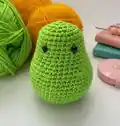
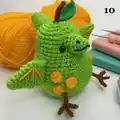
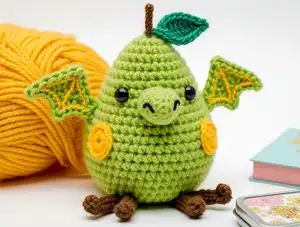
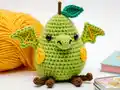
The Pearodactyl pattern is a whimsical fusion of fruit and prehistoric fun, bringing together the beloved shape of a pear with the playful charm of a pterodactyl. This intermediate-level amigurumi project features a grass green pear-shaped body adorned with sunshine yellow spots, folded wings with decorative stitching, and adorable gingerbread-colored feet and stem. The pattern includes clever techniques like invisible decreases, folding and stitching pieces together, and creating dimension through strategic stuffing and assembly.

Pearodactyl Fruit Dinosaur Amigurumi Pattern crochet pattern - detailed view of completed project

With its compact 11cm size, this Pearodactyl makes an ideal desk companion, nursery decoration, or thoughtful handmade gift. The pattern walks you through creating each component separately before bringing them all together in a satisfying assembly process.

Why You'll Love This Pearodactyl Fruit Dinosaur Amigurumi Pattern

I absolutely love this pattern because it brings such a unique and playful twist to traditional amigurumi designs! The combination of fruit and dinosaur themes creates something truly original that always brings smiles. I find the construction process incredibly satisfying, especially when folding and stitching the wings together and watching the character come to life during assembly. The color palette is so cheerful and vibrant, and the small details like the embroidered beak features and sunshine yellow wing accents really make this little creature special. What I appreciate most is how portable and quick this project is—perfect for taking along on trips or completing in an afternoon while still feeling accomplished with a finished adorable creation.

Pearodactyl Fruit Dinosaur Amigurumi Pattern step 1 - construction progress Pearodactyl Fruit Dinosaur Amigurumi Pattern step 2 - assembly progress Pearodactyl Fruit Dinosaur Amigurumi Pattern step 3 - details and accessories Pearodactyl Fruit Dinosaur Amigurumi Pattern step 4 - final assembly and finishing

Switch Things Up

I absolutely love experimenting with different color combinations for this Pearodactyl pattern! While the original grass green and sunshine yellow combination is cheerful and classic, I've tried creating autumn-themed versions using burnt orange, deep burgundy, and bronze colors that give it a completely different seasonal vibe.

For a more realistic pear look, I sometimes use a gradient technique by switching from a darker green at the bottom to a lighter yellow-green toward the top, which really captures that ripening fruit appearance. I've also made versions using variegated yarn for the body, which creates beautiful color-pooling effects and makes each Pearodactyl truly unique.

Another fun modification I enjoy is changing the wing decorations—instead of the three long stitches in sunshine yellow, I've embroidered tiny flowers, stars, or even used metallic thread for a magical sparkly effect. For gift-giving, I sometimes add a small ribbon bow around the neck or create a tiny scarf.

The spots are another area where I love to get creative. Instead of making five solid spots, I've done polka dots in multiple colors, created tiny hearts, or even omitted them entirely for a cleaner look. Some of my favorites have been making the spots in metallic gold or silver for a fancy touch.

If you're making this for a child, consider using safety eyes with different colors like blue or green instead of the standard black to give your Pearodactyl more personality and character!

Common Mistakes & How to Fix Them

✗ Forgetting to insert safety eyes between rounds twenty-four and twenty-five before closing the body completely, making it impossible to secure them properly later ✗ Not stuffing the body firmly enough as you decrease, resulting in a floppy or misshapen pear body that doesn't hold its characteristic rounded form ✗ Missing the invisible decrease technique and using regular decreases, which creates visible holes and an unprofessional finish on the curved body sections ✗ Attaching the wings too high or too low on the body instead of positioning them over rounds fifteen through twenty-one, throwing off the character's proportions

Pearodactyl Fruit Dinosaur Amigurumi Pattern

Create your very own adorable Pearodactyl with this delightful fruit-themed dinosaur amigurumi pattern! This charming pterodactyl combines the sweetness of a pear with prehistoric fun, featuring a pear-shaped body, whimsical wings with sunny yellow accents, and cute spotted details. Standing at 11cm tall when completed, this Pearodactyl makes a perfect gift for dinosaur lovers, fruit enthusiasts, or anyone who appreciates quirky handmade creations. The pattern includes detailed instructions with helpful photos to guide you through every step of creating this unique flying friend.

Intermediate 2-3 Hours

Materials Needed for Pearodactyl Fruit Dinosaur Amigurumi Pattern

— Main Fabric

  • 01
    Stylecraft Special DK in Kelly Green
  • 02
    Stylecraft Special DK in Grass Green
  • 03
    Stylecraft Special DK in Sunshine
  • 04
    Stylecraft Special DK in Gingerbread

— Tools Required

  • 01
    2.5 mm Crochet Hook
  • 02
    Two 6mm safety eyes
  • 03
    Stitch markers
  • 04
    Yarn needle
  • 05
    Fibrefill
  • 06
    Black embroidery thread
  • 07
    Scissors

Progress Tracker

0% Complete

— Body :

Round 1 :

Using Grass Green, 6sc in MR (6)

Round 2 :

inc each st around (12)

Round 3 :

*1sc, inc* rep 6 times (18)

Round 4 :

*2sc, inc* rep 6 times (24)

Round 5 :

*3sc, inc* rep 6 times (30)

Round 6 :

*4sc, inc* rep 6 times (36)

Round 7 :

*5sc, inc* rep 6 times (42)

Round 8 :

*6sc, inc* rep 6 times (48)

Rounds 9-16 :

sc each st around (48) (8 rnds)

Round 17 :

*6sc, dec* rep 6 times (42)

Round 18 :

sc each st around (42)

Round 19 :

*5sc, dec* rep 6 times (36)

Round 20 :

sc each st around (36)

Round 21 :

*4sc, dec* rep 6 times (30)

Rounds 22-27 :

sc each st around (30) (6 rnds)

Info :

Insert safety eyes between rnds 24-25 five visible sts apart. Start adding stuffing and continue to stuff as we decrease.

Round 28 :

*3sc, dec* rep 6 times (24)

Round 29 :

*2sc, dec* rep 6 times (18)

Round 30 :

*1sc, dec* rep 6 times (12)

Round 31 :

dec 6 times (6)

Info :

Fasten off and leave a long tail. Complete invisible close. Weave in ends.

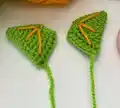
— Wings (make two) :

Round 1 :

Using Grass Green, 6sc in MR (6)

Round 2 :

sc each st around (6)

Round 3 :

*sc, inc* rep 3 times (9)

Round 4 :

sc each st around (9)

Round 5 :

*2sc, inc* rep 3 times (12)

Round 6 :

sc each st around (12)

Round 7 :

*3sc, inc* rep 3 times (15)

Round 8 :

sc each st around (15)

Round 9 :

dec, 5sc, inc, 5sc, dec (14)

Round 10 :

dec, 4sc, 2inc, 4sc, dec (14)

Info :

Fold and stitch together. Cut yarn leaving a long tail. Using sunshine make three long sts on each wing making sure they are only visible on the front

— Crest :

Round 1 :

Using Grass Green, 6sc in MR (6)

Round 2 :

*sc, inc* rep 3 times (9)

Round 3 :

sc each st around (9)

Round 4 :

*2sc, inc* rep 3 times (12)

Round 5 :

sc each st around (12)

Round 6 :

5sc, 2inc, 5sc (14)

Round 7 :

sc each st around (14)

Info :

Cut yarn leaving a long tail.

— Beak :

Round 1 :

Using Grass Green, 6sc in MR (6)

Round 2 :

*sc, inc* rep 3 times (9)

Round 3 :

sc each st around (9)

Round 4 :

3sc, 3inc, 3sc (12)

Round 5 :

5sc, 2inc, 5sc (14)

Info :

Cut yarn leaving a long tail. Using black embroidery floss, stitch two nostrils and a mouth to the beak.

— Legs (make two) :

Instructions :

Using Gingerbread, Ch8, *slst in 2nd ch from hook, 2slst, ch4* rep 2 times. Slst in 2nd ch from hook, 2slst, now working back up the original ch, 4slst. Cut yarn leaving a long tail

— Stem :

Instructions :

Using Gingerbread, Ch7, slst in 2nd ch from hook, 5slst (6)

— Leaf :

Round 1 :

Using Kelly Green, ch10, sc in 2nd ch from hook, 2hdc, dc, dcinc, dc, 2hdc, work the following sts in the final st (sc, ch2, slst in 2nd ch from hook, sc)

Info :

Now working down the other side of the ch, 2hdc, dc, dcinc, dc, 2hdc, sc, slst to join (20). Cut yarn leaving a long tail

— Spots (make five) :

Round 1 :

Using Sunshine, 6sc in MR, slst to join

Info :

Cut yarn leaving a long tail

Assembly Instructions

  • Lightly stuff the beak then sew between the eyes over rounds 23-27
  • Lightly stuff the crest then sew to the back of the head directly opposite the beak over rounds 26-30
  • Attach the stem and leaf to the centre/top of head
  • Join the wings either side of the body over rounds 15-21
  • Attach the legs between rounds 11-12 approximately 10 stitches apart
  • Finally, sew the spots to the sides near each wing, three on one side and two on the other

Important Notes

  • 💡Use stitch markers to keep track of your rounds, especially when working the body increases and decreases
  • 💡Practice the invisible decrease technique before starting to ensure a clean, professional finish
  • 💡Stuff the body firmly but gradually as you work through the decrease rounds to maintain the pear shape
  • 💡When folding and stitching the wings together, ensure both wings are folded the same way for symmetry
  • 💡Pin all pieces in place before sewing them permanently to ensure correct positioning and balance
  • 💡The sunshine yellow stitches on the wings should only be visible from the front side of each wing

This adorable Pearodactyl pattern brings together the best of both worlds—fruity freshness and prehistoric charm! Designed by Candy Downs for Hooked on Candy, this whimsical creation stands at a perfect 11cm tall and features charming details like sunshine spots, folded wings, and an embroidered beak. Whether you're building a collection of fruit dinosaurs or creating a unique gift for someone special, this Pearodactyl will surely become a treasured handmade companion. The pattern's clear instructions and helpful photos make it an enjoyable project that results in a character full of personality. Happy crocheting! 🧶✨🍐
You ask,

we answer.

FAQs

What size will my finished Pearodactyl be?

If you use the suggested Stylecraft Special DK yarn with a 2.5mm hook, your finished Pearodactyl will be approximately 11cm (about 4.3 inches) tall. Using a different yarn weight or hook size will change the final dimensions.

Can I use different yarn brands or colors for this pattern?

Absolutely! While the pattern recommends Stylecraft Special DK, you can use any DK weight yarn you prefer. Feel free to get creative with colors—imagine a purple pear dinosaur or an autumn-toned version! Just ensure you use a hook size appropriate for your chosen yarn.

What does 'invisible decrease' mean and why is it important?

Invisible decrease is a special technique where you insert your hook through the front loops only of two stitches before completing the decrease. This creates a much cleaner, hole-free finish compared to regular decreases, which is especially important for the rounded pear body shape.

When should I insert the safety eyes?

Insert the safety eyes between rounds 24 and 25, with five visible stitches between them. It's crucial to do this before you finish decreasing and closing the body, as you won't be able to secure them properly once the opening becomes too small.

How do I fold and stitch the wings together?

The pattern includes a photo tutorial for this technique. Basically, you fold each wing piece in half and then crochet through both layers at once, working single crochet stitches that go through corresponding stitches on both sides. This creates a flat, folded wing shape.

Can I make the Pearodactyl larger or smaller?

Yes! To make a larger version, use a heavier weight yarn (like worsted or chunky) with an appropriately sized hook. For a smaller version, try fingering or sport weight yarn with a smaller hook. The pattern will work the same way, just at a different scale.