🧶 Beautiful ✨ Detailed 💝 Adorable

Parasaurolophus Ginny Amigurumi Pattern

Parasaurolophus Ginny Amigurumi Pattern
4.5★ Rating
8-10 Hours Time Needed
2.4K Made This
✂️

Advanced Level

Designed for experienced knitters, these patterns involve intricate designs and complex techniques to challenge and inspire.

⏱️

All-Day Adventure

Requires 8-10 hours, ideal for a full day of immersive knitting.

🐰

Whimsical Buddy

Playful characters full of personality, designed to spark imagination and become cherished playtime favorites.

About This Parasaurolophus Ginny Amigurumi Pattern

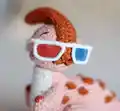
This Parasaurolophus Ginny pattern showcases advanced amigurumi techniques including jacquard color-work for the white belly, moveable head construction using cotter pins and disks, and detailed embroidery work for facial features. The pattern guides you through creating dimensional spots, French knot nails, and even includes a bonus tutorial for crafting miniature 3D glasses from floral wire and colored plastic. With careful shaping and thoughtful assembly using threaded bracing, you'll create a poseable dinosaur friend that stands steadily on her own.

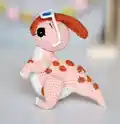
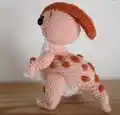
Parasaurolophus Ginny Amigurumi Pattern crochet pattern - detailed view of completed project

The pattern features clear photo references throughout the construction process, making complex techniques like the crest attachment and jacquard body work easier to follow. Ginny's gentle personality shines through in every carefully crafted detail from her embroidered eyebrows to her sweet pink cheeks.

Why You'll Love This Parasaurolophus Ginny Amigurumi Pattern

I absolutely love how this pattern challenges me to expand my amigurumi skills while creating something truly unique! The moveable head joint adds such a professional touch, and watching the jacquard belly pattern emerge as I work is incredibly satisfying. I'm particularly drawn to the attention to detail—from the embroidered facial expressions to the tiny French knot nails on her hands. The bonus 3D glasses are such a whimsical addition that makes Ginny feel like a character with her own story. This isn't just a dinosaur pattern; it's a masterclass in advanced construction techniques that results in a museum-quality piece you'll be proud to display or gift.

Parasaurolophus Ginny Amigurumi Pattern step 1 - construction progress Parasaurolophus Ginny Amigurumi Pattern step 2 - assembly progress Parasaurolophus Ginny Amigurumi Pattern step 3 - details and accessories Parasaurolophus Ginny Amigurumi Pattern step 4 - final assembly and finishing

Switch Things Up

I absolutely love experimenting with this pattern to create unique variations! For the color scheme, I've swapped the peachy-pink body for soft lavender or mint green to create different parasaurolophus personalities - imagine a whole herd in pastel rainbow colors! The spots are perfect for customization too; I've tried making them all the same size for a uniform look, or even replacing them with embroidered flowers or stars for a more whimsical fantasy dinosaur.

The crest offers amazing creative opportunities - I've experimented with variegated yarn to create an ombre effect from base to tip, or even added tiny embroidered details like scales or stripes along its length. Some makers have successfully added small wire inside the crest during construction (before closing) to make it slightly poseable, though this requires careful planning.

For a more playful version, I've embroidered different facial expressions - try sleepy eyes, winking, or even adding tiny eyelashes with embroidery floss for extra charm. The cheeks can be made in different colors too; I've used coral or even a slightly darker pink for more dimension. You could also experiment with the embroidered eyebrows - making them thicker, angled differently, or even omitting them for a younger, more innocent look.

The white belly created by jacquard could be replaced with a pattern - try horizontal stripes, a heart shape, or even a spotted belly! If jacquard feels too challenging, you could alternatively crochet the belly as a separate white piece and appliqué it on. The 3D glasses are just the beginning of accessories - I've created tiny scarves, flower crowns, or even miniature books for Ginny to hold. The threaded bracing system also means you can pose the limbs in different positions, so get creative with how your dinosaur sits, stands, or waves!

Common Mistakes & How to Fix Them

✗ Crocheting too loosely with the main body, causing stuffing to show through—use a smaller hook size to create tighter stitches and a neater finish ✗ Misaligning the crest when basting to the head—use extra thread to carefully position before final sewing to ensure symmetrical placement ✗ Not maintaining proper tension during jacquard color changes, creating gaps or puckering—keep both yarns at consistent tension and move the unused yarn forward carefully ✗ Overstuffing or understuffing the body parts, affecting the dinosaur's ability to stand—stuff firmly but not too tightly, especially around the cotter pin area ✗ Incorrectly positioning the safety eyes before embroidering, making facial expression look unbalanced—use pins to test placement before securing permanently ✗ Forgetting to mark round beginnings during complex shaping sections, losing track of stitch counts—use stitch markers religiously and count stitches after each round

Parasaurolophus Ginny Amigurumi Pattern

Bring prehistoric charm to life with this delightful Parasaurolophus Ginny crochet pattern! This sweet dinosaur features an adorable curved crest, gentle expression with embroidered details, and a moveable head thanks to a cotter pin joint system. Standing at 11cm tall, Ginny comes complete with spotted details, dimensional cheeks, and even includes bonus instructions for crafting tiny 3D glasses. Perfect for dinosaur lovers and amigurumi enthusiasts who want to create a unique, personality-filled companion with intricate construction techniques and charming finishing touches.

Advanced 8-10 Hours

Materials Needed for Parasaurolophus Ginny Amigurumi Pattern

— Main Fabric

  • 01
    Yarn A: Alpina Rene Twist, 125m/50gr, Sport weight (12 wpi) - for crest and spots
  • 02
    Yarn B: Gazzal Jeans, 170m/50gr, Sport weight (12 wpi) - main body color
  • 03
    Yarn C: Alize Cotton Gold Tweed, 330m/100gr, Sport weight (12 wpi) - for white belly and accents

— Tools Required

  • 01
    Crochet hook 1.75mm (for main dinosaur)
  • 02
    Crochet hook 1.5mm (for cheeks and spots)
  • 03
    10mm safety eyes
  • 04
    Black embroidery floss (mouline)
  • 05
    White embroidery floss (mouline)
  • 06
    Pink embroidery floss (mouline)
  • 07
    2 stitch markers or pins
  • 08
    Needles for pinning with bead on end
  • 09
    Synthepuh stuffing (polyester fiberfill)
  • 10
    Yarn needle with blunt end
  • 11
    Scissors
  • 12
    Sewing needle
  • 13
    Round-nose pliers
  • 14
    T-shaped cotter pin 25 x 2.0mm
  • 15
    Shim/washer 3 x 20mm
  • 16
    Disk 20mm diameter
  • 17
    White felt (optional for closing)
  • 18
    Floral wire 0.95mm diameter, 80cm (for bonus 3D glasses)
  • 19
    Blue and red translucent plastic (for bonus 3D glasses)
  • 20
    Super glue

Progress Tracker

0% Complete

— CREST (Yarn A):

Row 1:

26 loops, turning, 25sc starting from 2nd loop from hook (25l)

Row 2:

1 loop, turning, 25sc (25l)

Row 3:

1 loop, turning, dec, 23sc (24l)

Row 4:

1 loop, turning, 22sc, dec (23l)

Row 5:

1 loop, turning, 23sc (23l)

Row 6:

1 loop, turning, 22sc, inc (24l)

Row 7:

1 loop, turning, inc, 23sc (25l)

Row 8-9:

1 loop, turning, 25sc (25l)

Row 10:

1 loop, turning, 25 sl st (25l)

Row 11:

9 sc straight from point Start. Fold detail in half and crochet both sides together 25 sl st. Crochet [dec]x4, sl st in remaining hole. Cut thread leaving long end for sewing. Pass thread through all loops using yarn needle. Tighten and secure. Move thread 7 stitches to the left.

— HEAD (Yarn B):

Round 1:

2 loops, 6sc in 2nd loop from hook (amigurumi ring) (6l)

Round 2:

[inc]x6 (12l)

Round 3:

[sc, inc]x6 (18l)

Round 4:

[2sc, inc]x6 (24l)

Round 5:

[3sc, inc]x6 (30l)

Round 6:

[4sc, inc]x6 (36l)

Round 7:

[5sc, inc]x6 (42l)

Round 8-13:

42sc (42l)

Round 14:

[5sc, dec]x6 (36l)

Round 15:

[4sc, dec]x6 (30l)

Round 16:

[3sc, dec]x6 (24l)

Info:

Baste the crest to the head with extra black thread. Sew the crest to the head. Remove extra thread.

Info:

Insert safety eyes between rounds 11 and 12, distance between them approximately 12 stitches, don't fix yet.

Info:

Using yarn needle, embroider loose stitch of black thread floss above eye. Separate one thread and fasten with needle loose stitch in middle of eye. Embroider one more loose stitch 1mm higher to create oval shape.

Info:

Using yarn needle, embroider loose stitch of white thread floss below eye. Separate one thread and fasten with needle. Press eye to embroidered line and fasten it.

Info:

Divide black threads floss in half, embroider nostrils and mouth.

Info:

Cut 2 pieces of black threads floss about 0.5cm long. Attach to forehead symmetrically, mark with pins. Embroider eyebrows.

— CHEEKS, 2 pieces (Pink threads mouline):

Info:

Crochet cheeks with hook 1.5mm

Round 1:

2 loops, 6sc in 2nd loop from hook (amigurumi ring), sl st in 1st sc (6l)

Info:

Cut and fix thread, leaving long end for sewing. Sew cheeks to head with wrong side outward. Start stuffing head with synthepuh and continue crocheting.

Round 17:

[2sc, dec]x6 (18l)

Round 18:

[sc, dec]x6 (12l)

Info:

Completely fill head. Insert cotter pin into shim. Place cotter pin with shim in hole of head.

Round 19:

[dec]x6 (6l)

Info:

Trim thread. Pass thread through all loops using yarn needle. Tighten and secure.

— NECK and BODY:

Round 1 (Yarn B):

2 loops, 8sc in 2nd loop from hook (amigurumi ring) (8l)

Round 2:

[inc]x8 (16l)

Info:

Next, crochet body with yarn B and yarn C at once, alternately changing thread but not cutting it to get white breast. This technique is called jacquard. When crocheting last pink sc, insert hook into loop, pull out thread, crochet this sc to end with white thread. Pink thread is thrown forward, white working thread goes backwards. To change color back: when crocheting last white sc, insert hook into loop, pull out thread, crochet this sc to end with pink thread.

Round 3:

[3sc, inc]x2 (Yarn C); [3sc, inc]x2 (Yarn B) (20l)

Round 4:

only through back loops 10sc (Yarn C); 10sc (Yarn B) (20l)

Round 5:

[4sc, inc]x2 (Yarn C); [4sc, inc]x2 (Yarn B) (24l)

Info:

Insert cotter pin in middle of neck. Put disk on cotter pin and wrap ends in rings with help of round-nosed pliers.

Round 6:

12sc (Yarn C); 6sc, 4 loops, turning, 3sc starting from 2nd loop from hook, sl st in same loop (in which last sc was crocheted before chain), 6sc (Yarn B) (30l)

Round 7:

12sc (Yarn C); 9sc, 4 loops, turning, 3sc starting from 2nd loop from hook, sl st in same loop, 9sc (Yarn B) (36l)

Round 8:

[5sc, inc]x2 (Yarn C); [5sc, inc]x4 (Yarn B) (42l)

Round 9:

14sc (Yarn C); [6sc, inc]x2, 4 loops, turning, 3sc starting from 2nd loop from hook, sl st in same loop, [6sc, inc]x2 (Yarn B) (52l)

Round 10:

14sc (Yarn C); [7sc, inc]x2, 6sc, [7sc, inc]x2 (Yarn B) (56l)

Round 11:

14sc (Yarn C); 21sc, 4 loops, turning, 3sc starting from 2nd loop from hook, sl st in same loop, 21sc (Yarn B) (62l)

Round 12:

14sc (Yarn C); 24sc, 4 loops, turning, 3sc starting from 2nd loop from hook, sl st in same loop, 24sc (Yarn B) (68l)

Info:

Don't cut thread. Take another end of yarn ball and crochet tail.

— TAIL (Yarn B):

Round 1:

2 loops, 4sc in 2nd loop from hook (amigurumi ring) (4l)

Round 2:

[inc]x2, dec (5l)

Round 3:

sc, [inc]x2, dec (6l)

Round 4:

sc, [inc]x2, sc, dec (7l)

Round 5:

sc, [inc]x3, sc, dec (9l)

Round 6:

2sc, inc, sc, inc, 2sc, dec (10l)

Round 7:

10sc (10l)

Round 8:

3sc, [inc]x3, 2sc, dec (12l)

Round 9:

12sc (12l)

Round 10:

3sc, [inc]x5, 2sc, dec (16l)

Round 11:

16sc (16l)

Info:

Cut and fix thread. Stuff tail with synthepuh. Mark with pin the place where tail connects to back - move pin to 3rd loop from beginning of round count clockwise.

Info:

Connect body with tail in next round. To connect details insert hook initially into tail (from inside to outside), then into body (from outside to inside). Continue crocheting body from place where you left off.

Round 13 (incomplete):

14sc (Yarn C); crochet 24sc along body, crochet 6sc of body together with 6sc of tail, then crochet 24sc along body (Yarn B)

Round 14:

15sc (Yarn C); crochet 23sc on body, crochet 10sc on tail, crochet 24sc on body (72l) (Yarn B)

Info:

Sew holes between body and tail using extra thread.

Round 15:

15sc (Yarn C); 17sc, [dec]x3, 10sc, [dec]x3, 18sc (Yarn B) (66l)

Round 16:

16sc (Yarn C); 13sc, [dec]x3, 10sc, [dec]x3, 15sc (Yarn B) (60l)

Round 17:

16sc (Yarn C); 10sc, [dec]x3, 10sc, [dec]x3, 12sc (Yarn B) (54l)

Info:

Next cut yarn B and continue crocheting with yarn C only!

Round 18:

28sc, [dec]x6, 14sc (48l)

Info:

Start stuffing body with synthepuh.

Round 19:

[6sc, dec]x6 (42l)

Round 20:

[5sc, dec]x6 (36l)

Round 21:

[4sc, dec]x6 (30l)

Round 22:

[3sc, dec]x6 (24l)

Info:

Continue stuffing body.

Round 23:

[2sc, dec]x6 (18l)

Round 24:

[sc, dec]x6 (12l)

Info:

Completely fill body. Tip: Cut circle of white felt slightly larger than resulting hole. Insert it into hole so synthepuh doesn't cling to hook during closing.

Round 25:

[dec]x6 (6l)

Info:

Trim thread. Pass thread through all loops using yarn needle. Tighten and secure.

— LEGS, 2 pieces (Yarn B):

Round 1:

7 loops, turning, 6sc (starting from 2nd loop from hook), 6sc (from back of chain) (12l)

Round 2:

[2sc, inc]x4 (16l)

Round 3-6:

16sc (16l)

Round 7:

[6sc, dec]x2 (14l)

Round 8:

[5sc, dec]x2 (12l)

Info:

Start stuffing leg with synthepuh.

Round 9-10:

12sc (12l)

Round 11:

[dec]x2, 4sc, [dec]x2 (8l)

Round 12:

dec, 4sc, dec (6l)

Round 13:

6sc only through back loops (6l)

Info:

Completely fill leg, don't stuff further.

Round 14:

[inc]x2, 4sc (8l)

Round 15:

sc, [inc]x2, 5sc (10l)

Round 16-17:

10sc (10l)

Info:

Change thread to Yarn C (leave long end of Yarn B). Remove pin marking beginning of round. Fold resulting 10 loops in half and in next round crochet both halves together.

Round 18:

1 loop, turning, 5 sl st (5l)

Round 19:

1 loop, turning, [{sl st, dc, sl st} in one loop, sl st]x2, {sl st, dc, sl st} in one loop

Info:

Squeeze foot to leg with few stitches using left thread of Yarn B.

— HANDS, 2 pieces (Yarn B):

Round 1:

2 loops, 6sc in 2nd loop from hook (amigurumi ring) (6l)

Round 2:

[2sc, inc]x2 (8l)

Round 3:

[3sc, inc]x2 (10l)

Round 4-6:

10sc (10l)

Round 7-8:

[inc]x3, sc, [dec]x3 (10l)

Round 9:

10sc (10l)

Round 10-11:

[dec]x3, sc, [inc]x3 (10l)

Info:

Stuff hand with synthepuh.

Round 12:

[dec]x2, sc, [dec]x2, sc (6l)

Info:

Trim thread. Pass thread through all loops using yarn needle. Tighten and secure.

— NAILS, 3 pieces on each hand (Yarn C):

Info:

Embroider 3 nails on each hand with French knot.

— SPOTS (Yarn A):

Info:

Crochet spots with hook 1.5mm, split Yarn A in half!

SMALL, 8 pieces:

3 loops, turning, 2sc (starting from 2nd loop from hook), 2sc (from back of chain) sl st in 1st sc (4l). Cut and fix thread, leaving long end for sewing.

MIDDLE, 6 pieces:

4 loops, turning, 3sc (starting from 2nd loop from hook), 3sc (from back of chain) sl st in 1st sc (6l). Cut and fix thread, leaving long end for sewing.

BIG, 4 pieces:

5 loops, turning, 4sc (starting from 2nd loop from hook), 4sc (from back of chain) sl st in 1st sc (8l). Cut and fix thread, leaving long end for sewing.

Info:

Sew spots on hands, legs, back and tail.

— ASSEMBLAGE:

Info:

Sew crocheted hands and legs to body with threaded bracing (use round-nosed pliers to make it easier to pull needle). Attach hands between rounds 9 and 10 of body, distance between hands approximately 18 stitches. Attach legs between rounds 15 and 16 of body, distance between legs approximately 28 stitches (view from above).

Step 1:

Attach hands and legs using needles for cutting. Check that dinosaur stands steadily. Detach hands and legs without removing needles from them, and insert other needles for cutting in their place.

Step 2:

Insert needle through back into hand attachment point (leaving loose end of thread outside).

Step 3:

Thread needle through two loops on inner surface of hand (needle for cutting must be in middle).

Step 4:

Insert needle into body at hand attachment point and pull out it at point of attachment of second hand.

Step 5:

Pass needle through second hand in same way.

Step 6:

Sew body and hands two more times in same way for strength.

Step 7:

Insert needle at hand attachment point and pull out it at point of attachment of opposite leg.

Step 8:

Thread needle through leg.

Step 9:

Insert needle into body at leg attachment point and pull out it at point of attachment of second leg.

Step 10:

Pass needle through second leg.

Step 11:

Sew body and legs two more times in same way for strength.

Step 12:

Insert needle into body at leg attachment point and pull out it at back in place where it was introduced at very beginning.

Step 13:

Tie few knots and hide thread.

— BONUS: 3D GLASSES:

Info:

Measure desired width of glasses (approximately 5.6cm or 2.2 inches). Make frame for glasses from floral wire 0.95mm diameter, using 80cm total length. Attach frame to paper and circle it. Cut out paper glasses and try them on frame (make sure there are no gaps anywhere). Circle paper glasses on plastic (left glass is red, right one is blue). Glue glasses to frame with superglue.

Assembly Instructions

  • Head is already attached to body via the cotter pin joint system installed during construction - ensure the disk is properly secured inside the neck and the cotter pin ends are wrapped tightly with round-nosed pliers.
  • Using threaded bracing method with strong thread and round-nosed pliers, attach hands between rounds 9-10 of body with approximately 18 stitches distance between them, sewing through body three times for security.
  • Attach legs between rounds 15-16 of body with approximately 28 stitches distance between them (measured from above), using the same threaded bracing technique and passing through three times.
  • Before final attachment, use cutting needles to test positioning and ensure the dinosaur stands steadily without wobbling - adjust placement if needed.
  • Connect the threading by passing needle from one hand through body to opposite leg, then to second leg and back to second hand, creating a figure-eight pattern for maximum stability.
  • Sew decorative spots (8 small, 6 medium, 4 large) onto hands, legs, back and tail using the long thread ends left from each spot during construction.
  • Optional: Create miniature 3D glasses from floral wire and colored plastic following the bonus pattern instructions, then carefully position them on Ginny's face.

Important Notes

  • 💡Use stitch markers religiously at the beginning of each round, especially during the complex jacquard sections and body shaping to maintain accurate stitch counts.
  • 💡When working jacquard technique, keep both yarn strands at consistent tension and always move the unused yarn forward to create neat float stitches on the wrong side.
  • 💡The cotter pin joint system requires careful assembly - ensure the disk sits flush inside the neck cavity and use round-nosed pliers to wrap the ends completely into tight rings.
  • 💡Stuff firmly but not too tightly, especially around the cotter pin area in the neck and body connection points to allow proper head movement and stable standing.
  • 💡When embroidering facial features, use the photo references carefully and mark placements with pins before committing to permanent stitching for symmetrical results.
  • 💡Split Yarn A in half when crocheting the spots to achieve the delicate, thin appearance that won't overwhelm the small decorative elements.
  • 💡The threaded bracing assembly technique requires strong thread and patience - practice pulling the needle through with round-nosed pliers to avoid hand fatigue and ensure secure limb attachment.

This enchanting Parasaurolophus Ginny pattern brings prehistoric charm into the modern world of amigurumi! Designed for experienced crocheters who love a challenge, this pattern showcases advanced techniques like moveable joints, jacquard color-work, and detailed embroidery that result in a museum-quality dinosaur friend. With her gentle expression, dimensional details, and bonus 3D glasses, Ginny is more than just a stuffed toy - she's a personality-filled companion with her own story. The comprehensive instructions with photo references guide you through every complex step, from the curved crest construction to the threaded bracing assembly. Perfect for dinosaur enthusiasts and collectors who appreciate handcrafted artistry! 🦕🧶✨


You ask,

we answer.

FAQs

Can I make this pattern without the cotter pin joint system?

Yes! If you prefer not to use the cotter pin system, you can simply sew the head directly to the body after completing both pieces. The head won't be moveable, but the dinosaur will still be adorable and structurally sound.

What is jacquard crochet and is it difficult?

Jacquard crochet is a color-changing technique where you work with two colors simultaneously without cutting the yarn, creating the white belly on Ginny's body. The pattern includes detailed instructions and photo references showing exactly when and how to change colors. It requires practice but the step-by-step guidance makes it achievable for experienced crocheters.

Can I use different yarn weights than suggested?

Yes, but you'll need to adjust your hook size accordingly and be aware that your finished dinosaur will be a different size than the 11cm (4.3 inches) height specified. Choose a hook size that creates tight enough stitches so the stuffing doesn't show through. Test with a swatch first to ensure good tension.

Do I have to make the 3D glasses bonus project?

No, the 3D glasses are completely optional! Ginny is absolutely complete and adorable without them. The glasses are a fun bonus accessory if you want to add extra personality and have experience working with wire crafts, but they're not essential to the main pattern.

How do I keep track of my place during the complex body construction?

Use stitch markers at the beginning of each round and count your stitches after completing each round (the total is shown in brackets). For the jacquard sections, you might also want to keep written notes about which round you're on and take photos of your progress to reference if you need to set the project aside.

What is threaded bracing and why is it used for limb attachment?

Threaded bracing is a strong assembly technique where you thread through the body multiple times, connecting limbs on opposite sides in one continuous motion. This creates extremely secure attachments that can withstand play and positioning. The pattern includes 13 detailed steps with photo references to guide you through the process, and using round-nosed pliers makes pulling the needle through much easier.