🧢 Beautiful ✨ Detailed πŸ’ Adorable

Budgerigar Bird Amigurumi Pattern

Budgerigar Bird Amigurumi Pattern
4.4β˜… Rating
8-10 Hours Time Needed
1.3K Made This
βœ‚οΈ

Advanced Level

Designed for experienced knitters, these patterns involve intricate designs and complex techniques to challenge and inspire.

⏱️

All-Day Adventure

Requires 8-10 hours, ideal for a full day of immersive knitting.

🐦

Charming Critter

Delightful animal designs with sweet details that capture the essence of your favorite woodland and farmyard friends.

About This Budgerigar Bird Amigurumi Pattern

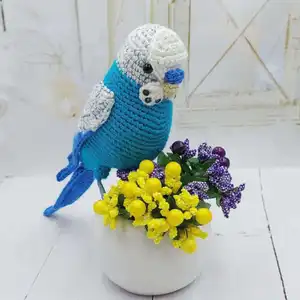
This budgerigar pattern brings realistic charm to amigurumi with wire-reinforced legs featuring bendable toes and poseable wings with structured feathers. The pattern includes detailed instructions for creating authentic budgie features like the cere, forehead markings, and cheek spots. You'll work with multiple yarn colors to achieve the natural gradient and patterns found on real budgerigars, making this a truly special handmade creation.

Budgerigar Bird Amigurumi Pattern crochet pattern - detailed view of completed project

The finished bird stands beautifully on its own thanks to the wire frame construction in the legs and tail. With careful attention to assembly and positioning, your budgie will have lifelike proportions and charm.

Why You'll Love This Budgerigar Bird Amigurumi Pattern

I absolutely love how this pattern transforms simple yarn into a lifelike companion that captures the sweet personality of real budgies. The wire framework technique adds such a professional touch, allowing the little bird to stand proudly and pose naturally. What really makes my heart sing is seeing those tiny bendable toes and delicate wing feathers come together into something that feels truly alive. The color-changing details and realistic proportions make this more than just a toy, it becomes a treasured keepsake that bird lovers will adore for years to come.

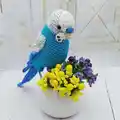
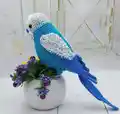
Budgerigar Bird Amigurumi Pattern step 1 - construction progress Budgerigar Bird Amigurumi Pattern step 2 - assembly progress Budgerigar Bird Amigurumi Pattern step 3 - details and accessories Budgerigar Bird Amigurumi Pattern step 4 - final assembly and finishing

Switch Things Up

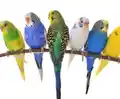
I love experimenting with different color combinations to create unique budgerigar personalities! While the pattern suggests classic blue or green variations, you could try making a yellow budgie with light green markings, or even a white albino version with pink eyes. The beauty of this pattern is how adaptable it is to real budgie color mutations.

For a fun twist, I sometimes add tiny accessories like miniature perches made from painted wooden dowels or create a whole flock in different colors displayed together. You could also adjust the wing position before the glue dries to create birds that appear to be stretching or preening.

If you want to simplify the pattern slightly, you can skip the individual wire-wrapped toes and instead create simple solid feet, though you'll lose the adorable bendable quality. For an extra special touch, I recommend adding a tiny crocheted bell or millet spray as props to display alongside your finished budgie.

Common Mistakes & How to Fix Them

βœ— Not using tight enough stitches which creates visible gaps where the wire frame shows through the stuffing material βœ— Forgetting to stuff the body while crocheting which makes it difficult to position the wire frame properly later βœ— Skipping the loop offset instructions which causes the body parts to curve or twist in unnatural directions βœ— Attaching the legs before properly measuring their length against the finished body proportions resulting in awkward stance βœ— Not bending the toes into the correct position with two forward and two backward before the glue dries completely βœ— Over-stuffing the body too tightly which makes the wire frame visible and palpable through the fabric surface

Budgerigar Bird Amigurumi Pattern

Create your very own adorable budgerigar with this detailed amigurumi pattern! Standing at 9.5 by 13.5 cm, this charming little bird captures the delicate beauty and personality of real budgies. Perfect for bird lovers and crochet enthusiasts alike, this pattern guides you through crafting realistic details including wire-frame legs with bendable toes, delicate wing feathers, and authentic color variations. Whether you choose the classic blue or vibrant green budgie design, you'll love bringing this sweet companion to life stitch by stitch.

Advanced 8-10 Hours

Materials Needed for Budgerigar Bird Amigurumi Pattern

β€” Main Fabric

  • 01
    YarnArt Etamin 100% Acrylic yarn (180m/30g) in light blue-425, blue-462, beige-448, white-421, grey-449 for blue budgerigar
  • 02
    YarnArt Etamin 100% Acrylic yarn (180m/30g) in yellow-461, green-438, blue-462, beige-448 for green budgerigar
  • 03
    Main color consumption: 6g, additional colors: 3g, remaining colors: 1g each
  • 04
    Fine navy blue or olive green bobbin thread for color details

β€” Tools Required

  • 01
    Steel crochet hook size 1.25mm (#8 US)
  • 02
    Fiberfill stuffing material
  • 03
    Tapestry needle for sewing
  • 04
    Scissors
  • 05
    Round pliers and wire cutters
  • 06
    Steel wire 0.5mm diameter or copper wire 1mm thick for legs
  • 07
    Bead wire 0.5mm thick for wing and tail feather frames
  • 08
    Textile band-aid for wire stoppers
  • 09
    5mm black half round beads (2 pieces) for eyes
  • 10
    Moment Crystal Glue
  • 11
    PVA Glue
  • 12
    Sequins or beads 2mm diameter (6 pieces) for cheek spots or embroidery thread
  • 13
    Thread for tightening the tail
  • 14
    Wooden skewer or toothpick with broken tips for stuffing
  • 15
    Stitch markers

Progress Tracker

0% Complete

β€” Leg (Make Two) :

Info :

Cut 4 pieces of wire 8 cm (3 inch) long

Info :

Wind yarn on wire tip in single layer 16mm (0.6 inch) long, moisten with PVA glue and fix tip with clip to dry

Info :

Don't cut thread from fourth toe. Put toes together and continue wrapping to form leg. Winding length is 3 cm (1.2 inch), can be impregnated with PVA glue

Info :

Make limiter with pair of turns using textile band-aid at height of 2 cm (0.8 inch) from toes

Row 1 :

6 sc in MC, close ring but do not tighten. Direct tail from ring inward but do not crochet or shorten

Row 2-3 :

6 sc

Row 4 :

(inc, 2 sc) * 2 = 8, close work invisibly without skipping loop = 9

Info :

Insert wire foot into amigurumi circle but do not tighten. Put foot aside and crochet second same foot

β€” Head-Body :

Info :

Start with white yarn with addition of dark blue thin bobbin thread OR yellow yarn with addition of dark olive bobbin thread

Row 1 :

ch 5, 3 sc, inc, 3 sc on other side of chain = 8

Row 2 :

(inc, 2 sc, inc) * 2 = 12

Row 3 :

(sc, inc) * 6 = 18

Row 4 :

(2 sc, inc) * 6 = 24

Row 5 :

(3 sc, inc) * 6 = 30

Info :

Check that marking thread runs exactly in center of front. Fold figure in half along initial chain to see displacement clearly. If necessary, crochet loops offset

Row 6-8 :

30 sc

Row 9 :

(inc, 14 sc) * 2 = 32 + LO

Row 10 :

32 sc

Info :

Change thread to green or blue

Row 11 :

inc, 31 sc = 33

Row 12 :

inc, 32 sc = 34

Row 13 :

(inc, 16 sc) * 2 = 36 + LO

Row 14 :

(inc, 17 sc) * 2 = 38

Row 15 :

inc, 18 sc, inc, 17 sc, inc = 41

Row 16 :

(inc, 19 sc) * 2, inc = 44

Row 17 :

44 sc

Row 18 :

inc, 42 sc, inc = 46 + LO

Row 19-21 :

46 sc

Row 22 :

inc, 44 sc, inc = 48

Row 23-27 :

48 sc + LO

Row 28 :

dec, 46 sc = 47

Row 29 :

dec, 45 sc = 46

Row 30 :

dec, 44 sc = 45

Row 31 :

dec, 41 sc, dec = 43

Row 32 :

3 sc, dec, 33 sc, dec, 3 sc = 41

Row 33 :

7 sc, dec, 23 sc, dec, 7 sc = 39

Info :

Partially fill toy with fiberfill

Row 34 :

dec, sc, 5 join sc with thigh, 2 sc, dec, 15 sc, dec, 2 sc, 5 join sc with thigh, sc, dec = 32. Attention: number of loops in row does not match arithmetic operations since we crocheted 5 loops per thigh and left 4 loops each

Info :

Measure desired leg length according to body proportions. Wrap textile band-aid limiter in several layers above this point. Thickness should allow pushing it deep into leg. Pull end of thread to pull amigurumi circle completely

Info :

Twist frame wires together, isolate ends with textile band-aid. Insert frame into bird body. Carefully place fiberfill so frame is not palpable. Press legs to chest so they don't interfere with continuing

Row 35 :

dec, 4 sc on leg, 20 sc on body, 4 sc on leg, dec = 30

Row 36 :

7 sc, dec, 12 sc, dec, 7 sc = 28

Row 37 :

2 sc, dec, 20 sc, dec, 2 sc = 26

Row 38 :

5 sc, dec, 12 sc, dec, 5 sc = 24

Row 39 :

3 sc, dec, 14 sc, dec, 3 sc = 22

Row 40 :

sc, dec, 16 sc, dec, sc = 20

Row 41 :

sc, dec, sc, dec, 8 sc, dec, sc, dec, sc = 16

Info :

Fill body with fiberfill

Row 42 :

thru.dec, dec, 8 sc, dec, thru.dec = 12

Row 43 :

thru.dec, dec, 4 sc, dec, thru.dec = 8, fasten off leaving long thread for sewing tail

Info :

Fill body with fiberfill finally. Bend legs to natural position. Bend toes (2 forward and 2 back). Give toes curved shape with round pliers. Trim and file nails to prevent scratching

β€” Wings :

Info :

Crochet yellow/white yarn with addition of olive/dark blue fine bobbin thread

Row 1 :

ch 6, inc, 3 sc, 3 sc in 1, 4 sc, sl st, ch, turn = 12

Row 2 :

inc, 5 sc, inc, ch, turn = 9

Row 3 :

inc, 7 sc, inc, ch, turn = 11

Row 4 :

inc, 4 sc, 2 hdc, inc hdc, 2 dc, inc dc, turn = 14

Row 5 :

inc dc, 2 dc, inc hdc, 2 hdc, 7 sc, 3 sc in 1, 11 sc, 2 sc, 2 sc, continue crocheting in same direction

Row 6 :

inc dc, 2 dc, inc hdc, 7 hdc, inc hdc, 3 hdc, sc, sl st, fasten off

Info :

Cut thread leaving tail for sewing. Crochet second same wing

β€” Feathers :

Info :

Wing feathers should be carefully starched or crocheted with carcass wire. Use 0.5mm thick copper wire in yarn winding. Start winding centimeter from edge of wire and wind to edge. Bend end of wire to fix yarn. Wind by scrolling wire with winding between fingers. 18cm of wire needed in green/gold winding for wings

Info :

Attach green/blue yarn to sharp corner of wing along long side. Crochet across crocheting, at end of feather attach to wing

Feather 1 :

ch 3, add wrapped wire, sc in bend of wire, 3 sc, sc in same loop where chain began, 2 sc on base, turn

Feather 2 :

skip 2, 3 sc, ch 3, sc in band of wire, 6 sc, sc in same loop where feather began, sc on base, turn

Feather 3 :

skip 1, 7 sc, ch 3, sc in band of wire, 10 sc, sc in same loop where feather began, 5 sc on base, turn

Feather 4 :

skip 1, 15 sc, 6 ch, sc in band of wire, 21 sc, sc in same loop where feather began, 3 sc on base, sl st, close work invisibly without skipping loop

Info :

Repeat for second wing in same way without mirroring anything. Difference in turning rows will not be noticeable. Edges of base will be sewn to body

β€” Tail :

Info :

Lay frame wire with winding in tail. 32cm needed for tail in blue winding

Feather 1 :

ch 25, 23 sc, 3 sc in 1, 23 sc

Feather 2 :

2 sc in band of wire, then crochet FLO: 15 sc, sc in wire, turn, 15 sc, for both edges of loop: inc

Feather 3 :

inc, then crochet FLO: 15 sc, sc in wire, turn, 15 sc, sc, sl st. Fasten thread, hide end of thread inside single crochets

Info :

Bend base of tail with corner, insert tail into remaining hole on body. Sew on tail with end of yarn left on body

β€” Forehead & Cheeks :

Info :

Crochet yellow/white yarn in one thread

Row 1 :

ch 6, 5 sc, ch, turn = 5

Row 2 :

inc, 3 sc, inc, ch, turn = 7

Row 3 :

inc, 5 sc, inc, ch, turn = 9

Row 4-5 :

9 sc, ch, turn

Row 6 :

dec, 5 sc, dec, ch, turn = 7

Row 7 :

dec, 3 sc, dec, ch, turn = 5

Row 8 :

dec, sc, dec = 3

Info :

Crochet in circle with sc, make increase so muzzle will be smooth, sl st, ch

Row 9 :

3 sc, ch, turn = 3

Row 10 :

inc, sc, inc, ch, turn = 5

Row 11 :

(dc, 5 htr, dc) in 1, 3 sc, (dc, 5 htr, dc), sl st. Fasten off leaving long tail for sewing

β€” Cere :

Info :

Crochet in one thread in blue or brown

Row 1 :

ch 3, 4 sc in 1, 4 sc in 1, sl st. Cut thread leaving tip for sewing

β€” Beak :

Info :

Crochet in spiral around chain by beige yarn

Row 1 :

ch 4, 2 sc, inc, 2 sc = 6

Row 2 :

dec, 4 sc = 5

Row 3 :

dec, 3 sc = 4, fill with leftover yarn. Pull hole by front loops leaving long tail for sewing

Assembly Instructions

  • Sew the forehead behind both edges of loops with cheeks covering color change step and forehead edge located in middle of initial chain of parrot's head
  • Attach the beak with invisible stitches to the front center of the face
  • Sew the cere on both edges of loops bending upper edge so holes of initial chain form the nostrils
  • Glue the 5mm black half round bead eyes under the forehead noting that bird eyes are located almost on sides of head
  • Embroider black spots on cheeks using threads beads or sequins and add blue stroke detail as shown in pattern photos
  • Sew wings to body sides ensuring edges of base are securely attached and feathers extend naturally outward
  • Give toes slightly curved shape and bend tips of claws with round pliers at ninety degree angle then file claws smooth

Important Notes

  • πŸ’‘Crochet with tight stitches throughout to avoid small holes when stretching fabric and prevent wire frame from showing
  • πŸ’‘Stuff the body while crocheting rather than waiting until end to ensure proper wire frame positioning and shape
  • πŸ’‘Pay careful attention to loop offset instructions to prevent body parts from curving or twisting unnaturally during assembly
  • πŸ’‘Measure leg length carefully against finished body proportions before securing wire stoppers to achieve balanced stance
  • πŸ’‘Wind wire for feathers tightly and evenly in single layer to create sturdy frame without sagging or gaps
  • πŸ’‘Use PVA glue sparingly on wire windings and allow complete drying time before inserting into amigurumi pieces

This charming budgerigar pattern combines traditional amigurumi techniques with advanced wire framework construction to create a truly lifelike companion. With bendable toes, poseable wings, and authentic color variations, your handcrafted budgie will capture the sweet personality of these beloved pet birds. Whether you choose the classic blue or vibrant green color scheme, this detailed pattern guides you through every step from wire-wrapped toes to delicate tail feathers. Perfect for bird enthusiasts and experienced crocheters looking for their next rewarding challenge! 🦜 Happy crocheting! 🧢✨

You ask,

we answer.

FAQs

Can I make this budgerigar without using wire in the legs and feathers?

While you can make the budgie without wire, it won't stand on its own and the feathers will need to be heavily starched to maintain their shape. The wire framework is what gives this pattern its realistic poseable quality and allows the bird to stand naturally. If you prefer not to use wire, consider stuffing the legs firmly and using fabric stiffener on the wings and tail.

What does loop offset mean and why is it important?

Loop offset (LO) is a technique where you work one or two extra single crochets beyond the round you just finished without counting them, then move your stitch marker accordingly. This prevents the natural spiral curve that occurs in amigurumi from distorting your piece. It's especially important for this pattern to keep the body symmetrical and properly shaped.

How do I wind the wire with yarn for the toes and feathers?

Start winding about one centimeter from the wire's edge, rolling the wire between your thumb and forefinger while keeping tension on the yarn. The wire should be pulled tighter than the yarn for proper winding. Wind to the edge, bend the wire tip to secure the yarn, then continue winding by scrolling the wire between your fingers. The coils should cover the wire in a single tight layer without gaps or sagging.

Can I use different yarn than YarnArt Etamin for this pattern?

Yes, you can substitute other yarns, but choose a similar weight acrylic or cotton yarn with approximately the same meterage. Keep in mind that using different yarn will affect the final size of your budgerigar and may require adjusting your hook size. Always use a hook smaller than recommended for the yarn to achieve tight stitches that hide the stuffing and wire frame.

How do I attach the legs to the body during Row 34?

Row 34 involves joining the legs to the body by working single crochets that go through both the body stitches and the leg stitches simultaneously. You'll crochet five stitches that join each leg while continuing around the body. The pattern notes that you're crocheting five loops per thigh but leaving four loops each, which is why the stitch count doesn't match standard arithmetic.