About This Little Bull Amigurumi Pattern
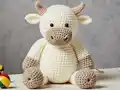
This Little Bull pattern brings farmyard charm into your crafting world with its generous 39cm height and cuddly construction. The pattern uses double-stranded yarn technique with a 4.5mm hook, creating a plush, sturdy toy that's perfect for children or collectors alike. Special details like the cream-colored muzzle, embroidered hooves, and unique brush-tipped tail give this bull incredible personality and character. The spiral round construction ensures smooth, seamless results throughout every piece.
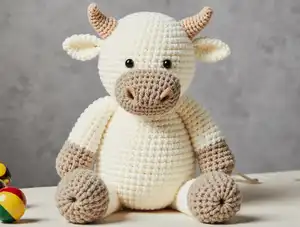
This bull features posable limbs that can be stuffed to your preferred firmness, safety eyes for durability, and charming horns that add authentic farmyard appeal. The pattern's clear structure takes you through each component systematically, from the rounded head to the tapered legs.
Why You'll Love This Little Bull Amigurumi Pattern
I absolutely love this bull pattern because it creates such a substantial, huggable toy that feels impressive to complete. The double-stranded yarn technique gives the finished piece wonderful body and durability, making it perfect for actual play rather than just display. I find the color combination of beige, cream, and gray creates such a soft, natural aesthetic that appeals to both children and adults. The embroidered details like the nostrils and hooves add professional touches that make you feel like a real toy designer. What really gets me excited is how the tail comes together with that adorable brush tip made from yarn pieces—it's such a clever detail that brings the whole character to life. The spiral construction means no obvious seams or joins, giving your bull a polished, store-bought quality. I also appreciate that this pattern doesn't require complex color changes or tiny pieces, making it a relaxing yet engaging project. The generous size means you can really see your progress with each round, which keeps motivation high throughout the crafting process.
Switch Things Up
I love experimenting with this bull pattern to create entirely different farmyard friends and personalities. Sometimes I'll swap the beige for brown or spotted colors to make a dairy cow, using white as the base with black or brown patches randomly placed throughout the body. For a more whimsical approach, I've created rainbow bulls using gradient yarns or working each body section in different bright colors, which children absolutely adore.
One of my favorite variations is making a Highland cow by adding longer, shaggy fringe around the head and body using loop stitch techniques or by attaching yarn pieces similar to the tail brush method. I've also experimented with different horn styles - twisting cream and white yarn together for striped horns, or making them longer and more curved for a Texas longhorn effect.
For seasonal variations, I enjoy adding accessories like a small crocheted flower crown for spring, a tiny bell collar for a Swiss Alps theme, or even a miniature scarf for winter versions. Sometimes I embroider different facial expressions to give each bull unique personality - sleepy eyes, winking eyes, or even adding felt eyelashes for a feminine touch. I've also played with ear positioning, making them floppier by adding extra rounds or more perky by using wire supports inside. The muzzle offers great customization too - I've made pink noses for a more cartoonish look or added embroidered mouth details for extra character. Each variation teaches me something new about how small changes can create completely different personalities in amigurumi.
Common Mistakes & How to Fix Them
✗ Working with single strand instead of double strands creates a floppy, understuffed appearance—always use yarn doubled as specified for proper structure
✗ Forgetting to mark the beginning of spiral rounds leads to misaligned features and uneven shaping—use stitch markers consistently throughout every piece
✗ Stuffing too loosely causes the bull to lose its shape and flop over—pack holofiber firmly especially in the head and body
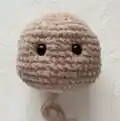
✗ Attaching safety eyes after stuffing the head makes positioning impossible—insert eyes between rounds 11-12 before completing the head stuffing
✗ Sewing pieces without pinning first results in crooked limbs and awkward proportions—always pin parts in place and check from all angles before final sewing