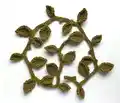
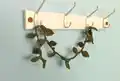
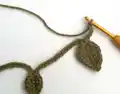
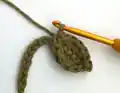
About This Leaf Garland Crochet Pattern
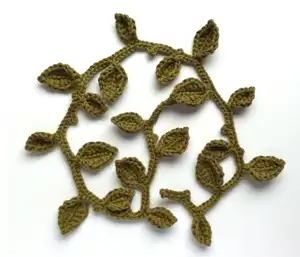
Size and tension aren't critical in this project, giving you complete freedom to choose the hook and yarn combination that creates your desired look. The pattern uses simple stitches worked with the right side facing throughout, making it approachable for crocheters at any skill level.
Why You'll Love This Leaf Garland Crochet Pattern
I absolutely love this pattern because it's like having a creative playground in your hands. Every time I make it, I discover new ways to adapt it for different purposes and seasons. The simplicity of the basic leaf design means you can work it up quickly, but the endless variations keep it interesting. I especially love how you can customize the spacing between leaves to create exactly the effect you want, whether that's a delicate, airy garland or a lush, full vine. It's one of those patterns that keeps giving back every time you pick it up.
Switch Things Up
I love experimenting with this pattern in ways that surprise even me. One of my favorite variations is making it with two or three different shades of green yarn, switching colors randomly to create a more natural, varied leaf appearance that mimics real foliage. You could also try making the small leaves in one color and the large leaves in another for a striking two-tone effect.
For seasonal adaptations, I've made autumn garlands using rust, gold, and burgundy yarns, and spring versions with soft pastels and tiny flower embellishments sewn onto some leaves. During the holidays, metallic gold or silver yarn creates an elegant garland that catches the light beautifully on a Christmas tree or mantel.
If you want to add more texture, try using different yarn types within the same garland - perhaps cotton for most leaves and a fuzzy mohair blend for a few accent leaves. You could even incorporate beads by threading them onto your yarn before starting and sliding them into position as you work the chains between leaves.
For a more whimsical touch, I sometimes add tiny crocheted berries or acorns between the leaves, or work French knots in contrasting colors on some leaves to suggest veining. The pattern also works wonderfully as a border for other projects - I've used it to edge blankets, shawls, and even as a decorative trim on clothing.
Common Mistakes & How to Fix Them
✗ Forgetting to work in back loops only when specified, which changes the leaf structure and appearance significantly
✗ Turning the work instead of rotating it while keeping the right side facing, resulting in leaves that don't form properly
✗ Losing track of which chain loops are worked and unworked, leading to confusion when forming leaf sides
✗ Making chains too tight between leaves, which causes the garland to bunch and lose its natural draping flow