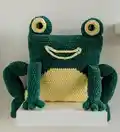
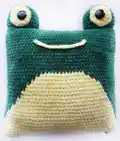
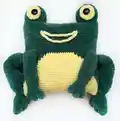
🧢 Beautiful ✨ Detailed πŸ’ Adorable

Frog Pillow Pattern

Frog Pillow Pattern
4.8β˜… Rating
8-10 Hours Time Needed
1.5K Made This
βœ‚οΈ

Intermediate Level

Ideal for those with basic knitting experience, featuring slightly more advanced stitches and techniques to expand your skills.

⏱️

All-Day Adventure

Requires 8-10 hours, ideal for a full day of immersive knitting.

🏑

Cozy Accent

A warm touch for your space that transforms ordinary corners into inviting nooks filled with handmade charm.

About This Frog Pillow Pattern

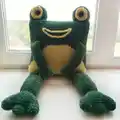
This Frog Pillow pattern combines functionality with whimsy to create a decorative piece that doubles as a comfortable cushion. The pattern features continuous rounds worked with color changes that create the frog's distinctive belly, along with separately crafted components including bulging eyes with shank buttons, three-fingered hands and feet, and a cheerful embroidered smile. You'll have the option to position the legs for a sitting pose or let them dangle freely, giving you creative control over your finished piece.

Frog Pillow Pattern crochet pattern - detailed view of completed project

The finished pillow uses plush chenille-style yarn that creates an irresistibly soft texture perfect for cuddling. With detailed photo instructions throughout and two leg attachment options, this pattern guides you through every step of bringing your friendly frog to life.

Why You'll Love This Frog Pillow Pattern

I absolutely love this pattern because it transforms simple crochet techniques into a character bursting with personality. The way the yellow belly emerges through gradual color transitions feels like magic, and watching those adorable three-fingered hands and feet take shape is incredibly satisfying. I find the continuous round construction meditative yet engaging, and the flexibility to create either a sitting or dangling-leg version means each frog can have its own unique pose. This project strikes the perfect balance between being challenging enough to keep me interested while remaining achievable and fun throughout the entire process.

Frog Pillow Pattern step 1 - construction progress Frog Pillow Pattern step 2 - assembly progress Frog Pillow Pattern step 3 - details and accessories Frog Pillow Pattern step 4 - final assembly and finishing

Switch Things Up

I love experimenting with this frog pillow pattern by trying different color combinations that reflect various frog species or match specific room dΓ©cors. Instead of the classic green and yellow, I've created frogs in blue and white for a whimsical fantasy look, or brown and cream tones for a more natural tree frog appearance. You could even go bold with bright pink and purple for a funky, modern aesthetic that kids absolutely adore.

I sometimes add embroidered details like spots or stripes using contrasting yarn colors to give each frog more personality and make them unique. Another variation I enjoy is adjusting the smile – you can embroider a wider grin or a subtle smirk by changing the curve and length of the yellow chains. I've also experimented with different button colors and sizes for the eyes to create various expressions.

For a more interactive version, I've attached ribbons or fabric tags to the hands and feet, which babies and toddlers love to explore with their fingers. You could even add a small pocket to the belly area for tucking away small treasures or a hot water bottle for extra coziness. I find that personalizing each frog with these small touches transforms a simple pattern into something truly special that reflects the recipient's personality or the intended room's theme.

Common Mistakes & How to Fix Them

βœ— Forgetting to work in continuous rounds without joining can lead to visible seams and uneven color transitions throughout the pillow body βœ— Not maintaining consistent tension when changing between green and yellow colors results in puckering or gaps at color transition lines βœ— Overstuffing the body and limbs makes the pillow too firm and causes the fabric to stretch, distorting the frog's shape βœ— Failing to close the gaps between fingers properly leaves unsightly holes that weaken the structure of the hands and feet

Frog Pillow Pattern

Create your own adorable frog pillow that's perfect for home dΓ©cor or as a thoughtful gift. This charming pattern features a cheerful frog character with bulging eyes, a sweet smile, and poseable limbs. Measuring approximately 35x47 cm when sitting or 63x30 cm with stretched legs, this cuddly companion brings personality to any nursery, bedroom, or living space. Work with soft Himalaya Dolphin Baby or YarnArt Dolce yarn in vibrant green and sunny yellow to bring this delightful amphibian friend to life.

Intermediate 8-10 Hours

Materials Needed for Frog Pillow Pattern

β€” Main Fabric

  • 01
    Himalaya Dolphin Baby Yarn in Green (3.5 skeins) and Yellow (1 skein)
  • 02
    YarnArt Dolce Yarn in Green (3.5 skeins) and Yellow (1 skein) as alternative
  • 03
    Polyfil or any other type of soft stuffing material

β€” Tools Required

  • 01
    Crochet hook size E (3.5mm) or size to match tension
  • 02
    Shank buttons (22-24mm) for eyes
  • 03
    Tapestry needle with large eye for sewing
  • 04
    Scissors
  • 05
    Stitch markers
  • 06
    Pins for positioning parts before sewing

Progress Tracker

0% Complete

β€” Body :

Info :

Work in continuous rows. Use green color.

Round 1 :

90 ch

Info :

From this moment we will alternate colors

Round 2 :

green: Connect the chain by working the first sc into the first chain, being careful not to twist the chain (this is the first stitch of the second round), 43 sc, yellow: 46 sc {90}

Round 3 :

green: 44 sc, yellow: 46 sc {90}

Round 4 :

green: 44 sc, yellow: 46 sc {90}

Round 5 :

green: 45 sc, yellow: 44 sc, green: 1 sc {90}

Round 6 :

green: 46 sc, yellow: 43 sc, green: 1 sc {90}

Round 7 :

green: 47 sc, yellow: 41 sc, green: 2 sc {90}

Round 8 :

green: 48 sc, yellow: 40 sc, green: 2 sc {90}

Round 9 :

green: 49 sc, yellow: 38 sc, green: 3 sc {90}

Round 10 :

green: 50 sc, yellow: 37 sc, green: 3 sc {90}

Round 11 :

green: 51 sc, yellow: 35 sc, green: 4 sc {90}

Round 12 :

green: 52 sc, yellow: 34 sc, green: 4 sc {90}

Round 13 :

green: 53 sc, yellow: 32 sc, green: 5 sc {90}

Round 14 :

green: 54 sc, yellow: 31 sc, green: 5 sc {90}

Round 15 :

green: 55 sc, yellow: 29 sc, green: 6 sc {90}

Round 16 :

green: 56 sc, yellow: 28 sc, green: 6 sc {90}

Round 17 :

green: 57 sc, yellow: 26 sc, green: 7 sc {90}

Round 18 :

green: 58 sc, yellow: 25 sc, green: 7 sc {90}

Round 19 :

green: 59 sc, yellow: 23 sc, green: 8 sc {90}

Round 20 :

green: 60 sc, yellow: 22 sc, green: 8 sc {90}

Round 21 :

green: 62 sc, yellow: 19 sc, green: 9 sc {90}

Round 22 :

green: 64 sc, yellow: 16 sc, green: 10 sc {90}

Round 23 :

green: 66 sc, yellow: 13 sc, green: 11 sc {90}

Rounds 24-41 :

green: 90 sc {90} (18 Rounds)

Round 42 :

Make 9 sc shift stitches to bring yarn to corner (may vary based on tension)

Info :

Weave all ends. Cut yarn leaving long tail for sewing top edge. Stuff pillow tightly, especially in corners. Sew bottom edge while continuing to stuff. Secure yarn and weave end inside pillow.

β€” Eyes (2 details made of two parts each) :

Part 1 (Make 2) :

Use green color

Round 1 :

6 sc in magic ring {6}

Round 2 :

6 inc {12}

Round 3 :

(1 sc, inc) *6 {18}

Round 4 :

(2 sc, inc) *6 {24}

Round 5 :

(3 sc, inc) *6 {30}

Rounds 6-10 :

30 sc {30} (5 Rounds)

Round 11 :

(3 sc, dec) *6 {24}

Info :

Cut yarn leaving long tail for sewing

Part 2 (Make 2) :

Use yellow yarn

Round 1 :

6 sc in magic ring {6}

Round 2 :

6 inc {12}

Round 3 :

(1 sc, inc) *6 {18}

Round 4 :

(2 sc, inc) *6, 1 sl st {24}

Info :

Cut yarn leaving long tail for sewing

Assembly :

Sew part 1 to top corners of pillow, stuffing as you sew. Sew part 2 to part 1. Sew shank buttons to yellow part. Secure thread, hide inside eyes, cut excess.

β€” Mouth :

Info :

Make two separate chains using yellow yarn

Chain 1 :

21 ch

Chain 2 :

25 ch

Info :

Leave long tails for sewing. Sew on mouth, secure yarn and weave in ends

β€” Arms (2 details) :

Fingers (Make 3) :

Make 3 separate details. Tighten yarn of first 2 fingers and leave tail for sewing holes. Do not cut yarn of 3rd finger, continue to crochet.

Round 1 :

6 sc in magic ring {6}

Round 2 :

(inc) *6 {12}

Round 3 :

(dec) *6 {6}

Round 4 :

3rd finger: 2 sc, 2nd finger: 3 sc, 1st finger: 6 sc, now crochet on other side of fingers, 2nd finger: 4 sc, 3rd finger: 4 sc {19}

Info :

Close 2 holes between fingers by crocheting 1 sc using tails from 1st and 2nd fingers (or sew with needle). Cut yarn and hide inside.

Round 5 :

19 sc

Round 6 :

3 sc, dec, 7 sc, dec, 5 sc {17}

Round 7 :

3 sc, dec, 6 sc, dec, 4 sc {15}

Round 8 :

2 sc, dec, 6 sc, dec, 3 sc {13}

Round 9 :

6 sc, inc, 5 sc, inc {15}

Round 10 :

7 sc, inc, 6 sc, inc {17}

Round 11 :

17 sc

Info :

Loosely stuff the detail and continue to crochet

Rounds 12-23 :

17 sc (12 Rounds)

Info :

Loosely stuff again and fold detail to close edge by crocheting 8 sc inserting hook through both layers. Leave long tail for sewing.

β€” Legs (Make 2) :

Fingers (Make 3) :

Make 3 separate details. Tighten yarn of first 2 fingers and leave tail for sewing holes. Do not cut yarn of 3rd finger, continue to crochet.

Round 1 :

6 sc in magic ring {6}

Round 2 :

(inc) *6 {12}

Round 3 :

(1 sc, inc) *6 {18}

Round 4 :

(1 sc, dec) *6 {12}

Round 5 :

3rd finger: 5 sc, 2nd finger: 6 sc, 1st finger: 12 sc, now crochet on other side of fingers, 2nd finger: 7 sc, 3rd finger: 7 sc {37}

Info :

Close 2 holes between fingers by crocheting 1 sc using tails from 1st and 2nd fingers (or sew with needle). Cut yarn and hide inside.

Round 6 :

37 sc {37}

Round 7 :

8 sc, dec, 8 sc, dec, 7 sc, dec, 6 sc, dec {33}

Round 8 :

8 sc, dec, 6 sc, dec, 6 sc, dec, 7 sc {30}

Round 9 :

dec, 5 sc, dec, 5 sc, dec, 6 sc, dec, 6 sc {26}

Round 10 :

5 sc, dec, 5 sc, dec, 5 sc, dec, 3 sc, dec {22}

Round 11 :

5 sc, dec, 4 sc, dec, 3 sc, dec, 4 sc {19}

Round 12 :

dec, 3 sc, dec, 3 sc, dec, 3 sc, dec, 2 sc {15}

Round 13 :

15 sc

Info :

Stuff loosely

Round 14 :

(3 sc, inc) *3, 3 sc {18}

Round 15 :

(2 sc, inc) *6 {24}

Round 16 :

24 sc

Rounds 17-30 :

24 sc (14 Rounds)

Info :

Keep stuffing loosely

Round 31 :

(2 sc, dec) *6 {18}

Round 32 :

(1 sc, dec) *6 {12}

Round 33 :

(1 sc, inc) *6 {18}

Round 34 :

(2 sc, inc) *6 {24}

Rounds 35-42 :

24 sc (8 Rounds)

Info :

Loosely stuff again and fold detail to close edge by crocheting 12 sc inserting hook through both layers. Leave long tail for sewing.

Assembly Instructions

  • Sew the completed arms to round 24 of the pillow body, counting from the bottom edge upward to ensure proper placement
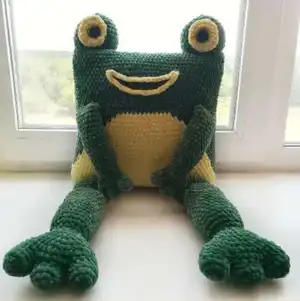
  • Choose your leg attachment style: Option 1 - Sew legs to bottom corners for a sitting frog, or Option 2 - Attach to sides of round 18 for dangling legs
  • For sitting position, fold the legs as shown in photos and sew the bottom part of each leg firmly to the bottom corners of the pillow
  • For dangling position, attach legs to the sides at round 18, then fold legs and sew the bottom portion to the pillow corner to create the bent pose
  • Securely stitch all attachment points with multiple passes of thread to ensure limbs can withstand handling and display
  • Tighten all threads firmly after assembly and weave loose ends carefully inside the pillow body to keep the exterior neat

Important Notes

  • πŸ’‘Work in continuous rounds throughout the pattern without joining to create seamless color transitions and smooth fabric
  • πŸ’‘Cut and rejoin yarn with each color change rather than carrying colors to maintain clean edges and prevent bulkiness
  • πŸ’‘Maintain consistent tension especially during color transitions to avoid puckering or gaps in the fabric where colors meet
  • πŸ’‘Stuff the pillow body very firmly, particularly in the corners, to maintain proper shape and prevent sagging over time
  • πŸ’‘Use loose stuffing for arms and legs to keep them flexible and poseable rather than stiff and overstuffed
  • πŸ’‘Pin all parts in their final positions before sewing to ensure symmetrical placement and balanced appearance

This charming Frog Pillow pattern brings together comfort and personality in one delightful package. The combination of continuous round construction with strategic color changes creates a professional-looking piece that's surprisingly approachable for intermediate crocheters. Whether you choose the sitting pose for a nursery shelf or the dangling-leg version for quirky bedroom décor, your finished frog will become an instant favorite. The soft chenille yarn makes this pillow irresistibly huggable while the distinctive features give it character that mass-produced pillows simply can't match. Happy crocheting, and enjoy watching your friendly frog friend come to life! 🐸✨
You ask,

we answer.

FAQs

Can I use different yarn types for this pattern?

Yes, you can substitute with any similar weight chenille or velvet yarn, but keep in mind that different yarn will affect the final size. The recommended Himalaya Dolphin Baby or YarnArt Dolce creates the signature soft, plush texture. If you substitute, maintain the same hook size relative to your yarn weight for best results.

How do I prevent the color changes from looking messy?

The pattern instructs you to cut and rejoin yarn with each color change rather than carrying it along. This creates cleaner transitions. Always secure your ends well and weave them in carefully on the wrong side. Working in continuous rounds also helps create smoother color transitions without visible seams.

What's the best way to attach the eyes so they're secure?

Use shank buttons as specified (22-24mm) and sew them through both the yellow inner circle and the green outer part of the eye. Pass your needle through multiple times and knot securely on the inside. This creates a sturdy attachment that won't come loose with regular handling.

Can I make the pillow larger or smaller?

Absolutely! To make it larger, use a bulkier yarn with a larger hook, or add more stitches to your starting chain and increase proportionally throughout. For a smaller version, use thinner yarn with a smaller hook. Just maintain the same stitch count ratios for the color transitions to keep the belly proportional.

Which leg position do you recommend?

Both options have their charm! The sitting position (legs on bottom corners) makes the pillow more stable and kid-friendly for actual use as a cushion. The dangling leg position (attached at round 18) creates a more decorative, whimsical look perfect for display. Choose based on whether function or aesthetics is your priority.