๐Ÿงถ Beautiful โœจ Detailed ๐Ÿ’ Adorable

Adorable Piggy Bank Amigurumi Pattern

Adorable Piggy Bank Amigurumi Pattern
4.7โ˜… Rating
8-10 Hours Time Needed
3.0K Made This
โœ‚๏ธ

Intermediate Level

Ideal for those with basic knitting experience, featuring slightly more advanced stitches and techniques to expand your skills.

โฑ๏ธ

All-Day Adventure

Requires 8-10 hours, ideal for a full day of immersive knitting.

๐Ÿงธ

Cute Companion

An adorable friend to cherish, handcrafted with love to bring comfort and joy for years to come.

About This Adorable Piggy Bank Amigurumi Pattern

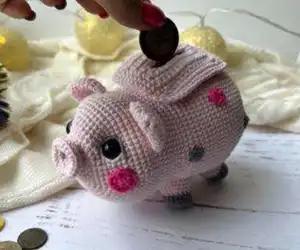
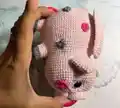
This charming piggy bank pattern combines practical functionality with adorable amigurumi design. Standing at approximately 10-12 cm tall, this sweet pig features a built-in capacity for storing coins, complete with a velcro-secured opening for easy access. The pattern incorporates color changes, embroidered details, and decorative spots that bring personality to your finished piece. With its sturdy four-legged stance and cute facial features including embroidered eyelids and nostrils, this piggy bank becomes both a delightful decoration and a useful money-saving tool.

Adorable Piggy Bank Amigurumi Pattern crochet pattern - detailed view of completed project

The design includes thoughtful construction details like a plastic-reinforced base for stability and a hidden capacity insert that maintains the pig's shape while providing storage space. The velcro closure system makes this project both child-friendly and practical for everyday use.

Why You'll Love This Adorable Piggy Bank Amigurumi Pattern

I absolutely love this pattern because it transforms a simple amigurumi project into something truly functional and meaningful. There's something special about creating a handmade item that serves a practical purpose while looking adorable on any shelf or desk. I appreciate how the pattern teaches you to work with different construction techniques, from creating the internal capacity to installing the velcro closure system. The color combination of soft pinks and grays creates such a sweet aesthetic, and watching the personality emerge as you add the embroidered details and colorful spots is incredibly rewarding. Plus, knowing that your finished piggy bank will help someone save money while bringing a smile to their face makes every stitch worthwhile.

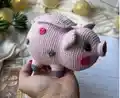
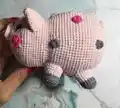
Adorable Piggy Bank Amigurumi Pattern step 1 - construction progress Adorable Piggy Bank Amigurumi Pattern step 2 - assembly progress Adorable Piggy Bank Amigurumi Pattern step 3 - details and accessories Adorable Piggy Bank Amigurumi Pattern step 4 - final assembly and finishing

Switch Things Up

I love experimenting with color combinations to give each piggy bank its own unique personality. Instead of the traditional pink, try working with pastel blue and white for a baby boy's room, or go bold with purple and gold for a royal-themed pig. You could even create a rainbow piggy by using different colors for each section of the body.

For a more whimsical touch, I sometimes add tiny accessories like a crocheted bow between the ears, a miniature flower crown, or even a small crocheted scarf around the neck. These additions take just a few extra minutes but completely transform the character.

I've also tried replacing the circular spots with heart shapes or star shapes for different occasions - hearts for Valentine's Day gifts or stars for a child who loves space. Simply modify round 1 of the spots pattern to create your desired shape.

Another fun variation I enjoy is creating themed pigs for holidays: add small crocheted reindeer antlers for Christmas, bunny ears for Easter, or a tiny witch hat for Halloween. These seasonal touches make wonderful holiday gifts that can be displayed year-round.

For kids who love specific characters, I've experimented with adding superhero capes or creating different animal variations by modifying the ear shape - longer ears create a bunny bank, smaller rounded ears make a bear bank. The base pattern is so versatile that once you've made one, the possibilities become endless for creating an entire collection of unique savings companions.

Common Mistakes & How to Fix Them

โœ— Forgetting to insert the plastic capacity before fully stuffing can make it impossible to add later without partially disassembling your work โœ— Placing safety eyes too close together or at the wrong rounds creates an unbalanced facial expression that affects the overall cuteness โœ— Skipping the plastic insole in the hooves results in unstable legs that cannot properly support the piggy bank's standing position โœ— Not tightening cheeks evenly or symmetrically leads to a lopsided appearance that detracts from the finished pig's charm and expression โœ— Applying velcro without proper glue drying time causes the cover to detach frequently and reduces the functionality of the piggy bank

Adorable Piggy Bank Amigurumi Pattern

Create your own charming piggy bank with this delightful crochet pattern that combines functionality with adorable design. This sweet project features a lovable pig with a built-in coin capacity, complete with cute cheeks, embroidered details, and colorful spots. Perfect for crafters who want to make a practical yet whimsical piece that serves as both a decorative item and a functional money-saving companion. The pattern includes detailed instructions for creating a standing piggy with gray hooves, pink body, and a removable velcro cover for easy coin access.

Intermediate 8-10 Hours

Materials Needed for Adorable Piggy Bank Amigurumi Pattern

โ€” Main Fabric

  • 01
    Fine/4ply Yarn Art Jeans yarn (50g/160m) in White (N01)
  • 02
    Fine/4ply Yarn Art Jeans yarn (50g/160m) in Bright Pink (N59)
  • 03
    Fine/4ply Yarn Art Jeans yarn (50g/160m) in Gray (N68)
  • 04
    Fine/4ply Yarn Art Jeans yarn (50g/160m) in Light Pink (N74)

โ€” Tools Required

  • 01
    1.5 mm crochet hook
  • 02
    Safety eyes (12mm)
  • 03
    Velcro strips
  • 04
    Super glue
  • 05
    Scissors
  • 06
    Sewing pins
  • 07
    Stuffing material/fiberfill
  • 08
    Needle for sewing pieces
  • 09
    Plastic sheet (from stationery folder for insoles)
  • 10
    Stitch markers

Progress Tracker

0% Complete

โ€” Head-Body :

Head

Info :

With Light Pink yarn, place row marker at Round 1

Round 1 :

6sc in a MR (6)

Round 2 :

6inc (12)

Round 3 :

(1sc, inc) *6 (18)

Round 4 :

(2sc, inc) *6 (24)

Round 5 :

(3sc, inc) *6 (30)

Round 6 :

(4sc, inc) *6 (36)

Round 7 :

(5sc, inc) *6 (42)

Round 8 :

(6sc, inc) *6 (48)

Round 9 :

(7sc, inc) *6 (54)

Round 10 :

(8sc, inc) *6 (60)

Round 11 :

(9sc, inc) *6 (66)

Round 12 :

(10sc, inc) *6 (72)

Round 13-22 :

72sc (10 rounds) (72)

Round 23 :

(10sc, dec) *6 (66)

Round 24 :

66sc (66)

Body

Round 25 :

(10sc, inc) *6 (72)

Round 26 :

(11sc, inc) *6 (78)

Round 27 :

(12sc, inc) *6 (84)

Round 28 :

84sc (84)

Round 29 :

Skip stitches for hole for capacity. Before skipping, make ch1 and push the part inside the loop. Fix all yarn tails at the end. 15sc, skip 10sc, 59sc (74)

Round 30-32 :

15sc, skip 10sc, 59sc (3 rounds) (74)

Round 33 :

13sc, inc, sc, skip 10sc, 2sc, inc, (13sc, inc) *4 (80)

Round 34-41 :

16sc, skip 10sc, 64sc (8 rounds) (80)

Round 42 :

16sc, ch10, 64sc (90)

Round 43 :

16sc, 10sc on the chain, 64sc (90)

Round 44 :

90sc (90)

Round 45 :

(13sc, dec) *6 (84)

Round 46 :

(12sc, dec) *6 (78)

Round 47 :

(11sc, dec) *6 (72)

Round 48 :

(10sc, dec) *6 (66)

Round 49 :

(9sc, dec) *6 (60)

Round 50 :

(8sc, dec) *6 (54)

Round 51 :

(7sc, dec) *6 (48)

Round 52 :

(6sc, dec) *6 (42)

Round 53 :

(5sc, dec) *6 (36)

Round 54 :

(4sc, dec) *6 (30)

Round 55 :

(3sc, dec) *6 (24)

Round 56 :

(2sc, dec) *6 (18)

Round 57 :

(1sc, dec) *6 (12)

Round 58 :

6dec

Info :

Fasten off, cut the yarn, weave in the ends. Cut the threads on the hole for the capacity and fix them. Insert the eyes between rounds 11-12 at a distance of 18-20 sc

โ€” Capacity :

Info :

With Gray yarn, place row marker at Round 1

Round 1 :

ch11. Start in the second chain from the hook: inc, 8sc, 3sc in the last chain, 9sc (22)

Round 2 :

2inc, 8sc, 3inc, 8sc, inc (28)

Round 3 :

2inc, 11sc, 3inc, 11sc, inc (34)

Round 4 :

2inc, 14sc, 3inc, 14sc, inc (40)

Round 5 :

(4inc, 16sc) *2 (48)

Round 6-25 :

48sc (20 rounds) (48)

Infos :

Cut the yarn. Turn the part face inwards. Stuff the piggy with fiberfill: stuff the head tightly, insert the capacity into the body, pushing the fiberfill apart on the sides. Sew the capacity into the hole with a light pink thread

โ€” Cover (make 2) :

Info :

With Light Pink yarn, work in rows

Row 1 :

ch15. Start in the second chain from the hook: 14sc, turn (14)

Row 2-4 :

ch1, 14sc, turn (3 rows) (14)

Row 5 :

Make a slot: ch1, 2sc, cut the yarn and fasten off, skip 10 stitches, attach the light pink yarn, 2sc, turn

Row 6 :

ch1, 2sc, ch10, 2sc, turn (14)

Row 7 :

ch1, 2sc, 10sc on the chain, 2sc, turn (14)

Row 8-10 :

ch1, 14sc, turn (3 rows) (14)

Info :

Continue crocheting from one Light pink piece. Connect the parts

Round 1 :

Apply the light pink part and crochet with Light Pink yarn, do not turn: inc in the corner, 12sc, inc in the corner, 10sc, inc in the corner, 12sc, inc in the corner, 10sc, sl st (52)

Round 2 :

ch1, inc the corner, 13sc, inc in the corner, 11sc, inc in the corner, 13sc, inc in the corner, 11sc, sl st (56)

Round 3 :

ch1, 56sc, sl st. Cut the yarn

Info :

Connect the parts together along the hole: sew the parts together with a light pink thread

โ€” Hooves - Legs (make 4) :

Info :

With Gray yarn, place row marker at Round 1

Round 1 :

6sc in a MR (6)

Round 2 :

6inc (12)

Round 3 :

(1sc, inc) *6 (18)

Round 4 :

BLO 18sc (18)

Round 5 :

18sc (18)

Round 6 :

Change color to Light Pink. BLO 18sc (18)

Round 7 :

(5sc, inc) *3 (21)

Round 8 :

(6sc, inc) *3 (24)

Round 9 :

24sc (24)

Infos :

Cut out an oval insole from plastic and put inside. Stuff with fiberfill. Leave a long tail for sewing. Place the legs on the bottom of the body, fix them with pins. Make sure that the pig is standing. Sew the legs to the body. Tighten the cheeks following the pictures. Embroider the whites of the eyes with white thread

โ€” Snout :

Info :

With Light Pink yarn, place row marker at Round 1

Round 1 :

6sc in a MR (6)

Round 2 :

6inc (12)

Round 3 :

(1sc, inc) *6 (18)

Round 4 :

(2sc, inc) *6 (24)

Round 5 :

BLO 24sc (24)

Round 6 :

(2sc, dec) *6 (18)

Round 7 :

18sc (18)

Infos :

Leave a long tail for sewing. Do not stuff. Fix the snout with pins to the head. Sew the snout. Embroider the eyelids with a gray thread. Embroider the nostrils with a gray thread

โ€” Ears (make 2) :

Info :

With Light Pink yarn, place row marker at Round 1

Round 1 :

6sc in a MR (6)

Round 2 :

(1sc, inc) *3 (9)

Round 3 :

(2sc, inc) *3 (12)

Round 4 :

(1sc, inc) *6 (18)

Round 5 :

(2sc, inc) *6 (24)

Round 6-8 :

24sc (3 rounds) (24)

Infos :

Do not stuff, leave a long tail for sewing. Mark the location of the ears with pins. Sew the ears to the head

โ€” Tail :

Info :

With Light Pink yarn

Instructions :

ch11. Start in the second chain from the hook: 10sl st, leave a long tail for sewing. Sew the tail to the body

โ€” Cheeks (make 2) :

Info :

With Bright Pink yarn, place row marker at Round 1

Round 1 :

6sc in a MR (6)

Round 2 :

6inc, sl st, leave a long tail for sewing (12)

Infos :

Mark the location of the cheeks with pins. Sew the cheeks to the head. Cut off 4 narrow strips of Velcro. Glue the hard part of the Velcro around the opening on the body; glue the soft part of the Velcro to the cover. Dry the glue well. Attach the cover to the body

โ€” Spots (make 6) :

Info :

Crochet 2 pieces in Bright Pink color and 4 pieces in Gray color

Round 1 :

6sc in a MR, sl st, leave a long tail for sewing (6)

Info :

Fix the spots evenly over the body with pins. Sew the spots to the body

Assembly Instructions

  • Insert the gray capacity piece into the body opening, pushing fiberfill to the sides to maintain shape, then sew it securely into the hole with light pink thread.
  • Cut oval plastic insoles and insert them into each of the four legs before stuffing with fiberfill to ensure stability.
  • Position all four legs on the bottom of the body using pins to test balance, making sure the pig stands properly before sewing them permanently in place.
  • Tighten and shape the cheeks by following the pattern's facial shaping instructions, then embroider white highlights on the eyes using white thread.
  • Pin the snout to the head at the correct position without stuffing it, then sew it securely and embroider gray eyelids and nostrils for facial detail.
  • Mark ear placement with pins on both sides of the head for symmetry, then sew the unstuffed ears to create natural folded shapes.
  • Cut four narrow velcro strips, glue the hard side around the body opening and soft side to the cover, allowing glue to dry completely before attaching the cover, then sew six spots (two bright pink, four gray) evenly across the body for decoration.

Important Notes

  • ๐Ÿ’กUse stitch markers consistently throughout the project to track rounds, especially during the complex body construction with the capacity opening
  • ๐Ÿ’กStuff the head firmly but leave the snout and ears unstuffed to maintain their natural shape and proportion
  • ๐Ÿ’กTest the pig's standing stability before permanently sewing the legs by positioning them with pins first
  • ๐Ÿ’กAllow super glue on velcro strips to dry completely (at least several hours) before attempting to attach the cover to prevent malfunction
  • ๐Ÿ’กKeep yarn tails long when indicated for sewing, as shorter tails make assembly more difficult and less secure
  • ๐Ÿ’กInsert plastic pieces for structural support before fully stuffing to avoid having to partially disassemble your work

This adorable Piggy Bank pattern brings together the charm of amigurumi with everyday functionality, creating a delightful money-saving companion that stands proudly on any surface. The thoughtful design includes a removable velcro cover for easy coin access, plastic-reinforced legs for stability, and sweet embroidered details that give your piggy tons of personality. With colorful spots, rosy cheeks, and a curly tail, this project teaches valuable construction techniques while creating something truly useful and heartwarming. ๐Ÿงถ Happy crocheting and happy saving! ๐Ÿทโœจ

You ask,

we answer.

FAQs

How do I create the opening for the coin capacity without unraveling my work?

When you reach round 29, make a chain 1 and push it inside the loop to create a secure knot before skipping the 10 stitches. This prevents unraveling. At the end, carefully cut the threads on the hole and weave them in securely to finish the edges neatly.

What type of plastic should I use for the insoles and where can I find it?

The pattern recommends using plastic from a stationery folder, which is thin, flexible, and easy to cut. You can also use plastic canvas, milk jug plastic, or thin craft plastic sheets. Cut oval shapes slightly smaller than the hoof opening so they fit inside easily.

Can I make this piggy bank larger or smaller by changing hook and yarn size?

Yes! Using a larger hook (2.0-2.5mm) with worsted weight yarn will create a bigger piggy bank, while using thinner thread with a 1.0mm hook will make it smaller. Just ensure your safety eye size and plastic pieces are proportionally adjusted to match your new size.

How do I ensure my pig stands upright without tipping over?

The key is to use plastic insoles in all four legs and position them evenly on the bottom. Pin all legs in place first and test the standing position before sewing. Stuff the legs firmly but not overly tight, and make sure the body weight is distributed evenly over all four legs.

What's the best way to attach the velcro so it stays secure?

Use super glue specifically designed for fabric or craft projects. Apply a thin layer to both the velcro and the surface, press firmly, and allow it to dry completely (preferably overnight) before testing. Make sure the cover opening aligns perfectly with the body opening before gluing.

Do I need to embroider the facial details or can I use felt pieces?

While the pattern calls for embroidery using gray thread for eyelids and nostrils, you can absolutely use small felt pieces if you prefer. However, embroidery creates a more integrated, professional look and is more durable, especially if the piggy bank will be handled frequently.