🧢 Beautiful ✨ Detailed πŸ’ Adorable

Cumulus Cardigan Pattern

Cumulus Cardigan Pattern
4.1β˜… Rating
25-35 Hours Time Needed
1.9K Made This
βœ‚οΈ

Intermediate Level

Ideal for those with basic knitting experience, featuring slightly more advanced stitches and techniques to expand your skills.

⏱️

Slow & Steady

A 10-12 hour projectβ€”great for savoring the process over several sessions.

πŸ§₯

Layered Comfort

Perfect for cozy, stylish layering through changing seasons with versatile, mix-and-match potential.

About This Cumulus Cardigan Pattern

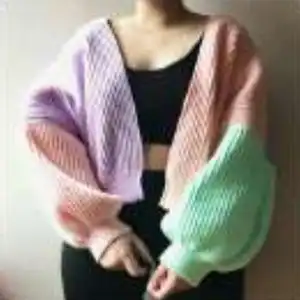
This Cumulus Cardigan pattern guides you through creating an oversized, slouchy cardigan with beautiful bishop sleeves. The pattern features detailed instructions for working ribbed textures using basic stitches in single crochet and slip stitch variations. You'll learn the flat slip stitch granny join method for seamless assembly, creating professional-looking seams that elevate your finished garment. The pattern includes three graded sizes plus complete custom sizing instructions.

Cumulus Cardigan Pattern crochet pattern - detailed view of completed project

Each piece is worked separatelyβ€”one back panel, two front panels, and two sleevesβ€”then joined together using professional seaming techniques. The ribbed details add texture and visual interest while the oversized fit ensures comfortable, everyday wearability.

Why You'll Love This Cumulus Cardigan Pattern

I absolutely love this pattern because it transforms simple stitches into an incredibly sophisticated garment that looks far more complex than it actually is. The oversized fit means you can wear it over anything while staying cozy and stylish. I appreciate how the pattern offers both graded sizing and custom fit instructions, making it accessible whether you prefer following a pattern exactly or adapting it to your unique measurements. The bishop sleeves add such an elegant touch, and the ribbed texture throughout gives it that handmade quality that makes every stitch worth it. Plus, learning the flat slip stitch granny join method has completely changed how I approach seaming in all my crochet projects.

Cumulus Cardigan Pattern step 1 - construction progress Cumulus Cardigan Pattern step 2 - assembly progress Cumulus Cardigan Pattern step 3 - details and accessories Cumulus Cardigan Pattern step 4 - final assembly and finishing

Switch Things Up

I absolutely love how versatile this Cumulus Cardigan pattern is for customization! While the pattern provides three graded sizes, I always encourage crocheters to make it truly their own by experimenting with different yarn weights and color combinations.

For a lighter spring version, I've tried using a cotton-bamboo blend in soft pastels that drapes beautifully and keeps you cool during transitional weather. If you want something cozier for winter, switching to a wool blend in rich jewel tones creates the most luxurious feel against your skin.

The ribbing detail is perfect for color blocking experiments too. I've seen stunning versions where the ribbing is worked in a contrasting color, creating a beautiful frame effect around the edges and cuffs. You could even try an ombre effect by gradually changing colors as you work through the rows.

Don't be afraid to adjust the length either! Making it slightly shorter creates a cropped cardigan perfect for high-waisted styles, while adding extra rows gives you a dramatic floor-length duster coat effect. I've also experimented with making the bishop sleeves even more voluminous by adding extra rows to the sleeve section.

For those who love texture, try substituting some of the single crochet sections with different stitch patterns like the moss stitch or even tiny bobbles for added dimension. The beauty of this pattern is that the basic construction is so solid, it can handle all sorts of creative variations while still maintaining that elegant, oversized silhouette we all love!

Common Mistakes & How to Fix Them

βœ— Not creating a gauge swatch before starting can result in sizing issues and incorrect yardage estimates for your finished cardigan βœ— Forgetting to turn work in the same direction at ribbing edges creates uneven edges instead of the clean straight lines needed βœ— Skipping the edging step before joining panels leads to visible gaps in seams and an unprofessional finish throughout the garment βœ— Measuring panels while stretched vertically gives inaccurate measurements and throws off the entire fit of your custom-sized cardigan βœ— Not leaving excess yarn at least four times the panel width makes joining pieces nearly impossible without adding new yarn awkwardly

Cumulus Cardigan Pattern

The Cumulus Cardigan is a beautifully oversized, slouchy cardigan featuring elegant bishop sleeves that drape perfectly over your everyday wardrobe basics. This pattern teaches you how to master basic stitches to create a stunning ribbed texture throughout all pieces while learning professional techniques for achieving crisp, neat seams. Whether you follow the graded sizing or customize it to your exact measurements, you'll create a cozy statement piece that combines comfort with effortless style.

Intermediate 25-35 Hours

Materials Needed for Cumulus Cardigan Pattern

β€” Main Fabric

  • 01
    4ply Milk cotton yarn or any Size 2 Sport Weight yarn
  • 02
    Approximately 700-750g (1980-2130 yards) for XS-S sizes
  • 03
    Approximately 800-850g (2270-2410 yards) for M-L sizes
  • 04
    Approximately 900-950g (2550-2690 yards) for XL-2XL sizes

β€” Tools Required

  • 01
    4mm crochet hook
  • 02
    Stitch markers
  • 03
    Scissors
  • 04
    Measuring tape
  • 05
    Darning needle

Progress Tracker

0% Complete

β€” Front/Back Panel and Ribbing :

Foundation Chain :

CH (111,121,131) or for custom sizing: CH until you reach your Front and Back Panel Foundation Chain length and CH 1

Row 1 :

Starting from the 2nd CH from the hook SLST 15, SC until the end of the row. You should end with a total of (110,120,130) ST(s). CH 1, and turn.

Row 2 :

SC 1, SC BLO across until 15 CHS REM, SLST BLO 14, SLST 1, CH 1, and turn.

Row 3 :

SLST 1, SLST BLO 14, SC BLO across until 1 CH REM, SC 1, CH 1, and turn your work

Repeat :

Repeat rows 2 and 3 until you complete (153,175,197) rows for the back panel and (57,67,77) for the front panels. For custom sizing: repeat rows 2 and 3 until the width of top portion of your cardigan meets your Back Panel width and make sure you end with an odd number of rows.

Edging :

After ending your last row with a CH1, do not turn your work and SLST into each space of the top edge of your work starting from the first space of the last stitch of your last row. For the back panel and just one of the front panels, do not fasten off, instead secure the last stitch with a stitch marker and leave a trail of yarn that is at least 4 times as long as the width of your piece.

β€” Cuff and Sleeve :

Foundation Chain :

CH 76 or for custom sizing: CH until you reach your Sleeve Foundation Chain length and CH 1

Row 1 :

Starting from the 2nd CH from the hook SLST 15, SC across the row until 1 CH REM, SC 1. You should end with a total of 75 ST(s). CH 1 and turn.

Row 2 :

SC 1, SC BLO 58, SC 1. You should end with a total of 60 ST(s). CH 1, and turn.

Row 3 :

Repeat row 2

Row 4 :

SC 1, SC BLO 58, On CH 60 insert your hook through the last ST of the 3rd, 2nd, and 1st row, yarn over and pull through 2 CH(s), and then yarn over and pull through 2 loops. SLST BLO 14, SLST 1. You should end with a total of 75 ST(s). CH 1 and turn.

Row 5 :

SLST 1, SLST BLO 14, SC 1, SC BLO 58, SC 1. You should end with a total of 75 ST(s). CH 1, and turn.

Repeat :

Repeat rows 2-5 until you have a total of (113,129,145) rows on your sleeve section. For custom sizing: Repeat rows 2-5 until you meet your desired cuff width and make sure you end with an odd number of rows.

Edging :

After ending your last row with a CH 1, do not turn your work and SLST into each space of the top edge of your work starting from the first space of the last stitch of your last row. Do not fasten off, instead secure the last stitch with a stitch marker and leave a trail of yarn that is at least 4 times as long as the width of your piece.

β€” Seaming and Assembly :

Attaching Left Front Panel to Back Panel :

Lay your pieces right sides facing up. Re-insert your hook into the last unfinished stitch of the front panel's edge with working yarn under the pieces. Insert your hook into the 2nd CH from the hook and through the 1st SLST of the back panel. Yarn over and pull through both ST(s) and through the first loop on your hook. Continue inserting hook into the loop nearest the back panel and through the loop nearest front panel, yarn over and pull through all loops until one stitch remains on front panel.

Attaching Right Front Panel to Back Panel :

Using the excess yarn from the back panel's edge, lay pieces right sides facing up. Re-insert hook into the last unfinished stitch of the back panel's edge with working yarn under the pieces. Insert hook into the 2nd SLST from the hook and through the 1st SLST of the front panel. Continue joining until complete.

Edging of Body Piece :

Create a slip knot and SLST into each ST across the body starting from the very first ST of the row. Once you reach the seam between the back and front panel SLST into the last ST before the seam and SLST into the first ST after the seam and across the entire row, CH 1. Do not fasten off.

Centering Sleeves :

Subtract the number of SLST(s) on the edging of the sleeves from the edging of the body pieces, divide the difference by 2 to determine the number of STS you need to skip on the body piece. Start joining your sleeve on that calculated stitch.

Attaching Sleeves :

Join body piece to sleeves using the excess yarn from the sleeve's edge as working yarn. At the end of the sleeve do not fasten off, secure unfinished ST with a stitch marker and leave a trail 4 times as long as the length of your sleeve.

Closing Sides and Sleeves :

Use the excess yarn from the edge of the body piece and the sleeves' seam. Once you reach the last ST before the sleeves section, insert your hook into the unfinished stitch of the sleeve's seam, pull through the loop and continue joining the sleeves.

β€” Ribbing :

Row 1 :

Create a slip knot and SLST into each ST across the body starting from the very first ST of the row from the bottom of the right panel. Once you reach the front and back panel seam, SLST into the next available CH after the seam, continue to SLST across the front panel and then CH1, and turn.

Row 2 :

SLST 1, SLST FLO across until 1 REM, SLST, CH1, and turn

Row 3 :

SLST 1, SLST BLO across until 1 REM, SLST CH1, and turn. Repeat to achieve your desired thickness. Fasten off and weave in ends.

Optional - Adding Front Ties Row 4 :

SLST BLO until the closing point where you would like to have the ties, CH until it measure 13 inches or your desired length, skip 1 CH and SLST on each CH across, SLST BLO until you reach the same closing point on the opposing side, CH the same number as on the right side, skip 1 CH and SLST on each CH across, SLST BLO across until 1 REM, SLST1, CH1 and fasten off.

Assembly Instructions

  • Join the left front panel to the back panel using the flat slip stitch granny join method, ensuring right sides are facing up and working yarn is positioned under the pieces.
  • Attach the right front panel to the back panel following the same joining technique, creating secure seams without visible gaps.
  • Create edging across the entire length of both body sides by slip stitching into each stitch from bottom to top, being careful at seams.
  • Calculate the centering position for sleeves by subtracting sleeve edge stitches from body edge stitches, dividing by two, and marking your starting point.
  • Attach both sleeves to the body using the excess yarn from sleeve edges, ensuring they're centered and symmetrical on both sides.
  • Close up the sides of the cardigan and sleeves in one continuous seam, transitioning smoothly from body to sleeve sections.
  • Add the front ribbing by working slip stitches along inner edges starting from the bottom right panel, working up and around the neckline.

Important Notes

  • πŸ’‘Always create a gauge swatch before starting, especially if using different yarn or hook size than recommended in the pattern.
  • πŸ’‘Turn your work in the same direction every time at ribbing edges to maintain consistently straight and professional-looking edges.
  • πŸ’‘Leave excess yarn at least four times the width of your panels before fastening off for easier seaming later.
  • πŸ’‘Measure your panels on a flat surface without stretching them vertically to ensure accurate sizing throughout the project.
  • πŸ’‘Use stitch markers to secure unfinished stitches during assembly to prevent work from unraveling while joining pieces.
  • πŸ’‘For custom sizing, always end with an odd number of rows on panels and cuffs for proper pattern alignment.
  • πŸ’‘Pin or mark the centering points for sleeves before attaching to ensure symmetrical placement on both sides of the cardigan.

This beautiful Cumulus Cardigan pattern combines simple stitches with professional techniques to create an elegant oversized garment you'll reach for again and again. The detailed instructions guide you through creating ribbed textures, bishop sleeves, and seamless joins that result in a polished, boutique-quality cardigan. Whether you follow the graded sizing or customize it perfectly to your measurements, you'll love the cozy comfort and effortless style of this slouchy layering piece. Perfect for elevating your everyday wardrobe with handmade charm! 🧢☁️

You ask,

we answer.

FAQs

Can I use a different yarn weight for this cardigan pattern?

Yes, you can use almost any yarn weight and corresponding hook size, but your gauge and final measurements will differ. Make sure to create a gauge swatch and adjust your foundation chains accordingly for proper sizing. The pattern recommends 4ply milk cotton or Size 2 Sport Weight yarn for the pictured oversized fit.

How do I know which size to make?

The pattern includes three graded sizes (XS-S, M-L, XL-2XL) plus complete custom sizing instructions. For custom fit, you'll measure your bust circumference, neck circumference, desired length, sleeve length, and wrist circumference, then calculate your foundation chains based on those measurements.

What is the flat slip stitch granny join method?

This is a seaming technique that creates nearly invisible, flat seams by working slip stitches through the edge stitches of two pieces held right side up. The pattern includes detailed photo tutorials and video links to guide you through this professional finishing technique.

Do I need to know how to read crochet diagrams for this pattern?

No, this pattern provides written instructions with detailed step-by-step directions, helpful tips, and photo references. The overview diagram shows the construction direction and stitch counts, but all instructions are clearly written out in text format.

How long does it take to complete this cardigan?

Completion time varies based on your crochet speed and the size you're making, but most crocheters complete this project in 25-35 hours spread over several sessions. The larger sizes (XL-2XL) require more rows and yarn, so they take longer than smaller sizes.

Can I adjust the sleeve length after I've made the body panels?

Yes! The pattern recommends measuring for sleeve length after joining the front and back panels together. You'll wear the cardigan and measure from shoulder to desired cuff length, then add 1.5 inches for your foundation chain measurement.

What if my front panels aren't the same width as shown in the pattern?

You can adjust the front panel width based on your neck measurement and desired inner ribbing thickness. The pattern shows how to calculate this: subtract half your neck circumference from your back panel width, then divide by two. You can further adjust by subtracting inches for thicker ribbing.