🧶 Beautiful ✨ Detailed 💝 Adorable

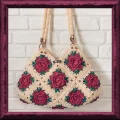
Vintage Rose Garden Granny Square Bag Pattern

Vintage Rose Garden Granny Square Bag Pattern
4.5★Rating
10-12 HoursTime Needed
2.4KMade This
✂️

Intermediate Level

Ideal for those with basic crocheting experience, featuring slightly more advanced stitches and techniques to expand your skills.

⏱️

Slow & Steady

A 10-12 hour project—great for savoring the process over several sessions.

Stylish Touch

An elegant detail to elevate any look, combining traditional techniques with contemporary design sensibilities.

About This Vintage Rose Garden Granny Square Bag Pattern

Vintage Rose Garden Granny Square Bag Pattern crochet pattern - detailed view

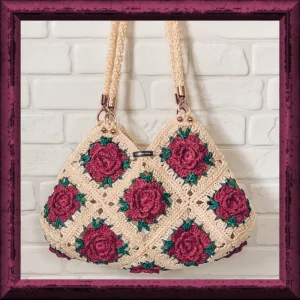
This bag is the ultimate gift for anyone who appreciates a vintage aesthetic with a modern twist. Once finished, it's a sturdy, functional piece of art that looks just as good on your arm as it does on a display shelf.

Why You'll Love This Vintage Rose Garden Granny Square Bag Pattern

I honestly couldn't stop making these squares once I started! There's something so satisfying about seeing the roses bloom as you add the leaf and border rounds. Plus, the way the squares fold into a 3D shape is like a little bit of crochet magic that makes the assembly so rewarding.

Vintage Rose Garden Granny Square Bag Pattern step 1 Vintage Rose Garden Granny Square Bag Pattern step 2 Vintage Rose Garden Granny Square Bag Pattern step 3 Vintage Rose Garden Granny Square Bag Pattern step 4

Switch Things Up

I remember the first time I saw a bag made from raffia; I was so intimidated by the material! It felt so different from the soft wools and cottons I was used to. But once I got into the rhythm of these rose squares, I realized how much character raffia adds to a design. It gives this bag a structure that you just can't get with other fibers.

When I was making mine, I found that the assembly phase was actually the most relaxing part. Seeing the flat diamond of squares suddenly pop into a 3D bag shape when you join those side seams is pure magic. If you're feeling adventurous, you could even play with the colors—imagine a field of yellow sunflowers or deep purple pansies instead of red roses!

One little tip from my craft room to yours: don't skimp on the hardware. Those metal handle holders and tiny bag feet really elevate the whole project from 'homemade' to 'professional boutique.' It’s those finishing touches that make you feel like a total pro when someone asks where you got it!

Common Mistakes & How to Fix Them

✗ When working the flower petals in Rounds 4, 6, and 8, it's easy to accidentally skip the slip stitches between petals—make sure you're anchoring each one so they don't look floppy.✗ If you don't steam your squares before joining, the bag might turn out lopsided; taking the time to block each of the 17 pieces to exactly 12cm makes assembly so much smoother.✗ The handle holders require 2 bolts; if you don't secure these with a bit of glue or polish, they can vibrate loose over time with regular use of the bag.✗ In Round 9, ensure you are catching the middle loop of the petals correctly; if you go too deep or too shallow, the green leaf accents won't sit flush behind the flower.

Vintage Rose Garden Granny Square Bag Pattern

You're going to love how this romantic floral tote comes together! It's the perfect project for when you want to create something that looks incredibly intricate but is actually made of manageable pieces. I've designed this to be your go-to summer accessory, whether you're heading to the farmer's market or a sunny brunch date with friends.

Intermediate 10-12 Hours

Materials Needed for Vintage Rose Garden Granny Square Bag Pattern

— Main Fabric

  • 01
    Raffia yarn for the 3D flowers (approx. 270 meters or 3 skeins)
  • 02
    Green raffia yarn for the leaf accents (approx. 80 meters)
  • 03
    Background or main color raffia yarn (approx. 350 meters)

— Tools Required

  • 01
    3.0 mm crochet hook
  • 02
    4 metal handle holders (15 mm diameter)
  • 03
    8 decorative bag feet or legs (12 mm diameter)
  • 04
    Small Phillips head screwdriver
  • 05
    Sewing needle and matching thread
  • 06
    Sharp scissors
  • 07
    Lining fabric (approx. 80 x 50 cm) in cotton, linen, or felt
  • 08
    Steam iron for blocking

Progress Tracker

0% Complete

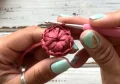
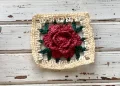
— 1. The Floral Square (Make 17) :

Round 1 :

start with ch 2, then work 6 sc into the second ch from hook. close with sl st to first sc and ch 1.

Round 2 :

work 12 sc directly into the center hole of the ring. ch 1.

Round 3 :

(ch 4, skip 3 stitches, sl st into the 4th stitch) repeat 3 times to create 3 arcs. tighten and trim your starting tail.

Round 4 :

into each ch-4 arc work (ch 2, 3 dc, ch 2, sl st in the previous round's sl st). repeat for all 3 arcs.

Round 5 :

working behind the petals, (ch 4, sl st into the back 2 loops of the center dc of the petal, ch 4, sl st into the previous sl st) repeat 3 times to create 6 arcs.

Round 6 :

into each of the 6 arcs work (1 sc, 3 dc, 1 sc, sl st into the sl st of the previous round).

Round 7 :

ch 2, sl st into the back 2 loops of the center dc of a petal, (ch 4, sl st into the back 2 loops of the next petal's center dc) repeat 5 times, ch 4, skip first 2 ch and sl st into the start. (6 arcs total).

Round 8 :

into each arc work (1 sc, 1 dc, 3 tr, 1 dc, 1 sc, sl st into the previous sl st). do not sl st the final petal; fasten off and hide the end.

Round 9 :

using green yarn, attach with ch 4 (using 2 threads) to a petal center. sc in next petal center, ch 3, (2 dc together, ch 4, 2 dc together) in sl st between petals. ch 4, sc in 3rd petal center, ch 4, (2 dc together, ch 4, 2 dc together) in next sl st. ch 3, sc in 4th petal, ch 3, sc in 5th petal, ch 3, (2 dc together, ch 4, 2 dc together) in next sl st. ch 4, sc in 6th petal, ch 4, (2 dc together, ch 4, 2 dc together) in next sl st. ch 3, fasten off.

Round 10 :

using background yarn, attach under an arc with ch 3 (2 threads). work 2 dc in same arc, 4 dc in next, 3 dc in next. in corner arc work (3 dc, ch 3, 3 dc). work 5 dc in each of next 2 arcs, then (3 dc, ch 3, 3 dc) in corner. repeat pattern for other side: 3 dc, 4 dc, 3 dc, then corner (3 dc, ch 3, 3 dc). work 5 dc in each of next 2 arcs, final corner (3 dc, ch 3, 3 dc), and sl st to start. ch 1.

Round 11 :

work 1 sc in every stitch around (16 sc per side). in each corner ch-space, work (2 sc, ch 2, 2 sc). fasten off and hide ends. steam the square to 12cm.

— 2. Joining the Canvas :

Info :

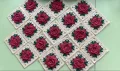
Arrange your 17 squares in a diamond-shaped grid as shown in the layout diagram.

Step 1 :

join squares using sl st through both layers on the front side. use a double strand of yarn and work 22 sl st along each side to connect them.

Step 2 :

once all squares are joined into a flat sheet, steam all the seams with an iron to flatten them out.

— 3. Side Seams :

Step 1 :

fold the joined canvas in half crosswise.

Step 2 :

following the assembly arrows, connect the side parts using 22 sl st per square side. the resulting seam should create a three-sided pyramid shape.

Step 3 :

place a rolled towel inside the bag and steam both side seams to set the shape.

— 4. Top Edging & Base Trim :

Round 1 :

attach yarn near a side seam. work split sc into each stitch. when you reach a corner arc of a square, work 9 dc into that space to create a handle anchor.

Round 2 :

continue with split sc along the edges. at the junctions where squares meet, work 3 sc together. repeat the 9 dc shells at each of the four handle points.

Round 3 :

work 1 sl st into every stitch of the previous row to provide a firm, finished edge. fasten off and hide ends.

— 5. Handles (Make 2) :

Round 1 :

begin with ch 2, then place 6 sc into the second ch from your hook. work in a continuous spiral.

Round 2 :

work 1 sc into each of the 6 stitches.

Round 3 :

work 6 sc, but insert your hook specifically into only the left-hand vertical leg of the sc from the previous round.

Round 4-Y :

continue working 6 sc into the left vertical leg of the stitches until the handle measures approximately 50 cm. stretch the cord well, then fasten off and hide the tails.

— 6. Final Assembly & Lining :

Hardware :

pass the 9-dc shells through the handle holders. insert handle ends into the holders and secure them tightly with the screwdriver and bolts. use a drop of polish to lock the screws.

Feet :

screw two decorative legs into the bag near each of the four handle holders.

Lining :

cut your fabric to match the bag's flat shape. sew the side seams, hem the top edge by 5mm, and pin it inside the bag.

Finishing :

sew the lining to the bag using hidden stitches around the top edge. steam the final seams through a damp cloth if needed.

Assembly Instructions

  • Lay all 17 completed squares out in the specified diamond grid and join them using slip stitches through both layers, ensuring you have 22 stitches per side.
  • Fold the entire flat piece in half and join the side edges to create the 3D bag body, which will naturally form a pyramid-like shape at the seams.
  • Work the base trim around the top opening of the bag, incorporating the 9-double crochet shells that will act as the anchor points for your handles.
  • Steam all your seams thoroughly from the inside; I find rolling up a towel and placing it inside helps the bag hold its shape while you iron.
  • Insert the ends of your crocheted handles into the metal holders and tighten the bolts firmly using a small screwdriver.
  • Cut your lining fabric to match the bag's dimensions, sew the side seams, and hem the top edge by about 5mm for a clean finish.
  • Place the lining inside the bag and use a needle and thread to attach it with invisible stitches around the top perimeter.

Important Notes

  • 💡Avoid steaming the raw raffia yarn before you start, as it can make the fibers too soft and difficult to work with.
  • 💡When working the handles, stretching them out firmly after crocheting is essential to reach the final 50cm length and settle the stitches.
  • 💡To keep your screws from backing out of the handle hardware, a tiny drop of clear nail polish on the threads works wonders.
  • 💡If your stitch counts feel off during assembly, double-check that you haven't missed the corner chain spaces when counting your 22 joining stitches.
  • 💡Using a double strand of yarn for the initial chains in the leaf and handle rounds adds much-needed durability to high-stress areas.

You've done it! There is nothing quite like the feeling of carrying a bag you made with your own two hands, especially one as stunning as this. This rose garden tote is bound to be a conversation starter every time you take it out. I hope you enjoyed every stitch of those seventeen squares and that this bag accompanies you on many sunny adventures. Don't forget to show off your finished masterpiece to your fellow makers—you've earned those bragging rights! Happy crocheting! 🧶✨🌹
You ask,

we answer.

FAQs

Can I use regular worsted cotton instead of raffia?

Absolutely! Cotton yarn will give the bag a softer, more draped look. Just be sure to check your gauge, as you might need to adjust your hook size to keep the squares at 12cm.

How do I make the handles stronger so they don't stretch?

The 'left leg' technique used in this pattern creates a very dense cord, but for extra security, you can crochet over a length of nylon rope or cotton cord hidden inside.

My flowers look a bit flat, how can I make them pop?

When steaming, avoid pressing the iron directly onto the rose centers. Use the tip of your finger to pull the petals forward while the yarn is still warm from the steam.

Is the lining really necessary for this bag?

Since raffia can be slightly abrasive and the granny square join has small gaps, a lining protects your belongings and helps the bag maintain its structural shape over time.