🧢 Beautiful ✨ Detailed πŸ’ Adorable

Rizzo the Ladybug Amigurumi Pattern

Rizzo the Ladybug Amigurumi Pattern
4.8β˜… Rating
6-8 Hours Time Needed
2.9K Made This
βœ‚οΈ

Intermediate Level

Ideal for those with basic knitting experience, featuring slightly more advanced stitches and techniques to expand your skills.

⏱️

Weekend Treat

Takes 5-7 hours, making it an enjoyable project to finish over a couple of days.

🐞

Charming Critter

Delightful animal designs with sweet details that capture the essence of your favorite woodland and farmyard friends.

About This Rizzo the Ladybug Amigurumi Pattern

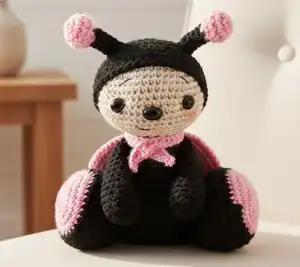
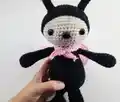
Rizzo the Ladybug is an absolutely charming amigurumi design that captures the beloved spotted beetle in the most adorable way possible. This pattern features a distinctive black cap that sits perfectly on the cream-colored head, creating that classic ladybug look everyone recognizes. The real star of this design is the beautiful pink wings that you'll decorate with black felt spots, giving you creative control over the final spotted pattern. With carefully crafted details including embroidered eyebrows for expression and a cozy pink scarf, Rizzo has personality that shines through in every stitch.

Rizzo the Ladybug Amigurumi Pattern crochet pattern - detailed view of completed project

The pattern provides clear guidance on working with color changes between the black and cream sections, plus helpful tips for attaching the decorative cap and positioning those signature spots. Optional pipe cleaners can be added to the antennae for added dimension and posability, making Rizzo even more lifelike.

Why You'll Love This Rizzo the Ladybug Amigurumi Pattern

I'm absolutely smitten with this ladybug pattern because Rizzo has such incredible personality packed into those 11 inches! The combination of the black cap with the cream face creates such a striking contrast that makes the features really pop. What I love most is the creative freedom with the felt spotsβ€”you can make each ladybug completely unique by varying the size and placement of the dots. The little pink scarf adds such a cozy, friendly touch that transforms this from just a bug into a true companion. I find the embroidered eyebrows and eye highlights give Rizzo the most endearing expression, and adding those rosy cheeks with actual blush is such a fun finishing touch that brings everything to life. It's one of those patterns where every small detail contributes to a big personality!

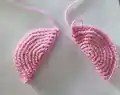
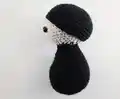
Rizzo the Ladybug Amigurumi Pattern step 1 - construction progress Rizzo the Ladybug Amigurumi Pattern step 2 - assembly progress Rizzo the Ladybug Amigurumi Pattern step 3 - details and accessories Rizzo the Ladybug Amigurumi Pattern step 4 - final assembly and finishing

Switch Things Up

I absolutely love experimenting with different color schemes for Rizzo! While the classic cream and black combination is timeless, I've created versions with bright red bodies and black caps for a more traditional ladybug look that really pops. You could also try pastel versions with soft lavender or mint green bodies paired with white caps for a dreamy, whimsical aesthetic.

The wings are where you can really get creative with your color choices. Instead of pink, try making them in bright red, orange, or even rainbow variegated yarn for a truly unique ladybug. I've even made a Halloween version with orange and black that turned out absolutely adorable!

For the spots, don't limit yourself to just black felt circles. You could use different colored felts to create a multi-colored polka dot effect, or even use fabric paint to add spots if you prefer not to cut and glue. Some makers have embroidered the spots directly onto the wings for a more textured, dimensional look.

The scarf is another fun area to personalizeβ€”try stripes, use sparkly yarn for special occasions, or even add tiny crocheted flowers or bows to the ends. You could make seasonal versions with holiday-colored scarves, or skip the scarf entirely and add a tiny crocheted flower crown instead for a garden party vibe. I've also experimented with different facial expressions by changing the eyebrow anglesβ€”raised eyebrows for surprised Rizzo, or curved ones for a sleepy look. Your imagination is the only limit!

Common Mistakes & How to Fix Them

βœ— Not positioning the black cap close enough to the opening of the head before sewing which can create an awkward gap and make the cap appear to float above the head βœ— Stuffing the wings when they should remain flat causing them to puff out unnaturally and preventing the felt spots from laying smoothly against the surface βœ— Cutting felt spots that are too large or too small in proportion to the wings which throws off the classic ladybug aesthetic and visual balance βœ— Pulling the white yarn highlight too tightly around the safety eyes creating puckering and an unnatural pulled appearance that distorts the eye shape and expression

Rizzo the Ladybug Amigurumi Pattern

Bring adorable Rizzo the Ladybug to life with this charming amigurumi pattern! Standing 11 inches tall, this delightful spotted friend features a classic black cap with decorative spots, sweet pink accents, and the cutest little scarf. Perfect for bug lovers of all ages, Rizzo combines cream and black colors with pops of pink for an irresistibly sweet appearance. This comprehensive pattern includes detailed instructions for creating every element, from the dotted wings to those endearing embroidered eyebrows that give Rizzo so much personality and charm.

Intermediate 6-8 Hours

Materials Needed for Rizzo the Ladybug Amigurumi Pattern

β€” Main Fabric

  • 01
    Worsted Weight #4 yarn approximately 50g of main color cream
  • 02
    Worsted Weight #4 yarn approximately 25-50g black for body cap and legs
  • 03
    Worsted Weight #4 yarn approximately 25-50g pink for wings scarf and accents
  • 04
    Big Twist Cream for main color option
  • 05
    Big Twist Black for cap body and contrast areas
  • 06
    I love this yarn Pink for wings and decorative elements

β€” Tools Required

  • 01
    D Hook or 3.25 mm crochet hook
  • 02
    12 mm safety eyes
  • 03
    14 mm oval nose
  • 04
    Scissors
  • 05
    Sewing needle
  • 06
    Stitch marker
  • 07
    Fiberfill stuffing
  • 08
    Black embroidery thread
  • 09
    White embroidery thread
  • 10
    Pipe cleaner optional for antennae structure
  • 11
    Black felt for wing spots
  • 12
    Hot glue or fabric glue

Progress Tracker

0% Complete

β€” Head :

Round 1 :

Make 6 sc into a magic ring (6)

Round 2 :

Increase in each st around (12)

Round 3 :

(sc, inc) x 6 (18)

Round 4 :

sc, inc, (2 sc, inc) x 5, sc (24)

Round 5 :

(3 sc, inc) x 6 (30)

Round 6 :

2 sc, inc, (4 sc, inc) x 5, 2 sc (36)

Round 7 :

(5 sc, inc) x 6 (42)

Round 8 :

3 sc, inc, (6 sc, inc) x 5, 3 sc (48)

Round 9-14 :

sc in each st around (48)

Infos :

Place eyes between rounds 12 and 13, leaving 10 holes between them. Place nose in between eyes between rounds 13 and 14. You may have to adjust the eye placement depending on yarn and hook size you use.

Round 15 :

3 sc, dec, (6 sc, dec) x 5, 3 sc (42)

Round 16 :

(5 sc, dec) x 6 (36)

Info :

Start stuffing the head

Round 17 :

2 sc, dec, (4 sc, dec) x 5, 2 sc (30)

Round 18 :

(3 sc, dec) x 6 (24)

Round 19 :

(2 sc, dec) x 6 (18)

Info :

F/O and leave a tail (the tail does not need to be long)

β€” Cap :

Round 1 :

Make 6 sc into a magic ring (6)

Round 2 :

Increase in each st around (12)

Round 3 :

(sc, inc) x 6 (18)

Round 4 :

sc, inc, (2 sc, inc) x 5, sc (24)

Round 5 :

(3 sc, inc) x 6 (30)

Round 6 :

2 sc, inc, (4 sc, inc) x 5, 2 sc (36)

Round 7 :

(5 sc, inc) x 6 (42)

Round 8 :

3 sc, inc, (6 sc, inc) x 5, 3 sc (48)

Round 9-13 :

sc in each st around (48)

Round 14 :

(6 sc, dec) x 6 (42)

Info :

F/O and leave a long tail for sewing

β€” Body :

Round 1 :

Make 6 sc into a magic ring (6)

Round 2 :

Increase in each st around (12)

Round 3 :

(sc, inc) x 6 (18)

Round 4 :

(inc, 2 sc) x 6 (24)

Round 5 :

(3 sc, inc) x 6 (30)

Round 6 :

2 sc, inc, (4 sc, inc) x 5, 2 sc (36)

Round 7-13 :

sc in each st around (36)

Round 14 :

(5 sc, dec) x 4, 8 sc (32)

Round 15 :

(4 sc, dec) x 3, 14 sc (29)

Round 16 :

(dec, 7 sc) x 2, dec, 9 sc (26)

Round 17 :

3 sc, dec, 16 sc, dec, 3 sc (24)

Info :

Start stuffing the body

Round 18 :

sc in each st around (24)

Round 19 :

8 sc, dec, 4 sc, dec, 8 sc (22)

Round 20 :

sc in each st around (22)

Round 21 :

dec, 8 sc, dec, 10 sc (20)

Round 22 :

sc in each st around (20)

Round 23 :

(dec, 8 sc) x 2 (18)

Info :

F/O and leave a long tail for sewing

β€” Arms (Make 2) :

Round 1 :

Make 6 sc into a magic ring (6)

Round 2 :

Increase in each st around (12)

Round 3-6 :

Sc in each st around (12)

Info :

Stop stuffing the arms

Round 7 :

5 sc, dec, 5 sc (11)

Round 8 :

Sc in each st around (11)

Round 9 :

4 sc, dec, 3 sc, dec (9)

Round 10 :

Sc in each st around (9)

Round 11 :

7 sc, dec (8)

Round 12-16 :

Sc in each st around (8)

Infos :

F/O and leave a long tail for sewing. Tip: If you fold the arms in half and sc closed, you will have an easier time when sewing them.

β€” Scarf :

Info :

Chain 41

Round 1 :

sl st in 2nd chain from hook, sc, hdc, 2 dc, hdc, 26 sc, hdc, 2 dc, hdc, sc, 2 sl st across the chain

Info :

F/O and leave a long tail for sewing

β€” Legs (Make 2) :

Info :

Starting with Color C: Ch 6

Round 1 :

inc in 2nd chain from hook, 3 sc, 4 sc in the last chain, working on the opposite side of the chain: 3 sc, inc (14)

Round 2 :

Inc3, 4 sc, inc3, 2 sc, inc3, 5 sc (20)

Round 3 :

inc x 3, 5 sc, inc3, 4 sc, inc3, 6 sc (27)

Round 4 :

sc, inc x 3, 8 sc, inc3, 6 sc, inc3, 7 sc (34)

Info :

Change to Color B

Round 5-7 :

sc in each st around (34)

Round 8 :

17 sc, dec x 6, 5 sc (28)

Info :

Stuff the legs as you work

Round 9 :

16 sc, dec x 4, 4 sc (24)

Round 10 :

15 sc, dec x 4, sc (20)

Round 11 :

12 sc, dec x 4 (16)

Info :

Stop stuffing the legs

Round 12 :

(dec, 6 sc) x 2 (14)

Round 13 :

sc in each st around (14)

Round 14 :

(dec, 5 sc) x 2 (12)

Round 15 :

sc in each st around (12)

Round 16 :

(dec, 4 sc) x 2 (10)

Round 17 :

sc in each st around (10)

Info :

F/O and leave a long tail for sewing

β€” Antennae (Make 2) :

Round 1 :

Make 6 sc into a magic ring (6)

Round 2 :

Increase in each st around (12)

Round 3-4 :

sc in each st around (12)

Round 5 :

Dec x 6 (6)

Info :

Change to Color B. Do not stuff the antennae from here on

Round 6-12 :

sc in each st around (6)

Info :

F/O and leave a long tail for sewing

β€” Wings (Make 2) :

Round 1 :

Make 6 sc into a magic ring (6)

Round 2 :

Increase in each st around (12)

Round 3 :

(sc, inc) x 6 (18)

Round 4 :

(2 sc, inc) x 6 (24)

Round 5 :

(3 sc, inc) x 6 (30)

Round 6 :

(4 sc, inc) x 6 (36)

Round 7 :

(5 sc, inc) x 6 (42)

Round 8 :

(6 sc, inc) x 6 (48)

Infos :

Do not F/O! Fold the wing in half and sc closed. F/O and leave a long tail for sewing

Assembly Instructions

  • Place the cap on the head positioning it near the opening of the head, then sew the cap securely onto the head ensuring it sits flat
  • Sew the head to the body adding stuffing when you get to the last few stitches to ensure proper firmness and shape
  • Pin the arms to the side of the body approximately between rounds 21 and 22, then sew them onto the body in a forward facing angle
  • Optional: Cut a piece of pipe cleaner in half, fold it in half again and twist, then insert into the lower half of the antennae cutting excess off, or stuff them instead
  • Pin the antennae onto the cap approximately between rounds 8 and 11, then sew them securely onto the head
  • Turn the body upside down with the front of the face facing away from you, pin the legs onto the bottom of the body approximately between rounds 4 and 5, then sew them on
  • Pin the wings onto the back of the body sewing only where indicated for secure attachment, then cut circles of various sizes from black felt and glue them onto the wings with hot glue or fabric glue
  • Wrap the scarf around the front of the neck with one side overlapping the other, pin it in place, then sew it securely onto the neck
  • Thread your needle with black thread and embroider eyebrows above each eye and a smile below the nose, then add white yarn highlights to the lower corner of each eye wrapping to the top without pulling too tightly
  • Add blush to the cheeks using actual makeup blush for a sweet finishing touch

Important Notes

  • πŸ’‘Use a stitch marker consistently to mark the beginning of each round throughout the entire project for accurate stitch counts
  • πŸ’‘Do not join rounds unless specifically stated in the pattern, always work in a continuous spiral for smooth results
  • πŸ’‘All stitches are worked in both loops unless the pattern states otherwise such as BLO back loops only
  • πŸ’‘Eye and nose placement may need adjustment depending on the specific yarn brand and hook size you choose to use
  • πŸ’‘The cap should be positioned near the opening of the head before sewing for the most natural ladybug appearance
  • πŸ’‘Do not stuff the wings as they need to remain flat for proper appearance and to allow felt spots to adhere smoothly
  • πŸ’‘Pin all parts in place before final sewing to ensure correct positioning and overall symmetry of your finished ladybug
  • πŸ’‘When adding felt spots you can choose to crochet them instead if you prefer not to use glue or felt

This adorable Rizzo the Ladybug pattern was designed to capture the charm of everyone's favorite spotted garden friend in the sweetest amigurumi form! The combination of the classic black cap with pink wings creates a delightful twist on the traditional ladybug look. With customizable felt spots and endearing embroidered features, each Rizzo you create will have its own unique personality. The cozy scarf and rosy cheeks add that extra touch of warmth that makes this ladybug truly special. 🐞✨ Happy crocheting! πŸ§ΆπŸ’•

You ask,

we answer.

FAQs

Can I make the spots with crochet instead of felt?

Absolutely! You can crochet small circles in black yarn instead of using felt. Just make tiny magic rings with increases to your desired spot size, fasten off, and sew them onto the wings.

Do the antennae need pipe cleaners?

No, pipe cleaners are completely optional. They add structure and allow you to pose the antennae, but you can simply stuff them with fiberfill if you prefer a softer finish or are making this for young children.

Can I use different colors for a unique ladybug?

Yes! While the traditional cream and black with pink wings is classic, you could create a blue ladybug, yellow ladybug, or any color combination you love. Just maintain the same yarn weight for consistent sizing.

How many felt spots should I add to the wings?

This is completely up to you! Traditional ladybugs have various numbers of spots. You can add 3-7 spots per wing in different sizes for a natural look, or create your own unique pattern.

What if I can't find oval noses?

Triangle noses work beautifully as an alternative and look equally adorable! You can also embroider the nose with yarn in a triangle or oval shape if you prefer not to use safety attachments.

Why does the cap need to be sewn near the opening of the head?

Positioning the cap near the opening ensures it sits properly on the head without gaps and creates that classic ladybug silhouette where the shell meets the face naturally.