🧶 Beautiful ✨ Detailed 💝 Adorable

Pino Baby Rhino Amigurumi Pattern

Pino Baby Rhino Amigurumi Pattern
4.2★ Rating
8-10 Hours Time Needed
1.8K Made This
✂️

Intermediate Level

Ideal for those with basic knitting experience, featuring slightly more advanced stitches and techniques to expand your skills.

⏱️

All-Day Adventure

Requires 8-10 hours, ideal for a full day of immersive knitting.

🐾

Charming Critter

Delightful animal designs with sweet details that capture the essence of your favorite woodland and farmyard friends.

About This Pino Baby Rhino Amigurumi Pattern

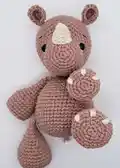
This baby rhino pattern creates a wonderfully huggable companion measuring approximately 16 centimeters tall when worked with the recommended materials. The design features carefully constructed limbs that attach securely to a rounded body, creating stable proportions perfect for standing display. Special attention to detail includes a textured horn, delicate embroidered features, and distinctive nails on each foot that bring Pino's personality to life with authentic charm.

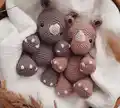
Pino Baby Rhino Amigurumi Pattern crochet pattern - detailed view of completed project

Working in continuous rounds creates smooth, seamless results throughout the body and head construction. The pattern incorporates strategic shaping techniques and back loop only stitches to add dimension and professional finishing touches.

Why You'll Love This Pino Baby Rhino Amigurumi Pattern

I absolutely love how this pattern transforms simple stitches into such an expressive character with genuine personality! The construction method ensures durability while maintaining that soft, squeezable quality we all want in handmade toys. What really makes this pattern special is how the horn and facial features come together to create an unmistakably adorable rhino expression. I appreciate that the limbs are worked separately and then joined, giving you complete control over positioning for that perfect stance. The size is ideal for little hands to hold or for creating a charming decorative piece that showcases your crochet skills beautifully.

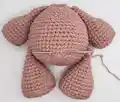
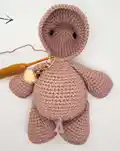
Pino Baby Rhino Amigurumi Pattern step 1 - construction progress Pino Baby Rhino Amigurumi Pattern step 2 - assembly progress Pino Baby Rhino Amigurumi Pattern step 3 - details and accessories Pino Baby Rhino Amigurumi Pattern step 4 - final assembly and finishing

Switch Things Up

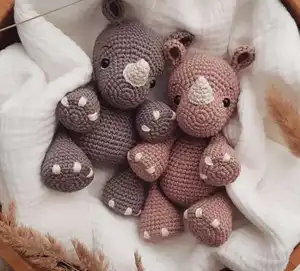
I love experimenting with color variations to give each Pino rhino a unique personality that reflects different creative visions. Instead of traditional browns, try working with soft pastels like lavender, mint green, or baby blue for a whimsical nursery decoration that stands out beautifully. You could even create a whole family of rhinos in graduating sizes by adjusting your yarn weight from fingering to bulky for display together.

For a more realistic approach, I sometimes add subtle shading by working with two similar tones held together during certain rounds, creating depth that brings Pino to life. Consider embroidering small flowers or patterns on the body for a folk art inspired look, or add a tiny crocheted blanket accessory draped over the back.

I've found that changing the horn color to metallic gold or silver yarn creates an enchanting unicorn-rhino hybrid that children absolutely adore. The ears offer another opportunity for creativity by working them in contrasting colors or adding embroidered details inside. You might also experiment with different eye sizes or positions to alter the expression, making some rhinos look more surprised, sleepy, or mischievous depending on placement.

Common Mistakes & How to Fix Them

✗ Not using a stitch marker in continuous rounds can cause your pattern to spiral incorrectly and lose proper shaping ✗ Overstuffing the limbs makes them too rigid and prevents natural positioning when attaching to the body securely ✗ Forgetting to check limb symmetry before final attachment results in uneven stance and awkward body proportions throughout ✗ Skipping the back loop only rounds eliminates the important texture detail that defines joints and adds dimensional realism

Pino Baby Rhino Amigurumi Pattern

Create your own adorable baby rhino named Pino with this charming amigurumi pattern! This delightful project brings a sweet woodland friend to life with careful shaping and endearing details. Perfect for both display and cuddles, Pino features sturdy legs, a distinctive horn, and an expressive face that captures the gentle nature of these magnificent creatures. Whether you're crafting for yourself or creating a thoughtful handmade gift, this pattern guides you through every step to achieve a professional-looking result.

Intermediate 8-10 Hours

Materials Needed for Pino Baby Rhino Amigurumi Pattern

— Main Fabric

  • 01
    Eco Cotton by Gründl in Pastell Schlamm (dark brown) or Mocca (light brown), approximately 56g
  • 02
    Eco Cotton by Gründl in Natur Weiß (off white), approximately 6g
  • 03
    White cotton yarn remnant (such as Schachenmayr Catania) for eye details, approximately 30cm

— Tools Required

  • 01
    Crochet hook 2.5mm (size B)
  • 02
    Safety eyes 8mm diameter in black
  • 03
    Darning needle with blunt tip
  • 04
    Sewing needle
  • 05
    Embroidery needle with pointed tip and large eyelet
  • 06
    Stitch marker
  • 07
    Fiberfill stuffing
  • 08
    Scissors
  • 09
    Pins for positioning and checking placement
  • 10
    Black embroidery thread for eyebrows

Progress Tracker

0% Complete

— Legs (Make 2) :

Round 1 :

6 sc into MR (6)

Round 2 :

inc x 6 (12)

Round 3 :

(1 sc, inc) x 6 (18)

Round 4 :

(2 sc, inc) x 6 (24)

Round 5 :

(3 sc, inc) x 6 (30)

Round 6 :

BLO 30 sc (30)

Round 7-9 :

30 sc (30)

Round 10 :

(3 sc, dec) x 6 (24)

Round 11 :

24 sc (24)

Round 12 :

(2 sc, dec) x 6 (18)

Round 13-14 :

18 sc (18)

Info :

Stuff the leg with fiberfill up to round 11. Do not stuff too tightly, so that the leg will keep its shape.

Round 15 :

(1 sc, dec) x 6 (12)

Round 16 :

12 sc (12)

Round 17 :

dec x 6 (6)

Round 18 :

6 sc (6)

Round 19 :

2 sc, this round is not crocheted until the end of the round

Info :

When folding the opening the joints of round 5 and 6 should be parallel. Adjust the number of stitches if needed. Fold the two sides together and crochet 2 sc across. Cut the yarn and weave in the yarn tail nicely.

— Arms (Make 2) :

Round 1 :

6 sc into MR (6)

Round 2 :

inc x 6 (12)

Round 3 :

(1 sc, inc) x 6 (18)

Round 4 :

(2 sc, inc) x 6 (24)

Round 5 :

BLO 24 sc (24)

Round 6-9 :

24 sc (24)

Round 10 :

(2 sc, dec) x 6 (18)

Round 11 :

18 sc (18)

Round 12 :

(1 sc, dec) x 6 (12)

Round 13-14 :

12 sc (12)

Info :

Stuff the arm with fiberfill up to round 12. Do not stuff too tightly, so that the arm will keep its shape.

Round 15 :

(2 sc, dec) x 3 (9)

Round 16-17 :

9 sc (9)

Round 18 :

(1 sc, dec) x 3 (6)

Round 19 :

2 sc, the round is not crocheted until the end of the round

Info :

When folding the opening the joints of round 5 and 6 should be parallel. Adjust the number of stitches if needed. Fold the two sides together and crochet 2 sc across. Cut the yarn and weave in the yarn tail nicely.

— Body :

Round 1 :

6 sc into MR (6)

Round 2 :

inc x 6 (12)

Round 3 :

(1 sc, inc) x 6 (18)

Round 4 :

(2 sc, inc) x 6 (24)

Round 5 :

(3 sc, inc) x 6 (30)

Round 6 :

(4 sc, inc) x 6 (36)

Round 7 :

(5 sc, inc) x 6 (42)

Round 8 :

(6 sc, inc) x 6 (48)

Round 9-10 :

48 sc (48)

Info :

The stitch marker is on the front. Make sure that the legs are crocheted in with the right side to the front and the joints of the rounds have to be at the backside.

Round 11 :

13 sc, crochet in the 1st leg with 2 sc, 24 sc, crochet in the 2nd leg with 2 sc, 7 sc (48)

Info :

At the front the legs have 20 sc in between and at the back there are 24 sc in between. Make sure that the legs are exactly symmetrically at each side of the body.

Round 12-14 :

48 sc (48)

Round 15 :

(6 sc, dec) x 6 (42)

Round 16-17 :

42 sc (42)

Round 18 :

(5 sc, dec) x 6 (36)

Round 19 :

(4 sc, dec) x 6 (30)

Round 20-21 :

30 sc (30)

Round 22 :

(3 sc, dec) x 6 (24)

Info :

Now start stuffing the body with fiberfill.

Round 23 :

(2 sc, dec) x 6 (18)

Round 24 :

7 sc, crochet in the 1st arm with 2 sc, 7 sc, crochet in the 2nd arm with 2 sc (18)

Info :

The arms have 7 sc in between at the front and at the back. Make sure that the arms are exactly symmetrically at each side of the body.

Round 25 :

(1 sc, dec) x 6 (12)

Info :

Fold the two sides of the opening together and crochet 5 sc across. Cut the yarn and weave in the yarn tail nicely.

— Tail :

Info :

Mark the position of tail centered at the back in round 9 with pins. Thread in a piece of yarn about 20cm in length and make a knot. Cut it leaving approximately 1cm.

— Head :

Round 1 :

6 sc into MR (6)

Round 2 :

inc x 6 (12)

Round 3 :

(1 sc, inc) x 6 (18)

Round 4 :

(2 sc, inc) x 6 (24)

Round 5 :

(3 sc, inc) x 6 (30)

Round 6-9 :

30 sc (30)

Round 10 :

4 sc, (inc, 1 sc) x 6, 14 sc (36)

Info :

You can already mark the position of the safety eyes with two yarn remnants in round 11.

Round 11 :

5 sc, place first marker, (inc, 2 sc) x 5, inc, place second marker, 15 sc (42)

Round 12 :

6 sc, (inc, 3 sc) x 6, 12 sc (48)

Round 13-14 :

48 sc (48)

Info :

Now insert the safety eyes 8mm diameter at the position you marked before.

Round 15 :

48 sc (48)

Round 16 :

42 sc, crochet in the body with 5 sc, 1 sc (48)

Info :

Make sure that the head is attached upright.

Round 17-19 :

48 sc (48)

Round 20 :

(6 sc, dec) x 6 (42)

Round 21 :

42 sc (42)

Round 22 :

(5 sc, dec) x 6 (36)

Round 23 :

(4 sc, dec) x 6 (30)

Round 24 :

(3 sc, dec) x 6 (24)

Round 25 :

(2 sc, dec) x 6 (18)

Info :

Stuff the head with fiberfill.

Round 26 :

(1 sc, dec) x 6 (12)

Round 27 :

dec x 6 (6)

Info :

Cut the yarn and weave in the yarn tail nicely.

— Ears (Make 2) :

Round 1 :

6 sc into MR (6)

Round 2 :

inc x 6 (12)

Round 3 :

1 ch, 5 hdc, (2 dc in 1 st) x 2, 5 hdc (14)

Info :

Finish off with a sl st in the next st. Cut the yarn leaving a long tail for sewing. Fold the ear together and sew the two stitches at the bottom together. Insert the needle from above and withdraw it at the bottom.

Attachment :

The ears are sewn to the head centered at round 17 with 12 visible sc in between.

— Horn :

Round 1 :

6 sc into MR (6)

Round 2 :

6 sc (6)

Round 3 :

(1 sc, inc) x 3 (9)

Round 4 :

inc x 3, 6 sc (12)

Round 5 :

12 sc (12)

Info :

Join the round with a sl st. Cut the yarn leaving a long tail for sewing.

Attachment :

Stuff the horn slightly with fiberfill and attach it centered to rounds 3-9. Make sure that the 3 increases of the horn are above.

— Nails :

Info :

Mark the nail position with pins. Your reference point is the joint of the rounds from the arms and legs. The joint of the round is now on the bottom. Between each nail there are 4 visible sc. Embroider each nail with 4 stitches.

— Facial Features :

Eyebrows :

The eyebrows are embroidered slanted over round 13 with 2 sc in length using black embroidery thread.

Eye Lid :

Make a stitch twice from the upper to the lower part of the eye. One third of the lower part of the eye is embroidered with white cotton yarn.

Assembly Instructions

  • Attach the completed legs to the body at round 11, ensuring they are positioned symmetrically with 20 sc between them at the front and 24 sc at the back.
  • Join the arms to the body at round 24, maintaining 7 sc spacing between each arm at both front and back for balanced placement.
  • Connect the head to the body at round 16 by crocheting them together with 5 sc, making sure the head sits upright and centered.
  • Sew the ears onto the head at round 17, positioning them symmetrically with 12 visible sc spacing between them for proper ear placement.
  • Attach the horn centered between rounds 3 and 9 on the head with the increased side facing upward for authentic rhino appearance.
  • Create the tail by threading and knotting yarn at the back center of round 9, leaving approximately 1cm length after cutting.
  • Embroider nails on each foot using white yarn with 4 stitches per nail, spacing them 4 sc apart with joints at the bottom.

Important Notes

  • 💡Use a stitch marker consistently when working in continuous rounds to track your position and prevent pattern confusion
  • 💡Adjust stitch counts when attaching limbs to ensure perfect symmetry and proper alignment on both sides of the body
  • 💡Stuff all parts firmly but not too tightly to maintain natural shapes and allow proper positioning during assembly
  • 💡Insert safety eyes before completing the head rounds as they cannot be added after the opening is closed
  • 💡Pin all components in place before final sewing to verify correct positioning and make adjustments as needed
  • 💡When using different yarn weights or brands, adjust your hook size accordingly to achieve proper gauge and finished dimensions

This delightful Pino baby rhino pattern combines traditional amigurumi techniques with thoughtful construction details to create a truly special handmade companion. The carefully designed proportions and charming facial features give Pino an endearing personality that makes this project rewarding from start to finish. Whether displayed on a shelf or given as a heartfelt gift, your finished rhino will bring smiles and showcase your crochet craftsmanship beautifully. 🦏 Happy crocheting! 🧶✨
You ask,

we answer.

FAQs

What size will my finished rhino be?

Using Eco Cotton by Gründl yarn with a 2.5mm hook, your completed Pino will measure approximately 16cm or 6.3 inches tall. The final size may vary depending on your yarn choice, hook size, and individual tension.

Can I use different yarn than what's recommended?

Absolutely! You can use any yarn weight you prefer. Just remember that your finished rhino size will change accordingly. Use a hook size appropriate for your chosen yarn and adjust stuffing amounts as needed for different scales.

How do I ensure the limbs are attached symmetrically?

The pattern provides specific stitch count spacing for proper placement. Use pins to position limbs before sewing, and don't hesitate to adjust stitch counts slightly if needed to achieve perfect symmetry on your particular project.

What does BLO mean and why is it important?

BLO stands for back loop only, meaning you crochet through just the back loop of each stitch. This creates a ridge that adds texture and definition, particularly important for defining the joints where limbs connect to the body.

Should I stuff the horn before attaching it?

Yes, stuff the horn lightly with fiberfill before sewing it to the head. Avoid overstuffing to maintain the horn's natural shape and ensure it stands upright properly when attached between rounds 3 and 9.