🧢 Beautiful ✨ Detailed πŸ’ Adorable

Hot Air Balloon Baby Mobile Amigurumi Pattern

Hot Air Balloon Baby Mobile Amigurumi Pattern
4.0β˜… Rating
20-25 Hours Time Needed
2.9K Made This
βœ‚οΈ

Advanced Level

Designed for experienced knitters, these patterns involve intricate designs and complex techniques to challenge and inspire.

⏱️

Slow & Steady

A 10-12 hour projectβ€”great for savoring the process over several sessions.

🧸

Whimsical Buddy

Playful characters full of personality, designed to spark imagination and become cherished playtime favorites.

About This Hot Air Balloon Baby Mobile Amigurumi Pattern

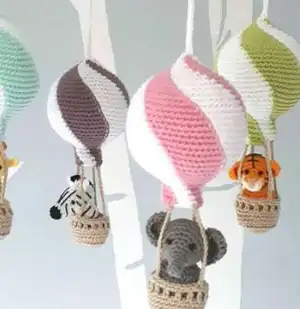
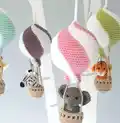
This comprehensive hot air balloon baby mobile pattern takes you on a creative journey through tapestry crochet techniques to create stunning swirled striped balloons. Each of the four balloons houses a different safari animal companion including a tiger, elephant, giraffe, and zebra, all nestled in their own crocheted baskets. The pattern includes detailed instructions for creating the wooden frame, plastic ring hanging system, and all the adorable animal characters that make this mobile truly special and unique.

Hot Air Balloon Baby Mobile Amigurumi Pattern crochet pattern - detailed view of completed project

Working with polystyrene balls to create perfectly shaped hot air balloons, you'll master the art of decreasing while maintaining pattern integrity. The animals feature charming details like embroidered stripes, carefully positioned ears, and sweet facial features that bring personality to each character.

Why You'll Love This Hot Air Balloon Baby Mobile Amigurumi Pattern

I absolutely love how this pattern challenges you to grow your crochet skills while creating something truly magical for a nursery. The tapestry crochet method for the balloon stripes creates such a stunning visual effect with those beautiful swirls, and watching each balloon take shape around the polystyrene ball is incredibly satisfying. What really makes my heart sing is seeing all four adorable safari animals come together, each with their own personality and charm. The combination of techniques keeps the project engaging from start to finish, and the pride you'll feel when hanging this handmade mobile is unmatched. It's a labor of love that becomes a treasured keepsake, and I find myself smiling every time I see one completed.

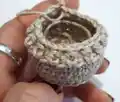
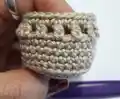
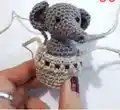
Hot Air Balloon Baby Mobile Amigurumi Pattern step 1 - construction progress Hot Air Balloon Baby Mobile Amigurumi Pattern step 2 - assembly progress Hot Air Balloon Baby Mobile Amigurumi Pattern step 3 - details and accessories Hot Air Balloon Baby Mobile Amigurumi Pattern step 4 - final assembly and finishing

Switch Things Up

I love how versatile this mobile pattern is for personalization! While the original uses beautiful safari animals, you could easily swap them for ocean creatures like whales, dolphins, and sea turtles using the same balloon structure. The color possibilities are endless tooβ€”imagine pastel rainbow balloons for a dreamy nursery or bold primary colors for a more vibrant look.

For a seasonal twist, I sometimes create themed versions: autumn balloons in rust, mustard, and forest green with woodland creatures, or winter balloons in icy blues and silvers with polar animals. You could even make the balloons in your nursery's specific color scheme to perfectly match the decor.

If you want to simplify the project, consider making just two balloons instead of four, or skip the embroidered details on the animals for a cleaner, modern aesthetic. I've also experimented with adding small bells inside the baskets (sewn securely) for gentle tinkling sounds, though this works best if the mobile is out of baby's reach.

For gifting, I love packaging each balloon separately with its animal, allowing the recipient to assemble their mobile gradually or use them as individual decorations. You could also scale down the pattern by using smaller polystyrene balls and thinner yarn for miniature versions perfect as Christmas ornaments or car seat toys.

Common Mistakes & How to Fix Them

βœ— Not maintaining consistent tension while working tapestry crochet can cause the balloon stripes to appear uneven or wavy throughout the piece βœ— Forgetting to switch color changes in the stitch after the last stitch of a color during rounds twelve through nineteen creates misaligned stripes βœ— Stuffing the animals too firmly causes them to lose their intended shape and can stretch the stitches making the stuffing visible βœ— Incorrectly placing increases in the same stitch as the previous row instead of the stitch after causes the balloon to lose its swirled stripe effect

Hot Air Balloon Baby Mobile Amigurumi Pattern

Create an enchanting nursery centerpiece with this whimsical hot air balloon baby mobile crochet pattern. This delightful project features four colorful striped hot air balloons, each carrying an adorable safari animal friend in a handcrafted basket. Make a tiger, elephant, giraffe, and zebra that will captivate your baby's attention and add a touch of handmade magic to their nursery. Using the tapestry crochet technique for stunning swirled balloon stripes, this mobile combines multiple skills to create a truly impressive finished piece that family and friends will admire.

Advanced 20-25 Hours

Materials Needed for Hot Air Balloon Baby Mobile Amigurumi Pattern

β€” Main Fabric

  • 01
    Schachenmayr Catania cotton yarn in White (106), Mint (385), Orchid (222), Canary (208)
  • 02
    Schoeller & Stahl Limone cotton yarn in Blaubeere (168), Maigrun (145), Sisal (49), Elefant (91), Kokos (79), White (06), Black (24), Mandarin (157), Natur (73), Blute (149)
  • 03
    Cotton or acrylic yarn suitable for 3mm crochet hook in various colors for balloons, baskets, and animals

β€” Tools Required

  • 01
    3mm (US size 2) crochet hook
  • 02
    Tapestry needle for sewing
  • 03
    Fiberfill stuffing
  • 04
    4 polystyrene balls 3.15 inches (8 cm) diameter
  • 05
    8 black glass beads or plastic safety eyes 4mm diameter
  • 06
    1 plastic or wooden ring 1.2 inches (30 mm) diameter
  • 07
    1 wooden frame 10 inches (25 cm) diameter
  • 08
    Scissors
  • 09
    Stitch markers

Progress Tracker

0% Complete

β€” HOT AIR BALLOON :

Info :

Work with the Tapestry crochet method (Carrying the second color along top of single crochet being worked in)

R1 :

Begin with COLOR A: Magic ring, 6 ch in ring (6)

R2 :

* 2sc with COLOR A, 2sc with COLOR B * 6 times (12)

R3 :

skip 1 st, * (sc, 2sc with COLOR A), (sc, 2sc with COLOR B) * 6 times (18)

R4 :

* (sc in next 2 st, 2sc) with COLOR A, (sc in next 2 st, 2sc) with COLOR B * 6 times (24)

Info :

From R3 every increase will be made in the stitch AFTER the increase stitch of the previous row (NOT in the same st). This makes the balloon stripes more swirly.

R5-R11 :

continue increasing in the same way (6 increases for every row) (66)

R12-R19 :

8 rows even (* 11 st with COLOR A, 11 st with COLOR B * 6 times) (66)

Info :

In rows from 12 to 19, every color change will be made in the stitch AFTER the last stitch of a color. Insert the polystyrene ball.

R20 :

* (sc in next 9 st, sc2tog with COLOR A), (sc in next 9 st, sc2tog with COLOR B) * 6 times (60)

R21-R26 :

continue decreasing (6 decreases in every row) (24)

Info :

In rows from 20 to 26, every decrease will be made between the last COLOR A stitch and the first COLOR B stitch.

R27-R31 :

5 rows even (* sc in next 4 st with COLOR A, sc in next 4 st with COLOR B * 6 times) (24)

Info :

Break the yarn and fasten off.

β€” BASKET :

R1 :

with Limone 49 Sisal - Magic ring, 6 ch in ring (6)

R2 :

2sc in each ch (12)

R3 :

* sc, 2sc * 6 times (18)

R4 :

* sc in next 2 st, 2sc * 6 times (24)

R5 :

* sc in next 3 st, 2sc * 6 times, sl st in first st (30)

R6 :

Ch1, (back loop only) sc in same st, sc in next 29 st, sl st in first st (30)

R7 :

Ch1, sc in same st, sc in next 29 st, sl st in first st (30)

R8-R9 :

same as R7 (30)

R10 :

Ch4, skip 1 st, * hdc in next st, ch2, skip 1 st * 14 times, sl st in 3Β° ch (44)

R11 :

2 sc in spaces between every hdc, sl st in first st (30)

R12 :

Ch15. Break the yarn and leave a long strand. Join yarn in 8Β° st from the previous string (skipping 7 st), ch15. Break the yarn and leave a long strand. Join yarn in 8Β° st from the previous string (skipping 7 st), ch15. Break the yarn and leave a long strand. Join yarn in 7Β° st from the previous string (skipping 6 st), ch15. Break the yarn and leave a long strand.

β€” ELEPHANT :

HEAD :

R1 :

with Limone 91 Elefant - Magic ring, 6 ch in ring (6)

R2 :

(Back loop only) even (6)

R3-R4 :

2 rows even (6)

R5 :

* sc, 2sc * 3 times (9)

R6 :

even (9)

R7 :

* sc in next 2 st, 2sc * 3 times (12)

R8 :

even (12)

R9 :

* sc, 2sc * 6 times (18)

R10 :

* sc in next 2 st, 2sc * 6 times (24)

R11-R14 :

4 rows even (24)

R15 :

* sc in next 2 st, sc2tog * 6 times (18)

R16 :

* sc, sc2tog * 6 times (12)

Info :

Insert stuffing.

R17 :

* sc, sc2tog * 4 times (8)

Info :

Break the yarn and fasten off.

EARS (x2) :

R1 :

with Limone 91 Elefant - Magic ring, 3 ch in ring, turn (3)

R2 :

Ch1, 2sc in each ch, turn (6)

R3 :

Ch1, * sc, 2sc * 3 times, turn (9)

R4 :

Ch1, even, turn (9)

R5 :

Ch1, even (9)

Info :

Break the yarn and leave a long strand.

BODY :

R1 :

with Limone 91 Elefant - Magic ring, 6 ch in ring (6)

R2 :

2sc in each ch (12)

R3 :

* sc, 2sc * 6 times (18)

R4 :

* sc in next 2 st, 2sc * 6 times (24)

R5-R11 :

7 rows even (24)

R12 :

* sc in next 2 st, sc2tog * 6 times (18)

R13 :

* sc, sc2tog * 6 times (12)

R14 :

even (12)

Info :

Break the yarn and leave a long strand. Insert stuffing.

β€” GIRAFFE :

EARS (x2) :

R1 :

with Catania 208 Canary - Ch4, sc in 2Β° ch from hook, sc in next 2 st. (3)

Info :

Break the yarn and leave a long strand.

HORNS (x2) :

R1 :

with Limone 79 Kokos - Magic ring, 3 ch in ring (3)

R2 :

Back loops only, even (3)

R3 :

even (3)

Info :

Break the yarn and leave a long strand.

HEAD :

R1 :

with Catania 208 Canary - Magic ring, 6 ch in ring (6)

R2-R3 :

2 rows even (6)

R4 :

* sc, 2sc * 3 times (9)

R5 :

even (9)

R6 :

* sc in next 2 st, 2sc * 3 times (12)

R7 :

even (12)

R8 :

* sc, 2sc * 6 times (18)

R9-R11 :

3 rows even (18)

R12 :

* sc, sc2tog * 6 times (12)

R13 :

* sc, sc2tog * 4 times (8)

Infos :

Break the yarn and fasten off. Attach the horns to the head. Attach the ears to the head.

BODY :

R1 :

with Catania 208 Canary - Magic ring, 6 ch in ring (6)

R2 :

2sc in each ch (12)

R3 :

* sc, 2sc * 6 times (18)

R4 :

* sc in next 2 st, 2sc * 6 times (24)

R5-R6 :

2 rows even (24)

R7 :

* sc in next 2 st, sc2tog * 6 times (18)

R8 :

even (18)

R9 :

* sc, sc2tog * 6 times (12)

R10 :

even (12)

R11 :

* sc, sc2tog * 4 times (8)

R12-R15 :

4 rows even (8)

Infos :

Break the yarn and leave a long strand. Insert stuffing. Attach the head to the body. Sew the eyes on the head.

β€” ZEBRA :

EARS (x2) :

R1 :

with Limone 06 White - Ch4, sc in 2Β° ch from hook, sc in next st, * sc, hdc, sc * in last ch. On opposite side, sc in next 2 st, sl st in first st (7)

Info :

Break the yarn and leave a long strand.

MANE :

R1 :

with Limone 06 White - Ch16, sc in 2Β° ch from hook, sc in next 14 ch, turn (15)

R2 :

Change color (Limone 24 Black) - Ch1, even (15)

Info :

Break the yarn and leave a long strand.

HEAD :

R1 :

with Limone 24 Black - Magic ring, 6 ch in ring (6)

R2 :

* sc, 2sc * 3 times (9)

R3 :

even (9)

R4-R5 :

Change color (Limone 06 White) - 2 rows even (9)

R6 :

* sc in next 2 st, 2sc * 3 times (12)

R7-R8 :

2 rows even (12)

R9 :

* sc, 2sc * 6 times (18)

R10-R14 :

5 rows even (18)

R15 :

* sc, sc2tog * 6 times (12)

Info :

Insert stuffing.

R16 :

* sc, sc2tog * 4 times (8)

Info :

Break the yarn and fasten off.

BODY :

R1 :

with Limone 06 White - Magic ring, 6 ch in ring (6)

R2 :

2sc in each ch (12)

R3 :

* sc, 2sc * 6 times (18)

R4 :

* sc in next 2 st, 2sc * 6 times (24)

R5-R7 :

3 rows even (24)

R8 :

* sc in next 2 st, sc2tog * 6 times (18)

R9-R11 :

3 rows even (18)

R12 :

* sc, sc2tog * 6 times (12)

R13-R14 :

2 rows even (12)

R15 :

Ch1, turn, skip 1Β° st, sc in next 6 st, turn (6)

R16 :

Ch1, skip 1Β° st, sc in next 5 st, turn (5)

R17 :

Ch1, skip 1Β° st, sc in next 4 sts, turn (4)

R18 :

Ch1, skip 1Β° st, sc in next 3 sts (3)

Infos :

Break the yarn and leave a long strand. Insert stuffing. Attach the head to the body. Attach the mane to the head. Attach the ears to the head. Sew the eyes to the head (between R9 and R10). With a long strand of Limone 24 Black, embroider the zebra stripes on the head and the body.

β€” TIGER :

EARS (x 2) :

R1 :

with Limone 157 Mandarin - Magic ring, 3 ch in ring, turn (3)

R2 :

Ch1, 2sc in each ch, turn (6)

R3 :

Ch1, even (6)

Info :

Break the yarn and leave a long strand.

HEAD :

R1 :

with Limone 73 Natur - Magic ring, 6 ch in ring (6)

R2 :

* sc, 2sc * 3 times (9)

R3 :

sc in next 2 st, 2sc, sc in next st. Change color (Mandarin): sc in next st, 2sc, sc in next st. Change color (Natur): sc in next st, 2sc (12)

R4 :

even (sc in next 5 st with Natur, sc in next 4 st with Mandarin, sc in next 3 st with Natur) (12)

R5 :

even (sc in next 5 st with Natur, sc in next 5 st with Mandarin, sc in next 2 st with Natur) (12)

R6 :

with Mandarin, * sc, 2sc * 6 times (18)

R7 :

* sc in next 2 st, 2sc * 6 times (24)

R8-R11 :

4 rows even (24)

Info :

With a long strand of Limone 149 Blute, embroider the nose: from inside the head, pull the needle out of the center of the magic ring. Insert the needle under the first row of Mandarin (in the middle). Pull the needle out of the following st on the left. Insert the needle in the center of the magic ring. Pull the needle out under the first row of Mandarin (in the last st on the right). Insert the needle in the center of the magic ring. Keep filling all the spaces until a triangle is formed. Pull the needle out of the left corner of the triangle. Insert the needle in the right corner of the triangle. Fasten off inside the head.

R12 :

* sc in next 2 st, sc2tog * 6 times (18)

R13 :

* sc, sc2tog * 6 times (12)

Info :

Insert stuffing.

R16 :

* sc, sc2tog * 4 times (8)

Infos :

Break the yarn and fasten off. Attach the ears to the head.

BODY :

R1 :

with Limone 157 Mandarin - Magic ring, 6 ch in ring (6)

R2 :

2sc in each ch (12)

R3 :

* sc, 2sc * 6 times (18)

R4 :

* sc in next 2 st, 2sc * 6 times (24)

R5 :

even (sc in next 4 st with Mandarin, sc in next 4 st with Natur, sc in next 16 st with Mandarin) (24)

R6-R8 :

3 rows even (sc in next 4 st with Mandarin, sc in next 5 st with Natur, sc in next 15 st with Mandarin) (24)

R9-R11 :

3 rows even (sc in next 5 st with Mandarin, sc in next 5 st with Natur, sc in next 14 st with Mandarin) (24)

R12 :

* sc in next 2 st, sc2tog, sc * with Mandarin, * sc, sc2tog, sc in next 2 st * with Natur, sc2tog with Mandarin, * sc in next 2 st, sc2tog * 3 times with Mandarin (18)

R13 :

* sc , sc2tog, sc * with Mandarin, * sc2tog, sc, sc2tog * with Natur, * sc, sc2tog * 3 times with Mandarin (12)

R14 :

even (sc in next 3 st with Mandarin, sc in next 3 st with Natur, sc in next 6 st with Mandarin) (12)

Infos :

Break the yarn and leave a long strand. Insert stuff. Attach the head to the body. Sew the eyes to the head. With a long strand of Limone 24 Black, embroider the tiger stripes on the head and on the body.

β€” MOBILE FRAME :

PLASTIC RING :

R1 :

with Limone 06 White - Ch1, sc around the ring until it's all covered.

Info :

Break the yarn and fasten off.

WOODEN FRAME :

R1 :

with Limone 06 White - Ch210, sl st in first ch to form a ring (make sure that the chain isn't twisted when you close the ring) (210)

R2-R10 :

Ch1, sc in same st, sc in next 209 st, sl st in fist st (210)

R11 :

Ch1, sl st in both sides (the foundation chains and the last row of sc together) to close, with the wooden frame inside.

Info :

Break the yarn and fasten off. Join white yarn in a random point of the frame (on the side opposite to the closing sts). Ch48, pass the hook through the little ring, skip 8 ch, sl st in next 40 ch. Break the yarn and fasten off. Do the same thing other 2 times, leaving a space of 8.7 inches (22 cm) between each thread. Join yarn in a random point on the opposite side of the frame, Ch20, pass the hook through the top of a hot air balloon, sl st in every ch, break the yarn and fasten off. Do the same thing other 3 times, spacing out the balloons evenly on the frame. If you like the balloons to be at different heights, you can hang 2 of them at a 20ch height and the other 2 at a 10ch height.

Assembly Instructions

  • Sew the elephant ears on the head by inserting the long strand in the needle and making a small fold in each ear, then attach between rounds fourteen and fifteen leaving six stitches between each ear
  • Attach each animal head to its corresponding body using the long yarn strand left from assembly and secure with tight, invisible stitches
  • Sew glass beads or attach safety eyes to each animal head in the designated positions mentioned in the pattern instructions
  • Position each completed animal inside its basket and sew securely in place, working from inside the basket turned inside out for easier access
  • Attach the four basket strings to each hot air balloon leaving five stitches of space between each attachment point on the balloon base
  • Create the wooden frame by working the crochet tube around the frame and closing it securely with slip stitches through both layers
  • Attach three hanging strings spaced twenty-two centimeters apart connecting the wooden frame to the plastic ring, then hang four balloons at varying heights around the frame

Important Notes

  • πŸ’‘Use stitch markers to track rounds when working with multiple color changes in the tapestry crochet balloon sections
  • πŸ’‘Maintain consistent tension throughout the tapestry crochet method to ensure balloon stripes remain even and create the desired swirled effect
  • πŸ’‘Insert polystyrene balls carefully into balloons before closing to achieve the perfect round shape without distorting stitches
  • πŸ’‘Stuff animal bodies firmly but gently to maintain their shape without stretching the fabric or making stuffing visible
  • πŸ’‘Pin all animal parts in place before sewing to ensure proper positioning and symmetry of features
  • πŸ’‘When embroidering stripes on zebra and tiger, use a long strand and work methodically following the pattern photos for accurate placement
  • πŸ’‘Ensure the wooden frame chain is not twisted before joining it into a ring for proper mobile construction

This enchanting hot air balloon baby mobile pattern combines tapestry crochet mastery with adorable amigurumi safari animals to create a stunning nursery centerpiece. The swirled balloon stripes achieved through strategic color changes add movement and visual interest, while each handcrafted animal companion brings personality and charm. This project challenges your skills while rewarding you with a treasured keepsake that will be admired for years to come. Perfect for gifting or displaying proudly in your little one's nursery! 🎈🧸✨
You ask,

we answer.

FAQs

What is tapestry crochet and do I need prior experience with this technique?

Tapestry crochet is a method where you carry multiple colors along the top of your work while crocheting, creating colorful patterns. While this pattern explains the technique, having some prior experience with color changes will make the process smoother. Practice on a small swatch before starting the balloons if you're new to this method.

Can I substitute the polystyrene balls with something else?

Yes, you can use plastic hollow balls, foam balls, or even firmly stuff the balloons without an internal structure. However, polystyrene balls create the most perfect round shape and are lightweight, making them ideal for a hanging mobile. Just ensure any substitute is approximately 3.15 inches (8 cm) in diameter.

How do I keep the balloon stripes swirled instead of straight?

The key is following the pattern's instruction to make increases in the stitch AFTER the increase of the previous round, not in the same stitch. This offset creates the swirled stripe effect. Mark your increases carefully and refer to the pattern photos to ensure you're achieving the correct spiral appearance.

What's the best way to attach the animals to the baskets without them falling out?

The pattern recommends turning the basket inside out while sewing the animal in place, which gives you better access to create secure stitches. Sew through the bottom rounds of the animal's body and through the basket base multiple times, using matching yarn color for invisible stitches.

Can I make this mobile without the wooden frame and just hang the balloons individually?

Absolutely! Each balloon with its animal and basket can hang independently from a ceiling hook or nursery mobile arm. The wooden frame creates a cohesive display, but individual balloons work beautifully as standalone decorations or can be arranged in your preferred configuration.

How do I embroider the stripes on the zebra and tiger without them looking messy?

Use a long strand of yarn threaded through your tapestry needle and follow the pattern's detailed step-by-step embroidery instructions. Work slowly, following the photos provided, and make sure your stitches follow the natural curve of the body. Practice on a scrap piece first if you're uncertain about embroidery techniques.