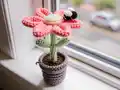
About This Enchanting Flower Blossom in Pot Amigurumi Pattern
This Flower Blossom pattern is a stunning intermediate project that teaches you multiple amigurumi techniques in one beautiful creation. You'll learn how to craft individual petals that attach seamlessly to form a realistic flower, create a sturdy stem with optional wire reinforcement, and construct a dimensional pot with decorative edging. The pattern includes clever construction methods like working in back loops only and front loops only to create texture and shape, plus the adorable addition of a tiny bumblebee companion with delicate wings.
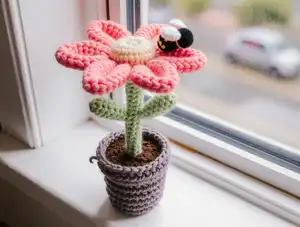
Using sport weight cotton yarn in vibrant spring colors, this project creates a lasting botanical display that's perfect for desks, shelves, or as a thoughtful gift. The detailed assembly instructions with photo references ensure your flower stands beautifully upright.
Why You'll Love This Enchanting Flower Blossom in Pot Amigurumi Pattern
I absolutely adore this pattern because it's like capturing a perfect moment of spring forever! There's something magical about creating a flower that will never wilt, never need watering, and will brighten up any space year-round. I love how this pattern challenges you just enough with the multiple components – six petals, two leaves, the stem, pot, and even a sweet little bumblebee – but each piece is manageable and fun to make. The sense of accomplishment when you assemble everything and watch your flower come to life is incredible! I especially appreciate the attention to detail, like the optional wire reinforcement for the stem and the cardboard base for stability, which shows the designer really thought about functionality. Plus, working with sport weight yarn means you get beautiful stitch definition that makes your flower look professionally crafted. It's the perfect project for rainy weekends when you're craving a touch of sunshine and nature!
Switch Things Up
I love experimenting with different color combinations for this flower pattern to match various seasons and decor styles! While the original uses soft pink petals, you could create a vibrant red rose, sunny yellow sunflower, or elegant purple iris by simply changing the petal color. For a romantic garden feel, try making multiple flowers in different shades of pink, lavender, and white to create an entire crochet flower arrangement.
The pot offers wonderful customization opportunities too. Instead of light brown, consider a terracotta orange for a traditional look, or go modern with gray, white, or even pastels. You could even add decorative details by surface crocheting patterns or stripes onto the pot, or embroidering small designs like hearts, stars, or initials.
For seasonal variations, create autumn flowers using burnt orange, deep red, and golden yellow, or make winter versions with white and silver yarn, perhaps adding tiny beads or sequins to the petals for a frost-like sparkle. Spring gardens could feature multiple flowers in Easter pastels, while summer bouquets might use bright, bold colors.
I also love making variations of the bumblebee by creating different insects – try a ladybug with red wings and black spots, a butterfly with colorful patterned wings, or even a tiny dragonfly with elongated wings. You could make several different pollinators to create a whole garden ecosystem!
For gift-giving, personalize the flower by matching the recipient's favorite color or birth month flower. You could create a whole bouquet of different flowers using the same base pattern but varying the petal shapes and numbers. The possibilities truly are endless, and each variation tells its own unique story!
Common Mistakes & How to Fix Them
✗ Not stuffing the stem firmly enough causes the flower to droop or fall over instead of standing upright beautifully
✗ Forgetting to mark the beginning of rounds leads to confusion during assembly and misaligned petals around the center piece
✗ Skipping the cardboard base in the pot bottom results in an unstable flower that tips over easily when displayed
✗ Not centering the dirt hole properly in the pot makes it difficult to insert the stem and achieve a balanced standing flower
✗ Rushing through the sepal picot stitches creates uneven decorative elements around the stem that look messy instead of delicate
✗ Adding stuffing to petals and leaves when the pattern says not to creates bulky, unrealistic flower parts that don't drape naturally