🧢 Beautiful ✨ Detailed πŸ’ Adorable

Crossbill Children's Sweater Pattern

Crossbill Children's Sweater Pattern
4.9β˜… Rating
15-25 Hours Time Needed
2.2K Made This
βœ‚οΈ

Advanced Level

Designed for experienced knitters, these patterns involve intricate designs and complex techniques to challenge and inspire.

⏱️

Slow & Steady

A 10-12 hour projectβ€”great for savoring the process over several sessions.

πŸ§₯

Layered Comfort

Perfect for cozy, stylish layering through changing seasons with versatile, mix-and-match potential.

About This Crossbill Children's Sweater Pattern

The Crossbill children's sweater is a stunning cable-knit design worked in the round from the bottom up, featuring beautiful symmetrical cable patterns and elegant construction details. The sweater is divided at the armhole level into separate front and back pieces, with shoulders joined using the three-needle bind-off method. Sleeves are worked separately in the round and sewn in, while the neckline is finished with a generous ribbed collar that adds both warmth and classic style to this timeless piece.

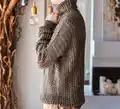
Crossbill Children's Sweater Pattern crochet pattern - detailed view of completed project

This pattern offers comprehensive sizing from 12 months to 12-14 years, with detailed charts and row-by-row instructions for each size variation. The design incorporates lifted increases, cable crossings, and short-row shaping techniques to create a professional finish.

Why You'll Love This Crossbill Children's Sweater Pattern

I absolutely love this pattern because it transforms simple merino wool into a treasured heirloom piece that children can wear for years. The cable work creates stunning visual texture without being overly complicated once you establish the rhythm, and I find the construction method incredibly satisfying as you watch the intricate patterns emerge round by round. The seamless body construction means minimal finishing work, and the detailed charts make it easy to track your progress. What really makes this special is how the classic cable design never goes out of style, creating a handmade sweater that families will want to pass down through generations.

Crossbill Children's Sweater Pattern step 1 - construction progress Crossbill Children's Sweater Pattern step 2 - assembly progress Crossbill Children's Sweater Pattern step 3 - details and accessories Crossbill Children's Sweater Pattern step 4 - final assembly and finishing

Switch Things Up

I love experimenting with this classic Crossbill pattern by changing up the yarn choices to create completely different looks and feels. Try working it in a vibrant hand-dyed merino for a modern twist on the traditional cable design, or use a rustic tweed yarn for a cozy countryside aesthetic that adds beautiful flecks of color throughout the cables.

You could also play with the collar length to suit your child's preferences - make it shorter for a neat turtleneck effect or extend it even longer for a dramatic cowl that can be folded multiple ways. I've seen knitters add contrasting color stripes in the ribbing sections or work the entire sweater in two complementary colors for a sporty look.

Consider adjusting the cable patterns themselves by substituting different cable motifs from your favorite stitch dictionaries while maintaining the same stitch count. The side panels offer another opportunity for creativity - try replacing them with different textured stitches like seed stitch or moss stitch for subtle variation.

For a truly personalized touch, I love adding small custom details like embroidered initials on the collar or tiny duplicate stitch accents worked into the cables after completion. You could even work the sleeves in a contrasting color for a baseball-style sweater that kids absolutely adore.

Common Mistakes & How to Fix Them

βœ— Forgetting to place stitch markers when dividing rounds into sections at the beginning, which makes tracking pattern repeats nearly impossible throughout the project βœ— Not switching to larger needles after the ribbing section, resulting in a sweater that's too tight through the body and doesn't match the intended gauge measurements βœ— Missing the side panel increases at armhole level, which causes the shoulders to be too narrow and creates poor fit across the chest area βœ— Losing track of cable crossing rounds and crossing cables on wrong rows, creating an inconsistent pattern that disrupts the overall design symmetry βœ— Binding off neckline stitches too tightly without using the recommended sewn bind-off method, making the collar inflexible and uncomfortable to wear βœ— Skipping the short-row shaping on sleeve caps, resulting in sleeves that don't sit properly in the armholes and create bunching or pulling βœ— Not checking gauge before beginning, leading to a finished sweater that's significantly larger or smaller than the intended size for the child

Crossbill Children's Sweater Pattern

Create a beautiful cable-knit children's sweater worked seamlessly from the bottom up. This charming design features intricate cable patterns running down the front and back, with a cozy ribbed neckline that can be folded into a stylish collar. Perfect for keeping little ones warm in style, this versatile sweater offers nine size options from 12 months through 12-14 years, making it an ideal project for growing children.

Advanced 15-25 Hours

Materials Needed for Crossbill Children's Sweater Pattern

β€” Main Fabric

  • 01
    Merino DK by cowgirlblues (100% merino wool; 50g = 85m/93yds)
  • 02
    Quince and Co. Lark (100% wool, 50g = 123m/134yds)
  • 03
    Mondial Superwool (100% merino wool, 50g = 125m/137yds)
  • 04
    Total yarn needed: 200-550g (7.0-19.4 oz) depending on size

β€” Tools Required

  • 01
    Circular knitting needles 3mm (US 2.5)
  • 02
    Circular knitting needles 4mm (US 6)
  • 03
    Stitch markers
  • 04
    Cable needle
  • 05
    Tapestry needle
  • 06
    Stitch holder or spare circular needle
  • 07
    Extra cords or auxiliary yarn
  • 08
    Scissors

Progress Tracker

0% Complete

β€” Main Body Setup :

Cast On :

Using 3mm needles, cast on 144; 148; 164 (172; 188; 196) (204; 236; 260) sts, place BoR marker and join in the round

Setup Round :

Work ribbing pattern while placing markers to divide round into Front and Back sections with Side Panels, Charts #1 and #2, and Body Center Pattern

Ribbing :

Continue in established ribbing pattern for 14; 14; 16 (16; 16; 18) (18; 18; 18) rounds

Decrease Round :

Work Row 2 of all charts, reducing to 22 sts for Body Center Pattern Chart

Info :

Change to 4mm needles. Total sts: 164; 168; 184 (200; 216; 224) (232; 272; 296)

Body :

Repeat Rounds 4-7 of charts until piece measures 21; 23; 25 (27; 35; 37) (41; 43; 45) cm or 5cm shorter than desired length

β€” Side Panel Increases :

Increase Section :

Continue with Side Panel increases following appropriate increase chart for your size while working other sections in established pattern

Division :

After completing increase charts, divide work into Front and Back at underarm

β€” Front :

Setup :

Place Back sts on holder. Work Front in back-and-forth rows with increases at beginning and end

Front Body :

Work to height of 6; 6.5; 7 (7.5; 6; 6.5) (7; 7.5; 8) cm from division

Neckline Shaping :

Bind off middle 10; 10; 10 (14; 14; 14) (16; 16; 16) sts. Work both shoulders simultaneously

Neck Decreases :

Bind off 4 sts once, 3 sts 1; 2; 2 (1; 2; 2) (1; 2; 2) times, 2 sts 2; 1; 3 (1; 2; 1) (2; 2; 2) times, 1 st 2; 2; 0 (5; 2; 4) (4; 2; 2) times

Infos :

Work to total height of 11; 11.5; 12 (12.5; 13; 13.5) (14; 14.5; 15) cm from division. Final count: 35; 34; 36 (42; 44; 44) (48; 57; 61) sts per shoulder

Shoulder Shaping :

Work short-row shaping: RS rows work partial rows with double stitches, creating gradual slope

Info :

Place completed shoulder sts on holder

β€” Back :

Setup :

Return to Back sts, join new yarn, work in same pattern as Front

Back Body :

Work to height of 9; 9.5; 10 (9.5; 10; 10.5) (11; 11.5; 12) cm from division

Back Neckline :

Bind off middle 30; 32; 36 (36; 40; 40) (40; 42; 42) sts

Neck Decreases :

Bind off 2 sts once, 1 st once at each neck edge

Shoulder Shaping :

At height of 11; 11.5; 12 (12.5; 13; 13.5) (14; 14.5; 15) cm, work short-row shaping same as Front

Joining :

Close shoulder seams using 3-needle bind-off method with wrong sides facing each other

β€” Right Sleeve :

Cast On :

Using 3mm needles, cast on 44; 46; 46 (50; 50; 54) (54; 54; 58) sts, place BoR marker and join

Setup Round :

Work Side Panel, place markers, work ribbing sections around center sleeve pattern from Chart #1 or #2

Ribbing :

Work 8; 8; 10 (10; 10; 10) (10; 12; 12) rounds

Increase Round :

Work Row 2 of appropriate chart, then Row 3

Info :

Change to 4mm needles. Total: 48; 50; 50 (54; 54; 58) (58; 58; 62) sts

Sleeve Increases :

Work Increase Rounds 1-12 repeatedly, using pfb increases every 6th round, then RLI and LLI increases

Info :

Continue until 60; 64; 64 (68; 72; 72) (76; 80; 84) sts, then work even

Sleeve Length :

Work to 15; 18; 20 (22; 25; 27) (29; 32; 35) cm or 4cm shorter than desired length

Sleeve Cap Shaping :

Work short rows with double stitches: turn 7 sts before markers, then 5 sts before double stitches, repeat once more

Finishing :

Resume working in round, work 6 rounds even, bind off all sts

β€” Left Sleeve :

Work :

Work Left Sleeve the same way as Right Sleeve

β€” Neckline Finishing :

Pickup :

Using 3mm needles, pick up and knit a multiple of 5 sts around neckline

Collar Ribbing :

Work (p3, k2) ribbing for 3cm

Decrease Round 1 :

Work (p2tog, p1, k2, p3, k2) around

Next Round :

Work all sts as they appear

Decrease Round 2 :

Work (p2, k2, p2tog, p1, k2) around

Continue :

Work p2, k2 ribbing until collar reaches 20cm or desired height

Bind Off :

Use sewn bind-off method to maintain elasticity

β€” Final Finishing :

Blocking :

Moisten sweater and block until completely dry

Weaving Ends :

Hide all yarn ends securely

Sleeve Attachment :

Sew sleeves into armholes, matching shaping and ensuring even placement

Assembly Instructions

  • Close shoulder seams using the three-needle bind-off method with wrong sides facing each other and right sides out for a clean finish
  • Block the completed body and sleeves before assembly by moistening and pinning to measurements, allowing to dry completely
  • Pin sleeves into armholes carefully, matching the center of sleeve cap to shoulder seam and distributing ease evenly around armhole
  • Sew sleeves into armholes using mattress stitch or your preferred seaming method, working from the right side for invisible seams
  • Weave in all yarn ends securely on the wrong side, splitting plies and working in multiple directions for security
  • Steam block seams gently if needed to flatten and set stitches for a professional finish
  • Try sweater on child and adjust collar length if necessary before final blocking

Important Notes

  • πŸ’‘Gauge is critical for this pattern - always swatch and block your gauge swatch before beginning to ensure proper fit
  • πŸ’‘Use stitch markers liberally throughout to track pattern repeats and prevent errors in the complex cable sections
  • πŸ’‘The pattern includes detailed charts for each size variation - follow your size consistently throughout all charts
  • πŸ’‘When working short-row shaping, ensure double stitches are worked correctly to prevent holes at turning points
  • πŸ’‘Cable crossings can be omitted in shoulder shaping sections if preferred - simply work 4 knit stitches instead
  • πŸ’‘Keep tension consistent when working cables to maintain even fabric and prevent puckering along cable panels
  • πŸ’‘The sewn bind-off method for the collar is essential to maintain elasticity - do not substitute with regular bind-off

This Crossbill children's sweater pattern brings together timeless cable knitting techniques with thoughtful construction methods to create a garment that's both beautiful and practical. The detailed charts and comprehensive sizing options make this pattern accessible for advanced knitters ready to create an heirloom-quality piece. With its classic cable design and cozy collar, this sweater will become a treasured favorite that keeps little ones warm through countless adventures. The seamless body construction and elegant finishing details ensure a professional result you'll be proud to gift or keep. Happy knitting and enjoy watching this beautiful sweater come to life stitch by stitch! 🧢✨

You ask,

we answer.

FAQs

Can I substitute a different yarn weight for this pattern?

While the pattern is designed for DK weight yarn, you can substitute with careful gauge matching. Always swatch with your chosen yarn and adjust needle sizes to achieve the specified gauge of 28 stitches and 32 rows per 10cm. Be aware that different yarn weights will affect yardage requirements and final drape.

How do I choose the right size for my child?

Measure your child's chest circumference and compare to the finished measurements in the pattern. The sweater is designed with approximately 5-10cm of positive ease for comfortable movement. Consider sizing up if between sizes or if you want the sweater to last through a growth spurt.

What if I've never done short-row shaping before?

The pattern provides detailed instructions for the double-stitch short-row method used in shoulder and sleeve cap shaping. Practice on a small swatch first to understand the technique. The short rows create a gradual slope that helps the sweater fit properly across the shoulders.

Can I work this pattern on straight needles instead of circular needles?

The body is designed to be worked in the round to minimize seaming, but you could adapt it to work flat on straight needles by adding seam stitches and converting the pattern to back-and-forth rows. This would require significant pattern modification and additional seaming at the end.

How much yarn do I really need, and can I use different colors?

Yarn requirements range from 200g for the smallest size to 550g for the largest. Always purchase an extra ball to account for gauge differences and tension variations. You could work this in multiple colors by changing at the ribbing or creating colorwork sections, though this would alter the yardage calculations.