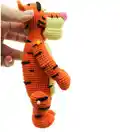
🧢 Beautiful ✨ Detailed πŸ’ Adorable

Bouncy Tigger Amigurumi Pattern

Bouncy Tigger Amigurumi Pattern
4.9β˜… Rating
8-10 Hours Time Needed
3.3K Made This
βœ‚οΈ

Intermediate Level

Ideal for those with basic knitting experience, featuring slightly more advanced stitches and techniques to expand your skills.

⏱️

All-Day Adventure

Requires 8-10 hours, ideal for a full day of immersive knitting.

🧸

Cute Companion

An adorable friend to cherish, handcrafted with love to bring comfort and joy for years to come.

About This Bouncy Tigger Amigurumi Pattern

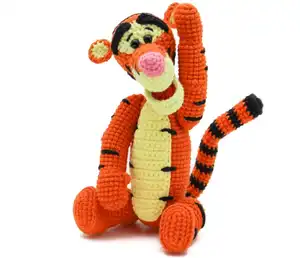
This Tigger amigurumi pattern brings the most wonderful thing about Tiggers straight to your crochet hook! Standing at approximately 19 cm tall with Cotton Gold yarn or 39 cm with plush yarn, this bouncy character features authentic orange and black stripes, a distinctive light yellow muzzle and belly, and his trademark springy tail. The pattern includes detailed instructions for thread mounting the limbs for maximum poseability, optional wire insertion for a flexible tail, and careful color-changing techniques to create Tigger's iconic striped appearance.

Bouncy Tigger Amigurumi Pattern crochet pattern - detailed view of completed project

With clear round-by-round instructions and helpful markers for attachment points, this pattern walks you through creating Tigger's expressive face, folded ears, and characteristic body shape. The result is a huggable companion that captures all the exuberance and charm of everyone's favorite bouncing tiger.

Why You'll Love This Bouncy Tigger Amigurumi Pattern

I absolutely love this Tigger pattern because it perfectly captures his bouncy, energetic personality in every stitch! The color-changing technique creates those iconic stripes that make Tigger instantly recognizable, and adding the wire to the tail means you can pose him mid-bounce just like in the stories. What really makes this pattern special is the attention to detailβ€”from the raised pink nose to the embroidered eyebrows and stripes that give him so much character. The thread mounting technique allows the arms and legs to move freely, making him perfect for display or play. Creating this cheerful tiger is like bringing a piece of the Hundred Acre Wood into your home, and watching him come together round by round is pure crafting joy!

Bouncy Tigger Amigurumi Pattern step 1 - construction progress Bouncy Tigger Amigurumi Pattern step 2 - assembly progress Bouncy Tigger Amigurumi Pattern step 3 - details and accessories Bouncy Tigger Amigurumi Pattern step 4 - final assembly and finishing

Switch Things Up

I love how versatile this Tigger pattern can be! While the classic orange and black stripes are iconic, you could experiment with different color combinations to create your own unique tiger character. Try using variegated yarn for a magical, rainbow-striped effect, or go pastel for a softer, nursery-friendly version.

The wire tail technique opens up so many display possibilitiesβ€”pose Tigger mid-bounce on a shelf, or have his tail curled playfully around a plant pot. If you're confident with the thread mounting method, you could even create different Tigger poses for photos, making him jump, wave, or sit contemplatively.

Consider making a whole Hundred Acre Wood collection by scaling the pattern up or down with different yarn weights. A tiny keychain Tigger in fingering weight yarn would be adorable, while a giant floor-sitting version in super bulky yarn would make an incredible statement piece. You could also add personal touches like a little scarf, a honey pot accessory, or embroider his name on the tummy patch.

For gift-giving, I love packaging handmade amigurumi with a children's bookβ€”pair this Tigger with a Winnie the Pooh storybook for the ultimate nostalgic present. And don't forget, the pattern's detailed stripe embroidery instructions can be adapted if you prefer a cleaner look with fewer stripes or want to add even more for extra visual impact!

Common Mistakes & How to Fix Them

βœ— Forgetting to place stitch markers when changing colors between orange and light yellow sections leads to misaligned stripes and features βœ— Not stuffing the neck area tightly enough causes the head to wobble or lean instead of staying upright and secure βœ— Skipping the marking and checking of attachment areas before crocheting them in results in misplaced ears, jaw, or stripe on the muzzle βœ— Over-stuffing the tail when wire is inserted makes it stiff and difficult to bend into playful bouncing poses βœ— Not leaving long enough thread ends when fastening off body parts makes sewing and assembly frustrating and weak

Bouncy Tigger Amigurumi Pattern

Create your very own bouncy Tigger with this delightful amigurumi pattern! This cheerful character from Winnie the Pooh comes to life with his signature orange and black stripes, springy tail, and infectious smile. Perfect for Disney fans and crochet enthusiasts, this pattern guides you through crafting Tigger's distinctive features including his posable tail with wire support, cheerful facial expressions, and adorable striped belly. Whether you're making him as a gift or adding to your Disney collection, this lovable tiger will bring joy and nostalgia to your crafting journey.

Intermediate 8-10 Hours

Materials Needed for Bouncy Tigger Amigurumi Pattern

β€” Main Fabric

  • 01
    Semi-cotton yarn in orange, light yellow, red, black, and pink colors (such as YarnArt Jeans, Alize Cotton Gold, or Gazzal Jeans)
  • 02
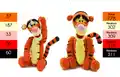
    Alternative option: YarnArt Dolce or Himalaya Dolphin Baby plush yarn for larger version
  • 03
    Alize Cotton Gold recommended (360 yards/3.5 oz), approximately 1.7 oz of main color needed
  • 04
    For plush version: Dolce 778, Himalaya 302, 309, 318, and 311 colors

β€” Tools Required

  • 01
    2mm crochet hook (or 3.5mm for plush yarn version)
  • 02
    Pair of plastic safety eyes 5-6mm (or 8mm for plush version)
  • 03
    Aluminum or copper wire approximately 2mm diameter for posable tail (optional)
  • 04
    Band-aid or fabric patch to wrap wire ends for safety
  • 05
    Synthetic or tooth thread for thread mounting limbs
  • 06
    Sewing needle for attaching body parts
  • 07
    Stitch markers
  • 08
    Pins with large heads
  • 09
    Scissors
  • 10
    Polyester fiber filling
  • 11
    Tapestry needle for embroidery

Progress Tracker

0% Complete

β€” Lower Jaw :

Inner Part (Red Yarn):

Round 0 :

Chain 6, work in spiral without turning chain and slip stitch

Round 1 :

Start in 2nd chain from hook: 4 SC, 3 SC into last chain from hook, on other side: 3 SC, INC (12)

Round 2 :

INC, 3 SC, 3 INC, 3 SC, 2 INC (18)

Round 3 :

SC, INC, 3 SC, (SC, INC) x 3, 3 SC, (SC, INC) x 2 (24)

Info :

Fix and cut thread

Outer Part + Assembly (Light Yellow Yarn):

Round 0 :

Chain 6, work in spiral

Round 1 :

Start in 2nd chain from hook: 4 SC, 3 SC into last chain from hook, on other side: 3 SC, INC (12)

Round 2 :

INC, 3 SC, 3 INC, 3 SC, 2 INC (18)

Round 3 :

SC, INC, 3 SC, (SC, INC) x 3, 3 SC, (SC, INC) x 2 (24)

Round 4 :

24 SC

Infos :

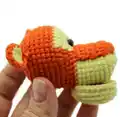
Fix and cut thread. Mark 6 SC on top of oval. Attach light yellow thread in next stitch after marker on left and work 18 SC until next marker. Attach red inner part face up and work two parts together with 24 SC, stuff detail slightly in process. Fix thread and hide inside. Put markers at distance of 6 SC in same place on top of oval (this will be place for attaching jaw to head)

β€” Ears :

Inner Part (Light Yellow Yarn) - Make 2:

Round 1 :

6 SC in MR

Round 2 :

6 INC (12)

Info :

Fix and cut thread

Outer Part + Assembly (Orange Yarn):

Round 1 :

6 SC in MR

Round 2 :

6 INC (12)

Infos :

Don't fasten off, attach yellow inner part face up and work together with 12 SC. Work additional round of 12 SC. Fold detail in half and work next and previous stitches from hook together with SC. Fix thread and leave long end to sew

β€” Stripe on Muzzle :

Orange Yarn (Make turn and work turning chain at end of each row):

Row 0 :

Chain 5

Row 1 :

Start in 2nd chain from hook: 4 SC

Row 2 :

INC, 2 SC, INC (6)

Row 3 :

INC, 4 SC, INC (8)

Rows 4-7 :

4 rows of 8 SC

Info :

Fix thread and leave long end to sew

β€” Head :

Start with Light Yellow Yarn, Stuff in Process:

Round 1 :

6 SC in MR

Round 2 :

(SC, 3 SC in same St) x 3 (12)

Round 3 :

2 SC, (3 SC in same St, 3 SC) x 2, 3 SC in same St, SC (18)

Round 4 :

3 SC, (3 SC in same St, 5 SC) x 2, 3 SC in same St, 2 SC (24)

Rounds 5-10 :

6 rounds of 24 SC

Infos :

In next round lower jaw and stripe are attached to muzzle. Position muzzle so triangle at base has one sharp angle down. Mark 8 SC on top for stripe and 6 SC at bottom for lower jaw (distance on sides between upper and lower attaching areas is 5 SC). Change thread color to orange

Round 11 :

5 SC, 8 SC together with stripe, 5 SC, 6 SC together with lower jaw (24)

Info :

Place stitch marker in middle of lower jaw attachment area (in third SC)

Round 12 :

9 SC, INC HDC, change to light yellow, 4 INC HDC, change to orange, INC HDC, 9 SC (30)

Round 13 :

9 SC, HDC, INC HDC, change to light yellow, (HDC, INC HDC) x 4, change to orange, HDC, INC HDC, 9 SC (36)

Round 14 :

9 SC, 2 HDC, INC HDC, change to light yellow, (2 HDC, INC HDC) x 4, change to orange, 2 HDC, INC HDC, 9 SC (42)

Info :

Insert eyes in Round 12 at distance of 3-4 SC

Rounds 15-20 :

6 rounds of 42 SC

Infos :

In Round 21 ears are attached. Mark a SC on sides at distance of 18 SC between them

Round 21 :

11 SC, SC together with ear, 18 SC, SC together with ear, 11 SC (42)

Round 22 :

(5 SC, DEC) x 6 (36)

Round 23 :

(4 SC, DEC) x 6 (30)

Round 24 :

(3 SC, DEC) x 6 (24)

Round 25 :

(2 SC, DEC) x 6 (18)

Round 26 :

(SC, DEC) x 6 (12)

Round 27 :

6 DEC (6)

Infos :

Tighten hole, fix thread and hide inside. Sew sides of stripe to middle of muzzle and fix ears if required

β€” Nose :

Pink Yarn:

Round 1 :

6 SC in MR

Round 2 :

(SC, 3 SC in same St) x 3 (12)

Round 3 :

2 SC, (INC, 3 SC) x 2, INC, SC (15)

Round 4 :

15 SC

Info :

Fix thread and leave long end to sew. Sew on tip of muzzle so it is raised up, can be slightly stuffed

β€” Eyebrows :

Black Yarn - Make 2, Leave long thread end at beginning:

Row 0 :

Chain 10

Row 1 :

Start in 4th chain from hook: DC, HDC, 5 SC

Infos :

Fix thread and leave long end to sew. Place eyebrows as shown in photo and sew to head at opposite ends. Embroider eyelids. Embroider stripes on muzzle on sides. Embroider stripes on head

β€” Arms :

Orange Yarn - Make 2 (Left and Right), Stuff in Process:

Round 0 :

Chain 5, work in spiral

Round 1 :

Start in 2nd chain from hook: 3 SC, 3 SC into last chain from hook, on other side: 2 SC, INC (10)

Round 2 :

INC, 2 SC, 3 INC, 2 SC, 2 INC (16)

Rounds 3-6 :

4 rounds of 16 SC

Info :

Place stitch marker exactly on side

Round 7 :

7 SC, PS, 8 SC

Round 8 :

16 SC

Round 9 Left Arm :

4 DEC, 2 SC, 4 INC, 2 SC (16)

Round 9 Right Arm :

2 SC, 4 INC, 2 SC, 4 DEC (16)

Rounds 10-17 :

8 rounds of 16 SC

Info :

Fold detail in half along palm, place stitch marker 2 SC to left of fold line (fold line is on opposite side of thumb)

Round 18 Left Arm :

12 SC, 4 INC (20)

Round 18 Right Arm :

4 INC, 12 SC (20)

Round 19 Left Arm :

12 SC, 4 DEC (16)

Round 19 Right Arm :

4 DEC, 12 SC (16)

Rounds 20-29 :

10 rounds of 16 SC

Info :

Stretch elbow area to form bend

Round 30 :

(2 SC, DEC) x 4 (12)

Round 31 :

(SC, DEC) x 4 (8)

Infos :

If using joints to mount arms, insert them on one line with thumb between Rounds 28 and 29. Tighten hole, fix thread and hide end inside. Embroider stitches/stripes with black thread

β€” Legs :

Orange Yarn, Stuff in Process:

Round 0 :

Chain 8, work in spiral

Round 1 :

Start in 2nd chain from hook: 6 SC, 3 SC into last chain from hook, on other side: 5 SC, INC (16)

Round 2 :

INC, 5 SC, 3 INC, 5 SC, 2 INC (22)

Round 3 :

SC, INC, 5 SC, (SC, INC) x 3, 5 SC, (SC, INC) x 2 (28)

Round 4 :

28 BPSC

Rounds 5-6 :

2 rounds of 28 SC

Info :

Align stitch marker exactly in middle of heel and ensure it stays in middle behind until end of working

Round 7 :

7 SC, 7 DEC, 7 SC (21)

Round 8 :

5 SC, 6 DEC, 4 SC (15)

Round 9 :

6 SC, 3 INC, 6 SC (18)

Round 10 :

DEC, 14 SC, DEC (16)

Round 11 :

5 SC, (INC, SC) x 2, INC, 6 SC (19)

Round 12 :

19 SC

Round 13 :

6 SC, (INC, 2 SC) x 2, INC, 6 SC (22)

Round 14 :

DEC, 18 SC, DEC (20)

Round 15 :

6 SC, (INC, 3 SC) x 2, INC, 5 SC (23)

Round 16 :

2 INC, 19 SC, 2 INC (27)

Round 17 :

8 SC, (DEC, 3 SC) x 2, DEC, 7 SC (24)

Round 18 :

INC, 22 SC, INC (26)

Round 19 :

8 SC, (DEC, 2 SC) x 2, DEC, 8 SC (23)

Round 20 :

23 SC

Round 21 :

(2 SC, DEC) x 5, 3 SC (18)

Round 22 :

(SC, DEC) x 6 (12)

Round 23 :

6 DEC (6)

Infos :

Tighten hole, fix thread and hide end inside. If using joints to mount legs, insert them on sides between Rounds 19 and 20. Embroider stitches/stripes with black thread

β€” Body :

Orange Yarn, Stuff in Process (Stuff neck area tight):

Info :

Mark square 6 by 6 SC below head, attach thread and work in spiral

Rounds 1-3 :

3 rounds of 18 SC

Round 4 :

(5 SC, INC) x 3 (21)

Rounds 5-6 :

2 rounds of 21 SC

Round 7 :

(6 SC, INC) x 3 (24)

Info :

Place stitch marker exactly in middle of neck behind

Round 8 :

3 SC, INC, 4 SC, INC, 6 SC, INC, 4 SC, INC, 3 SC (28)

Round 9 :

4 SC, INC, 4 SC, INC, 8 SC, INC, 4 SC, INC, 4 SC (32)

Round 10 :

5 SC, INC, 4 SC, INC, 10 SC, INC, 4 SC, INC, 5 SC (36)

Rounds 11-16 :

6 rounds of 36 SC

Info :

Place stitch marker exactly in middle of back

Round 17 :

8 SC, (2 SC, INC) x 6, 10 SC (42)

Rounds 18-29 :

12 rounds of 42 SC

Round 30 :

(5 SC, DEC) x 6 (36)

Rounds 31-36 :

6 rounds of 36 SC

Round 37 :

(4 SC, DEC) x 6 (30)

Round 38 :

(3 SC, DEC) x 6 (24)

Round 39 :

(2 SC, DEC) x 6 (18)

Round 40 :

(SC, DEC) x 6 (12)

Round 41 :

6 DEC (6)

Infos :

Tighten hole, fix thread and hide end inside. If using joints, install arms between Rounds 12 and 13, legs between Rounds 35 and 36

β€” Tummy :

Light Yellow Yarn (Make turn and work turning chain at end of each row):

Row 0 :

Chain 5

Row 1 :

Start in 2nd chain from hook: 4 SC

Row 2 :

INC, 3 SC (5)

Row 3 :

INC, 4 SC (6)

Row 4 :

INC, 5 SC (7)

Row 5 :

INC, 6 SC (8)

Rows 6-19 :

14 rows of 8 SC

Row 20 :

Skip a St, 5 SC, DEC (6)

Row 21 :

Skip a St, 3 SC, DEC (4)

Infos :

Work a chain, crochet detail around with SC, work INC in two loops on sides from above and below. Fix thread, leave long end to sew. Sew detail to body. Embroider stitches/stripes with black thread on body in random order

β€” Thread Mount :

Infos :

Mark attachment area on limbs: on arms between Rounds 28-29 on line with thumb, on legs between Rounds 19-20 on sides. Mark attachment area on body: from above between Rounds 12-13 on sides, from below between Rounds 35-36 on sides. Insert long needle through body in place of mounting 1st arm and withdraw in place of mounting 2nd arm. Put arm on needle taking only front part of fabric (not through whole detail), 2-3 SC and fiber filling. Turn back through same hole to initial thread end and put 2nd arm on needle. Stretch arms very well and tie thread ends, hide them in body through same initial hole so knot hides inside. Do thread mount of legs as described above

β€” Tail :

Start with Black Yarn:

Round 1 :

6 SC in MR

Round 2 :

6 INC (12)

Round 3 :

12 BPSC

Round 4 :

12 SC

Info :

Change to orange

Rounds 5-7 :

3 rounds of 12 SC

Info :

Change to black

Rounds 8-9 :

---

2 rounds of 12 SC

Info :

Change to orange

Rounds 10-12 :

3 rounds of 12 SC

Info :

Change to black

Rounds 13-14 :

2 rounds of 12 SC

Info :

Change to orange

Rounds 15-17 :

3 rounds of 12 SC

Info :

Change to black

Rounds 18-19 :

2 rounds of 12 SC

Info :

Change to orange

Rounds 20-22 :

3 rounds of 12 SC

Info :

Change to black

Rounds 23-24 :

2 rounds of 12 SC

Info :

Change to orange

Rounds 25-27 :

3 rounds of 12 SC

Info :

Change to black, fix thread and leave long end to sew

Installing Wire (Optional):

Infos :

Cut piece of wire longer than tail itself. Bend one end and wrap with fabric patch. Stuff tip of tail and insert wire inside

Rounds 28-29 :

2 rounds of 12 SC

Info :

Change to orange

Rounds 30-32 :

3 rounds of 12 SC

Info :

Change to black

Rounds 33-34 :

2 rounds of 12 SC

Info :

Change to orange

Rounds 35-37 :

3 rounds of 12 SC

Info :

Change to black

Rounds 38-39 :

2 rounds of 12 SC

Info :

Change to orange

Rounds 40-42 :

3 rounds of 12 SC

Infos :

Stretch loops on body between Rounds 36-37 to insert wire there. Insert loose end of wire into stretched loops, twist it and wrap with patch. Stuff tail not too tight so wire inside is fixed. Sew tail to body in area of Rounds 35-38 along contour

Assembly Instructions

  • Attach the completed head to the body by working directly into the marked 6x6 SC square at the neck area, ensuring tight stuffing in the neck region for stability
  • Use thread mounting technique to attach arms between body Rounds 12-13, threading through body and securing both arms simultaneously with firm knots hidden inside
  • Mount legs between body Rounds 35-36 using the same thread mounting method, ensuring limbs are positioned on the sides and can move freely
  • Sew the light yellow tummy piece to the front of the body, centering it and embroidering random black stripes across the body for Tigger's characteristic pattern
  • If using wire in tail, insert prepared wire through stretched loops between body Rounds 36-37, twist and secure with fabric patch before sewing tail to body at Rounds 35-38
  • Embroider black stripes on the head, muzzle sides, arms, and legs following the pattern's stripe placement guides for authentic Tigger appearance
  • Secure all thread ends by weaving them through the stuffed interior and trimming close to prevent unraveling during play or display

Important Notes

  • πŸ’‘Wire in the tail is optional but recommended for older children only (3+ years). For younger children, omit wire and stuff tail firmly instead
  • πŸ’‘When changing colors between orange and light yellow, cut threads each time and tie ends in knots to prevent color bleeding through stitches
  • πŸ’‘Crocheting density and hook size directly affect final toy size. Test your tension and adjust hook size if needed to match pattern gauge
  • πŸ’‘Place stitch markers carefully at each indicated attachment point before crocheting pieces together to ensure proper alignment and symmetry
  • πŸ’‘Stuff the neck area very tightly to prevent the head from wobbling or drooping forward once assembled onto the body
  • πŸ’‘Leave long thread tails when fastening off all parts (at least 12 inches) to make sewing and assembly much easier and more secure

This bouncy Tigger amigurumi pattern captures the wonderful thing about Tiggersβ€”they're full of personality, stripes, and springy fun! With detailed instructions for color changes, posable limbs, and that signature bouncy tail, you'll create a huggable friend straight from the Hundred Acre Wood. Perfect for Disney lovers and anyone who needs a little more bounce in their day. The optional wire tail feature makes him extra special and display-worthy. Grab your orange and black yarn and get ready to bring this beloved character to life, one joyful stitch at a time! 🧢🐯✨

You ask,

we answer.

FAQs

Can I make Tigger without using wire in the tail?

Absolutely! The wire is completely optional. If you're making Tigger for young children under 3 years old, it's recommended to skip the wire and simply stuff the tail firmly instead. The tail will still look great, just won't be posable.

What size will my finished Tigger be?

Using Alize Cotton Gold yarn with a 2mm hook, Tigger will be approximately 19 cm (7.5 inches) tall. If you use YarnArt Dolce or Himalaya Dolphin Baby plush yarn with a 3.5mm hook, he'll be about 39 cm (15 inches) tall. Your personal crochet tension may slightly vary these sizes.

How do I prevent the colors from showing through when changing between orange and light yellow?

The pattern recommends cutting the thread each time you change colors and tying the thread ends into knots. This prevents the unused color from being carried along and showing through your stitches, keeping color transitions clean and crisp.

Is thread mounting difficult? Can I use a different method to attach the limbs?

Thread mounting creates freely moveable limbs but requires practice. The pattern provides detailed instructions with a long needle technique. Alternatively, you can use plastic joints or safety joints (installed before closing limbs), or simply sew limbs directly to the body for a non-moveable but simpler option.

Why does the pattern say to stuff the neck area tightly?

Tight stuffing in the neck (the 6x6 SC attachment area) is crucial to keep Tigger's head upright and prevent it from flopping forward or to the side. This area bears the weight of the head, so firm stuffing ensures your Tigger maintains his proud, bouncy posture.

Do I need to know how to do back post single crochet (BPSC)?

Yes, BPSC is used in a few places like the leg foot base and tail sections. The pattern includes step-by-step instructions for this stitch. It creates a nice ridged texture and is fairly easy once you understand the concept of working around the post of stitches rather than into the top loops.