🧶 Beautiful ✨ Detailed 💝 Adorable

Bonanza Beechcraft V-Tail Airplane Amigurumi Pattern

Bonanza Beechcraft V-Tail Airplane Amigurumi Pattern
4.5★ Rating
8-10 Hours Time Needed
1.2K Made This
✂️

Advanced Level

Designed for experienced knitters, these patterns involve intricate designs and complex techniques to challenge and inspire.

⏱️

All-Day Adventure

Requires 8-10 hours, ideal for a full day of immersive knitting.

🧸

Cute Companion

An adorable friend to cherish, handcrafted with love to bring comfort and joy for years to come.

About This Bonanza Beechcraft V-Tail Airplane Amigurumi Pattern

This Bonanza Beechcraft V-tail airplane pattern is a sophisticated amigurumi project that captures the essence of this iconic aircraft. The pattern features unique construction methods including creating a triangular nose shape using strategic increases, double-layered wings and tail pieces for strength and stability, and a clever cord-crochet technique for the propeller blades. The finished airplane measures 30cm in length and width at the wing span, making it a substantial and impressive piece. Special attention is given to realistic details like the distinctive V-shaped tail configuration, wing-mounted engines, and authentic window placements using felt cutouts.

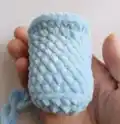
Bonanza Beechcraft V-Tail Airplane Amigurumi Pattern crochet pattern - detailed view of completed project

Working with plush yarn creates a wonderfully soft and huggable airplane that's perfect for play or display. The pattern includes detailed assembly instructions with precise measurements for placing all components, ensuring your finished plane has accurate proportions and realistic appearance.

Why You'll Love This Bonanza Beechcraft V-Tail Airplane Amigurumi Pattern

I absolutely love how this pattern transforms simple plush yarn into such a recognizable and impressive aircraft! The engineering behind creating the triangular nose shape is brilliant—using strategic three-stitch increases to build the fuselage from a flat base into a dimensional form. What really captures my imagination is the double-layer construction technique for the wings and tail, which not only adds structural integrity but also creates pieces that look professionally made. The cord-crochet method for the propeller blades is such a clever technique that I've used in other projects since learning it here. I'm particularly fond of how the V-tail comes together—positioning two identical pieces at an angle creates that authentic Bonanza silhouette that aviation enthusiasts will immediately recognize. The felt windows add such a polished, finished look that elevates this from a simple toy to a display-worthy piece. Working with plush yarn makes the entire process feel luxurious, and seeing the airplane take shape as you add each component is incredibly rewarding. This pattern has taught me so much about three-dimensional construction and strategic shaping that I apply to all my amigurumi projects now!

Bonanza Beechcraft V-Tail Airplane Amigurumi Pattern step 1 - construction progress Bonanza Beechcraft V-Tail Airplane Amigurumi Pattern step 2 - assembly progress Bonanza Beechcraft V-Tail Airplane Amigurumi Pattern step 3 - details and accessories Bonanza Beechcraft V-Tail Airplane Amigurumi Pattern step 4 - final assembly and finishing

Switch Things Up

I love customizing this airplane pattern to create different aircraft models! One of my favorite variations is changing the tail configuration—instead of the V-tail, I've made traditional T-tail planes by sewing the tail pieces in a cross formation. You could also experiment with wing positioning to create a biplane by adding a second set of smaller wings above the main wings.

Color combinations offer endless possibilities! Try making a vintage yellow crop duster, a sleek silver jet, or even a camouflage military plane using multiple shades of green and brown. I've created an entire fleet in different airline colors by adding felt stripes along the fuselage or changing the engine colors to match real-world liveries.

For extra detail, consider embroidering registration numbers on the tail or wings using thin yarn, or add felt decals like stars or company logos. I've made passenger jets by adding rows of tiny circular windows along the fuselage instead of the large ones in the pattern. You could also create a seaplane by adding pontoon floats underneath using the same technique as the engines. For holiday themes, try making the plane in red and white with a green wreath decal for Christmas, or patriotic colors for special occasions!

Common Mistakes & How to Fix Them

✗ Not finding the exact center for increases in round 11 of the fuselage creates an asymmetrical body shape ✗ Cutting thread on both wing or tail pieces instead of leaving one attached makes assembly unnecessarily difficult ✗ Forgetting to add hdc in corners when joining double-layer pieces causes corners to twist and lose definition ✗ Not stuffing the fuselage while crocheting makes it nearly impossible to fill evenly at the end ✗ Placing wings without measuring from center point results in uneven wingspan and crooked airplane appearance

Bonanza Beechcraft V-Tail Airplane Amigurumi Pattern

Take flight with this adorable plush Bonanza Beechcraft V-tail airplane amigurumi! This impressive pattern creates a detailed 30cm (11.8 inch) aircraft complete with distinctive V-shaped tail, working propeller with three blades, engines mounted on the wings, and authentic felt windows. Made with soft plush yarn, this cuddly plane is perfect for aviation enthusiasts of all ages. The pattern includes detailed instructions for creating the streamlined fuselage with a unique triangular nose shape, sturdy double-layered wings and tail pieces, functional engines, and a realistic propeller assembly. Whether you're making it as a special gift for a pilot, airplane lover, or child who dreams of flying, this pattern combines creative construction techniques with adorable results!

Advanced 8-10 Hours

Materials Needed for Bonanza Beechcraft V-Tail Airplane Amigurumi Pattern

— Main Fabric

  • 01
    One skein (100g/120m) plush yarn Yarnart Dolce or similar in blue color for main body
  • 02
    Small amount of plush yarn Yarnart Dolce or similar in milk/cream color for engines
  • 03
    Strong thin yarn in blue and milk colors for propeller and sewing (Yarnart Jeans 50g/160m recommended)
  • 04
    Hollofiber or polyester fiberfill stuffing

— Tools Required

  • 01
    4mm crochet hook (for plush yarn)
  • 02
    1.5mm crochet hook (for propeller and assembly)
  • 03
    Blue or black felt for windows
  • 04
    Black sewing thread for attaching windows or fabric glue
  • 05
    Scissors
  • 06
    Yarn needle
  • 07
    Stitch markers
  • 08
    Pins for positioning pieces during assembly

Progress Tracker

0% Complete

— FUSELAGE:

Info:

Blue plush yarn. You need to make a triangle shape by making 3 stitches in one loop.

Round 1:

9 sc in MR (9)

Round 2:

(2 sc, 3 sc in 1 loop) * 3 (15)

Round 3:

(4 sc, 3 sc in 1 loop) * 3 (21)

Round 4:

21 sc for the back half of the loop (21)

Round 5-10:

21 sc (21)

Info:

You need to make 6 increases exactly in the middle of the triangle. Find your center of the triangle and crochet the required number of stitches.

Round 11:

7 sc, 6 inc, 8 sc (27) - adjust stitch placement to center increases on your triangle

Round 12-13:

27 sc (27)

Info:

The increase should be in the middle. Find the center of the upper part and count required stitches. The increase should be in the center with 2 sc and 1 inc to the left and right.

Round 14:

11 sc, inc, 2 sc, inc, 2 sc, inc, 9 sc (30) - adjust if your row start has shifted

Round 15-16:

30 sc (30)

Round 17:

(4 sc, inc) * 6 (36)

Round 18-20:

36 sc (36)

Round 21:

(10 sc, dec) *3 (33)

Round 22:

33 sc (33)

Round 23:

(9 sc, dec) *3 (30)

Round 24-25:

30 sc (30)

Info:

Fill the fuselage with filler and add it during crocheting

Round 26:

(8 sc, dec) * 3 (27)

Round 27-28:

27 sc (27)

Round 29:

(7 sc, dec) *3 (24)

Round 30-31:

24 sc (24)

Round 32:

(6 sc, dec) * 3 (21)

Round 33-34:

21 sc (21)

Round 35:

19 sc, dec (20)

Round 36:

9 sc, dec, 9 sc (19)

Round 37:

17 sc, dec (18)

Round 38:

8 sc, dec, 8 sc (17)

Round 39:

17 sc (17)

Round 40:

15 sc, dec (16)

Round 41:

16 sc (16)

Round 42:

14 sc, dec (15)

Round 43:

6 sc, dec, 7 sc (14)

Round 44:

12 sc, dec (13)

Round 45:

5 sc, dec, 6 sc (12)

Round 46:

10 sc, dec (11)

Round 47:

4 sc, dec, 5 sc (10)

Round 48:

8 sc, dec (9)

Round 49:

7 sc, dec (8)

Round 50:

6 sc, dec (7)

Round 51:

5 sc, dec (6) + sl st

Info:

Fasten the thread, cut and tighten the hole

— TAIL (Make 4 pieces, combine into 2):

Info:

Blue plush yarn. Crochet in turning rows. Each new row starts with 1 chain. For each pair, cut thread on one part but not the second. Make 6 chains.

Row 1:

Starting from second loop from hook, crochet in chain: 5 sc (5)

Row 2-9:

Turn, 1 chain, 5 sc (5)

Info:

Fasten thread to one part and cut. On second part, make one chain, do not cut thread. Fold two pieces flat and crochet on three sides to connect them.

Info:

Crochet 1 sc in each stitch. In each corner, crochet in one loop (1 sc + 1 hdc + 1 sc) so angle is pronounced and doesn't twist. Fasten thread at end with chain and cut. Make another part the same way.

— WINGS (Make 4 pieces, combine into 2):

Info:

Blue plush yarn. Crochet 4 parts then connect two into one, like the tail. Crochet in turning rows. Each new row starts with 1 chain. Make 8 chains.

Row 1:

Starting from second loop from hook, crochet in chain: 7 sc (7)

Row 2-14:

Turn, 1 chain, 7 sc (7)

Info:

Fasten thread to one part and cut. On second, make one chain, do not cut thread. Fold two pieces flat and crochet on three sides.

Info:

Crochet 1 sc in each stitch. In each corner, crochet in one loop (1 sc + 1 hdc + 1 sc) so angle is pronounced and doesn't twist. Fasten thread at end with chain and cut. Make another part the same.

— ENGINES (Make 2):

Info:

Plush yarn in milky/cream color

Round 1:

5 sc in MR (5)

Round 2:

2 sc, inc, 2 sc (6)

Round 3:

inc, 5 sc (7)

Round 4:

3 sc, inc, 3 sc (8)

Round 5:

7 sc, inc (9)

Round 6:

4 sc, inc, 4 sc (10)

Round 7-10:

10 sc (10)

Info:

Fill the part with filler and add during crocheting

Round 11:

8 sc, dec (9)

Round 12:

7 sc, dec (8)

Round 13:

6 sc, dec (7)

Round 14:

5 sc, dec (6)

Round 15:

4 sc, dec (5)

Info:

Fasten thread with sl st and cut. Hide end inside engine

— PROPELLER HOLDER:

Info:

Cotton yarn or similar (50g/160m)

Round 1:

5 sc in MR (5)

Round 2:

4 sc, inc (6)

Round 3:

5 sc, inc (7)

Round 4:

6 sc, inc (8)

Round 5:

(3 sc, inc) * 2 (10)

Round 6:

(4 sc, inc) * 2 (12)

Round 7:

(5 sc, inc) * 2 (14)

Info:

Fasten thread with sl st, leave long end for sewing and cut

— PROPELLERS (Make 3):

Info:

Made using cord crochet principle. Leave thread about 60cm (23 inches), fold in half to form thicker double thread. Make chain in middle of thread, not on edge.

Info:

Crochet each stitch: Loop on hook, yarn over from leaving thread, crochet sc with working thread through two loops. Then yarn over from leaving thread and crochet sc. Make 9 such stitches.

Info:

Fasten and cut thread. Place propeller parts in correct position, pull thread ends into inside of holder and tie each pair into 2 knots. Cut long tails and hide short tails inside holder.

— WINDOWS:

Info:

Draw templates for windows and cut from paper or cardboard, or print provided file. Cut all windows from thin black or blue felt using templates. Central window is 1 piece, side windows are 2 pieces each.

Assembly Instructions

  • Find the center of the fuselage by locating the center between the increments in round 11, then follow this center line for placement.
  • Place wings between rounds 14 and 22 at a distance of 9 sc from the center (wings are 18 sc apart from each other). Fix with pins and sew along perimeter with strong thin thread matching the yarn color.
  • Fasten engines with pins at the ends of the wings and sew around the perimeter with thin thread to match the plush yarn color.
  • Place tail pieces 4-5 rows from edge of fuselage at an angle to form V-shape. In the middle they should touch. Secure with pins and sew along perimeter.
  • For all sewn parts, bring all thread ends to one point, tie into 2 knots, and hide extra tails inside the toy for secure attachment.
  • Place propeller at center point of front fuselage between rounds 2 and 3. Fasten with pins and sew around entire circumference.
  • Place windows with approximately equal distance between them. Fix front window first above round 11, then continue left and right placing all others. Sew with regular sewing thread or glue if not for children.

Important Notes

  • 💡Pattern does not contain crochet lessons, so basic crochet skills and knowledge are required
  • 💡The pattern uses mixed crochet style (grabbing working thread from above then below), size may vary with different methods
  • 💡Make sure to find exact center of triangle for increases in round 11 to maintain symmetrical fuselage shape
  • 💡When joining double-layer pieces for wings and tail, always crochet hdc in corners to prevent twisting
  • 💡Use strong thin cotton yarn for sewing plush pieces together as plush yarn is not strong enough for assembly
  • 💡Fill fuselage with stuffing as you crochet, adding more during construction for even distribution
  • 💡Always secure all thread ends by tying them together in knots before hiding inside the toy for durability

This impressive Bonanza Beechcraft V-tail airplane amigurumi pattern brings aviation dreams to life in soft, huggable form! Featuring authentic details like the distinctive V-shaped tail, wing-mounted engines, working propeller, and felt windows, this 30cm aircraft is perfect for pilots, aviation enthusiasts, and dreamers of all ages. The pattern teaches advanced construction techniques including triangular shaping, double-layer structural pieces, and cord-crochet propellers. Whether displayed on a shelf or used for imaginative play, this plush plane is sure to soar straight into hearts! ✈️☁️🧶

You ask,

we answer.

FAQs

What makes the Bonanza Beechcraft V-tail design unique?

The Bonanza Beechcraft is famous for its distinctive V-shaped tail configuration instead of the traditional vertical and horizontal tail surfaces. This pattern captures that iconic feature by creating two tail pieces that are sewn at an angle to form the characteristic V-shape.

Why do I need to make double layers for the wings and tail?

The double-layer construction creates stronger, more stable pieces that won't flop or bend during play. It also gives the wings and tail a more realistic thickness and professional appearance, making the finished airplane look more authentic and well-made.

What is the cord crochet technique used for the propellers?

Cord crochet creates a thick, sturdy cord by using doubled thread. You leave a long tail, fold it in half, then alternate between making yarn overs from the tail end and crocheting with the working thread. This creates strong, dimensional propeller blades that hold their shape.

Can I use regular yarn instead of plush yarn?

Yes, but your finished size will be different and the texture won't be as soft. If using regular DK weight yarn with a smaller hook, expect a smaller finished airplane. You may also need to adjust stuffing amounts and the plush yarn's forgiving nature won't hide slight imperfections.

How do I create the triangular nose shape for the fuselage?

The triangular shape is created by working 3 stitches into one loop repeatedly in the first few rounds, which creates three distinct points. These increases form a flat triangle base that gradually becomes dimensional as you continue crocheting in the round.

Do I need templates for the felt windows?

The pattern mentions templates are provided in the file. You can draw your own based on the spacing guidelines given, or trace around coins and other circular objects to create proportional windows. The key is maintaining consistent spacing between them.

Why use thin cotton yarn for assembly instead of the plush yarn?

Plush yarn is soft and fluffy but not structurally strong for sewing pieces together. Using thin, strong cotton yarn ensures the wings, tail, engines, and propeller are securely attached and won't pull apart during play or handling.