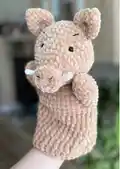
About This Boar Hand Puppet Amigurumi Pattern
This boar hand puppet pattern brings fairy-tale magic to life with its unique design that combines functionality and cuteness. The puppet features a hollow body structure that allows your hand to slip inside comfortably, making it perfect for puppet shows and interactive storytelling. Special techniques like eye indentation and nostril embroidery add realistic charm, while the fangs give this little boar character and personality. The plush yarn creates a soft, huggable texture that children will love.

The pattern includes detailed photo tutorials for advanced techniques like attaching arms to the body and creating indented features. Each step is clearly explained with stitch counts to ensure your puppet turns out perfectly proportioned and professionally finished.
Why You'll Love This Boar Hand Puppet Amigurumi Pattern
I absolutely love this pattern because it combines practical functionality with adorable design! Creating puppets opens up a whole world of imaginative play and storytelling possibilities. I find the eye indentation technique particularly satisfying—it gives the boar such an expressive, lifelike quality. The way the arms integrate into the body is clever and creates natural movement when you're using the puppet. Plus, working with plush yarn is incredibly enjoyable, and seeing the personality emerge as you add the fangs and embroider the details is truly rewarding. This isn't just a toy; it's a character waiting to tell stories!
Switch Things Up
I love experimenting with this pattern to create different woodland characters! Try switching the beige to gray or brown for different boar varieties, or even go wild with fantasy colors like purple or blue for a magical creature puppet.
I've found that adding a little vest or scarf around the puppet's neck creates an instant character costume - perfect for storytelling sessions. You could embroider different facial expressions to create multiple puppet personalities with varied emotions.
For a softer look, I sometimes skip the fangs and add a sweet smile embroidered with pink thread instead. This transforms the wild boar into a friendly farm pig character that's perfect for younger audiences.
I also enjoy playing with ear positions - sewing them at slightly different angles or making one ear flop forward creates so much personality. You could even make the ears larger for a more cartoony effect.
Consider creating a whole puppet family by adjusting the size! Make a baby boar by using thinner yarn and a smaller hook, or create a papa boar by doubling the pattern scale. The puppets can tell family stories together.
I've experimented with adding accessories like a small crochet acorn or leaf that attaches to the puppet's hand - it gives children something interactive to play with during puppet shows.
For educational purposes, I sometimes create different forest animal puppets using this same body base but changing the head details. A fox, bear, or wolf can all start with this functional puppet structure.
You could also add a small pocket on the body's back for storing tiny props or treats during performances. I've sewn on button details or patches to give each puppet unique characteristics.
Try making seasonal versions - add a tiny Santa hat for winter, flower crown for spring, or autumn leaf accessories. The possibilities for customization make each puppet special and uniquely yours!
Common Mistakes & How to Fix Them
✗ Forgetting to stuff the head firmly before closing can result in a floppy, misshapen puppet that won't hold its form properly during use
✗ Placing eyes too close together or at wrong rounds creates an unbalanced facial expression that looks off compared to the intended design
✗ Skipping the BLO stitches in round 4 of the head removes the distinctive snout shaping that gives the boar its characteristic appearance
✗ Not using sc2tog when attaching arms to body creates visible holes at the connection points that compromise the puppet's finished look
✗ Pulling indentation threads too tightly when creating sunken eyes and nostrils can warp the entire head shape and create uneven features