🧢 Beautiful ✨ Detailed πŸ’ Adorable

Alan the Lion Amigurumi Pattern

Alan the Lion Amigurumi Pattern
3.9β˜… Rating
8-10 Hours Time Needed
3.6K Made This
βœ‚οΈ

Intermediate Level

Ideal for those with basic knitting experience, featuring slightly more advanced stitches and techniques to expand your skills.

⏱️

All-Day Adventure

Requires 8-10 hours, ideal for a full day of immersive knitting.

🧸

Cute Companion

An adorable friend to cherish, handcrafted with love to bring comfort and joy for years to come.

About This Alan the Lion Amigurumi Pattern

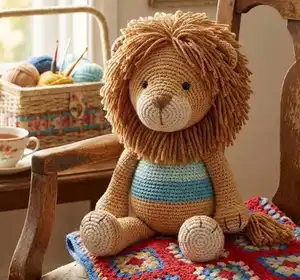
Alan the Lion is a delightful intermediate-level amigurumi project that combines traditional crochet techniques with creative textile artistry. This pattern features color-changing work for his facial markings, a detailed two-tone t-shirt, and an elaborate mane made from cashmilon wool. The finished lion stands at a huggable 30cm tall, making him perfect as a decorative piece or beloved companion for all ages.

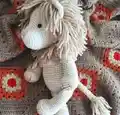
Alan the Lion Amigurumi Pattern crochet pattern - detailed view of completed project

The pattern includes comprehensive instructions for creating Alan's expressive face with safety eyes, embroidered nose and claws, plus a unique haircutting guide to achieve that perfect lion mane look.

Why You'll Love This Alan the Lion Amigurumi Pattern

I absolutely love this pattern because it's like creating a tiny work of art! The process of adding each strand to the mane is meditative and rewarding, and watching Alan's personality emerge as you shape his hair is pure magic. I find the color-changing technique for his face incredibly satisfying, and the final result is a character with so much charm and warmth. The detailed finishing touches, from the embroidered claws to the expressive eyes, make this project feel truly special and professional.

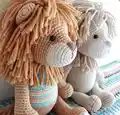
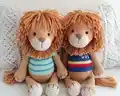
Alan the Lion Amigurumi Pattern step 1 - construction progress Alan the Lion Amigurumi Pattern step 2 - assembly progress Alan the Lion Amigurumi Pattern step 3 - details and accessories Alan the Lion Amigurumi Pattern step 4 - final assembly and finishing

Switch Things Up

I love how versatile Alan's pattern is! While the original design features that gorgeous camel-colored mane and a sweet turquoise t-shirt, you can really make him your own by switching up the colors.

For a more dramatic look, I've tried using a darker chocolate brown for the body with a rich golden mane, which gives Alan a truly regal appearance. Or go playful with a white or cream body and a rainbow-colored mane by mixing different wool shades as you add the hairpieces!

The t-shirt is another fun area to customize. Instead of the two-tone striped design, you could work it in a single bold color like red or navy, or even add tiny embroidered details like a heart or star on the chest.

If you're feeling adventurous, adjust the mane style too! Make it shorter and neater for a groomed lion look, or go wild and fluffy for maximum drama. You could even create a mohawk-style mane running just along the center of the head.

For a feminine touch, I've seen crafters add a little bow or flower accessory near one ear, which transforms Alan into a sweet lioness. The possibilities are truly endless, and each color combination creates a completely unique personality!

Common Mistakes & How to Fix Them

βœ— Not maintaining tight tension throughout can result in visible stuffing showing through stitches - keep your work tight and use a smaller hook than recommended βœ— Rushing the mane application without proper placement leads to uneven coverage and visible gaps - take your time placing each hairpiece methodically following the pattern's sequence βœ— Placing safety eyes incorrectly before stuffing makes repositioning difficult - always pin and check eye placement from multiple angles before securing them permanently βœ— Overstuffing the head and body creates an unnatural shape and distorts features - stuff firmly but not too tightly to maintain the intended proportions βœ— Skipping the color change instructions for the facial markings disrupts Alan's characteristic look - follow the color placement carefully for rounds 7-10 of the head

Alan the Lion Amigurumi Pattern

Create your own majestic companion with this charming Alan the Lion crochet pattern! Standing approximately 30cm tall, this adorable lion features a luxurious woolly mane, expressive embroidered details, and a sweet t-shirt outfit. Perfect for gift-giving or adding a handmade touch to your home, Alan combines classic amigurumi techniques with creative texture work. The pattern includes detailed instructions for crafting his distinctive facial features, posable limbs, and that signature fluffy mane that makes him truly special.

Intermediate 8-10 Hours

Materials Needed for Alan the Lion Amigurumi Pattern

β€” Main Fabric

  • 01
    Semi-thick cotton yarn 8/6 or DK weight in camel color (80g)
  • 02
    Semi-thick cotton yarn 8/6 or DK weight in natural/cream color
  • 03
    Semi-thick cotton yarn 8/6 or DK weight in aquamarine green
  • 04
    Semi-thick cotton yarn 8/6 or DK weight in light turquoise
  • 05
    Brown yarn for embroidering nose and claws
  • 06
    Cashmilon wool 4/7 or acrylic wool in camel color for mane (60g)

β€” Tools Required

  • 01
    Crochet hook size 2.25mm or 2.5mm
  • 02
    Black safety eyes size 8mm or 10mm
  • 03
    Polyester fiberfill stuffing
  • 04
    Sewing needle
  • 05
    Stitch markers
  • 06
    Scissors
  • 07
    Pins
  • 08
    Hair tie (for trimming mane)

Progress Tracker

0% Complete

β€” Head :

Info :

The snout and head are knitted without sewing. Start with the snout in natural color.

Round 1 :

Make 6 sc in a magic ring (6)

Round 2 :

6 inc (12)

Round 3 :

(1 inc, 1 sc) x6 (18)

Round 4 :

(3 inc, 6sc) x2 (24)

Round 5 :

(1 inc, 1 sc) x3, 6sc, (1 inc, 1 sc) x3, 6sc (30)

Round 6 :

(1 inc, 2sc) x3, 6sc, (1 inc, 2sc) x3, 6sc (36)

Round 7 :

12sc in natural, 6sc in camel, 18sc in natural (36)

Round 8 :

11sc in natural, 8sc in camel, 17sc in natural (36)

Round 9 :

10sc in natural, 10sc in camel, 16sc in natural (36)

Round 10 :

9sc in natural, 12sc in camel, 15sc in natural (36)

Info :

From now on continue in camel color. Cut the natural yarn.

Round 11 :

10sc, (1 inc, 1sc) x6, 14sc (42)

Round 12 :

42sc (42)

Round 13 :

10sc, (1 inc, 2sc) x6, 14sc (48)

Round 14 :

10sc, (1 inc, 3sc) x6, 14sc (54)

Round 15 :

(1 inc, 8sc) x6 (60)

Round 16-25 :

60sc (60) - 10 rounds

Info :

Place the eyes on the 2nd round counting from the last round in natural color and with 9 or 10 stitches of separation.

Round 26 :

(1 dec, 8sc) x6 (54)

Round 27 :

54sc (54)

Round 28 :

(1 dec, 7sc) x6 (48)

Round 29 :

48sc (48)

Round 30 :

(1 dec, 6sc) x6 (42)

Info :

Fill with polyfiber.

Round 31 :

(1 dec, 5sc) x6 (36)

Round 32 :

(1 dec, 4sc) x6 (30)

Round 33 :

(1 dec, 3sc) x6 (24)

Round 34 :

(1 dec, 2sc) x6 (18)

Round 35 :

(1 dec, 1sc) x6 (12)

Info :

Finish filling the snout and the head tightly before closing. The head must be in good shape. Close with 1 sl sc, hide the thread and cut.

Embroider the nose :

Start from the 2nd round from the center of the magic ring and take in the central 6sc. Cover the triangle completely with various stitches, make one or two horizontal stitches and finally embroider the vertical line.

β€” Ears (Make 2) :

Round 1 :

6 sc in a magic ring (6)

Round 2 :

6 inc (12)

Round 3 :

(1 inc, 1sc) x6 (18)

Round 4 :

(1 inc, 2sc) x6 (24)

Round 5 :

(1 inc, 3sc) x6 (30)

Round 6 :

(1 inc, 4sc) x6 (36)

Round 7 :

(1 dec, 7sc) x2 (16)

Info :

Close with 1 sl st and leave a thread to sew. Ears don't get filled. Sew the ears onto the head approximately on round 11, counting from the eyes location and with 12 stitches of separation.

β€” Body :

Info :

Start with the camel color.

Round 1 :

Make 6 sc in a magic ring (6)

Round 2 :

6 inc (12)

Round 3 :

(1 inc, 1sc) x6 (18)

Round 4 :

(1 inc, 2sc) x6 (24)

Round 5 :

(1 inc, 3sc) x6 (30)

Round 6 :

(1 inc, 4sc) x6 (36)

Round 7 :

(1 inc, 5sc) x6 (42)

Round 8 :

(1 inc, 6sc) x6 (48)

Round 9 :

(1 inc, 7sc) x6 (54)

Round 10-14 :

54sc (54) - 5 rounds

Info :

Change to t-shirt color (light turquoise)

Round 15-19 :

54sc (54) - 5 rounds

Round 20 :

(1 dec, 7sc) x6 (48)

Round 21-22 :

48sc (48) - 2 rounds

Info :

Change to aquamarine green

Round 23 :

(1 dec, 6sc) x6 (42)

Round 24-25 :

42sc (42) - 2 rounds

Round 26 :

(1 dec, 5sc) x6 (36)

Round 27-28 :

36sc (36) - 2 rounds

Round 29 :

(1 dec, 4sc) x6 (30)

Round 30-31 :

30sc (30) - 2 rounds

Round 32 :

(1 dec, 3sc) x6 (24)

Round 33-34 :

24sc (24) - 2 rounds

Info :

Close with 1 sl st and leave a long thread to sew. Fill the body with polyfiber.

β€” Legs (Make 2) :

Info :

Start with natural color.

Round 1 :

Make 6sc in a magic ring (6)

Round 2 :

6 inc (12)

Round 3 :

(1 inc, 1sc) x6 (18)

Round 4 :

(1 inc, 2sc) x6 (24)

Round 5 :

(1 inc, 3sc) x6 (30)

Info :

Change to camel color

Round 6-9 :

30sc (30) - 4 rounds

Round 10 :

9sc, 6 dec, 9sc (24)

Round 11 :

8sc, 4 dec, 8sc (20)

Round 12 :

8sc, 2 dec, 8sc (18)

Round 13-14 :

18sc (18) - 2 rounds

Round 15 :

(1 dec, 7sc) x2 (16)

Round 16-17 :

16sc (16) - 2 rounds

Round 18 :

1 dec, 14sc (15)

Info :

Fill the base of the leg with polyfiber.

Round 19-24 :

15sc (15) - 6 rounds

Round 25 :

(1 dec, 3sc) x3 (12)

Info :

Continue filling the leg up to round 23 approximately. These last 2 rounds remain unfilled.

Round 26 :

Close by flattening both sides the knit and unite every pair of stitches with 1 sc. You should have 6sc.

Info :

Cut the yarn keeping a long thread to sew. Knit 2 or 3sc extras for the left leg when finished round 25 and 7 or 8sc for the right leg before closing. This is useful for the changing of colors to be hidden and not seen in front.

β€” Arms (Make 2) :

Info :

Start with natural color.

Round 1 :

Make 6sc in a magic ring (6)

Round 2 :

6 inc (12)

Round 3 :

(1 inc, 1sc) x6 (18)

Round 4 :

(1 inc, 2sc) x6 (24)

Info :

Change to camel color.

Round 5-8 :

24sc (24) - 4 rounds

Round 9 :

6sc, 6 dec, 6sc (18)

Round 10 :

6sc, 3 dec, 6sc (15)

Round 11 :

15sc (15)

Round 12 :

(1 dec, 3sc) x3 (12)

Round 13-21 :

12sc (12) - 9 rounds

Info :

Change to t-shirt color (light turquoise)

Round 22-23 :

12sc (12) - 2 rounds

Info :

Change to aquamarine green color

Round 24-25 :

12sc (12) - 2 rounds

Round 26 :

(1dec, 4sc) x2 (10)

Round 27 :

Close by flattening both sides the knit and unite every pair of stitches with 1 sc. You should have 5 sc.

Info :

Fill the base with polyfiber. Fill the arm with a bit of polyfiber. The last 3 rounds remain unfilled. Make sure that the changing of color from natural to camel stays in line. Knit 1 sc extra for the left arm and 2 or 3 sc extras for the right one before closing. Cut the yarn leaving a long thread to sew.

β€” Tail :

Info :

Crochet in camel color.

Round 1 :

6 sc in a magic ring (6)

Round 2 :

6 inc (12)

Round 3-4 :

12sc (12) - 2 rounds

Round 5 :

(1 dec, 2sc) x3 (9)

Round 6-19 :

9sc (9) - 14 rounds

Round 20 :

Flatten and knit 4 sc taking together the opposites.

Info :

Fill the base of the tail and then just a bit until half. It must be light. Do not put any polyfiber at the superior part.

Tail Hair :

Cut wool threads of approximately 18 cm long. With the help of the crochet hook pass one through one stitch starting at round 5 of the tail. Make a knot of 1 round only and adjust to ensure. Repeat this all the way through the round. Continue adding threads downwards covering all spaces. Finally cut as long as you like. You may model the hair as you wish.

β€” Mane :

Info :

The mane will be the last step we will do, once we have finished sewing all parts. We will use cashmilon wool for the mane in camel color.

Preparation :

Cut strips approximately 16 or 17 cm long. Use the crochet hook to put the hairpieces.

First Row :

Start placing the hairpiece at the inner border of the left ear, just on the round where the ears were sewed. It's very important not to keep holes or any visible stitch. Cover all spaces and reach the back of the neck, adjusting every hairpiece. Now continue where you started going to the other side and complete the round.

Second Round :

Start on the lower round at the center and do not leave any free space. Then repeat the same on the other side and complete the round.

Face Delimitation :

Start approximately 6 or 7 stitches under the eyes line. Continue forming up a diagonal going down, trying to distribute the hairpieces. Repeat the same on the other side. Cover the triangle formed after doing the head's delimitation. You may add some hairpieces at the inferior part of the beard.

Between Ears :

Put another line of hairpieces between the ears. Add a few more hairpieces at the little space left between the ears in order to cover any visible holes.

Complete Head :

You may continue placing the hairpieces in circular way, following the rounds direction or divide the head in two with a hairpiece line and complete one of the halves. Then repeat the same on the other half. At this point there's no need to put hairpieces for every stitch, because since we're using wool the mane will look voluminous. Put them stitch by stitch behind the ears, up to the back of the head.

Haircut Suggestions :

Split and tie all the hairpieces behind the ears with the help of a hair tie and start cutting the front, the sides and the beard. Cut the front area up to the eyes or just above them. Then release the rest and start shaping little by little. It is preferable to cut by little and level the front with the back length. Repeat this a couple of times until you achieve a balanced mane. Use a sharp pair of scissors to make easier the task.

Assembly Instructions

  • Sew the head onto the body with the body's color changing remaining on the back. Use pins to set the head and make sure the eyes are placed in the center and at the front. The head is centered and resting over the body approximately 5 rounds from the end of the last round in natural color from the snout.
  • Sew the legs 3 rounds beneath the first round of the t-shirt. Use the pins in order to center them on both sides of the body and placed at the same distance. Make a couple stitches at the inferior part for more security.
  • Place the arms underneath the union of the head and the body. As same as with the legs, make a couple stitches under the arm for security.
  • Sew the tail one round under the t-shirt color change.
  • Embroider Alan's claws on all legs and arms. Every leg and arm have 3 claws. They must be centered. Place each one with 3 stitches of separation taking over 3 rounds in total.
  • Complete the mane following the detailed instructions, starting at the inner border of the ears and working systematically around the head.
  • Finish by trimming the mane to your desired length and shape, cutting the front area up to or just above the eyes, and shaping the rest gradually.

Important Notes

  • πŸ’‘Always knit very tightly and use a hook one or two sizes lower than the recommendation of the yarn maker to prevent stuffing from showing through
  • πŸ’‘Work in spiral rounds always, and do the change of color in the last step of the last stitch of the round
  • πŸ’‘Use stitch markers to keep track of your rounds, especially during color changes in the head and body
  • πŸ’‘When changing colors for the facial markings (rounds 7-10), don't cut the yarn - let it loose to prevent tension and adjust threads when doing the color change
  • πŸ’‘Pin all parts in place before sewing to ensure correct positioning and that the eyes are centered at the front
  • πŸ’‘The mane takes time and patience - cut hairpieces gradually and retouch the length as necessary rather than cutting too much at once

This enchanting Alan the Lion pattern brings together the joy of amigurumi with the artistry of mane-making! The detailed instructions guide you through creating a personality-filled companion with his expressive face, stylish two-tone t-shirt, and that magnificent woolly mane. The pattern's clear step-by-step approach makes even the elaborate mane achievable, resulting in a truly professional-looking finished piece. Alan is perfect for gifting to loved ones or as a statement handmade decoration for your home. 🦁🧢✨

You ask,

we answer.

FAQs

Can I use regular yarn instead of cashmilon wool for the mane?

Yes! The pattern suggests you can use regular yarn if you prefer. In this case, you could use a thicker yarn of 8/12 in order to accomplish a mane with more volume. The wool gives a specific fluffy effect, but yarn works well too.

What size will Alan be if I use different yarn or hook size?

Alan is approximately 30cm tall when using the suggested yarn (8/6 or DK weight) and hook size (2.25mm or 2.5mm). You can vary the size of the doll by using another yarn thickness or hook size - thicker yarn and larger hooks will make him bigger, while thinner yarn and smaller hooks will make him smaller.

Do I need to use safety eyes or can I embroider them?

You can choose either option! The pattern calls for black safety eyes size 8mm or 10mm, but if you don't like safety eyes, you may embroider them with black yarn instead. This is especially recommended if making Alan for very young children.

How do I prevent the color changes from showing on the front of Alan?

The pattern includes helpful tips for this! For the legs, knit 2-3 extra sc for the left leg and 7-8 extra sc for the right leg before closing. For arms, knit 1 extra sc for the left arm and 2-3 extra sc for the right one. This keeps the color changes hidden on the back or sides.

Is the mane difficult to make?

The mane is not difficult, but it does take time and patience. The most laborious part is cutting the hairpieces, which should be done at the very end once you've finished placing all pieces. The pattern recommends cutting little by little and retouching the length as necessary, which helps achieve a neat and nicely shaped mane.

Should I stuff all parts of Alan?

No, not all parts get stuffed equally. The head and body should be stuffed firmly to maintain good shape. The legs get stuffed up to about round 23, with the last 2 rounds remaining unfilled. Arms get a bit of stuffing at the base with the last 3 rounds unfilled. The tail gets light stuffing at the base and halfway up, with no stuffing in the superior part. Ears don't get stuffed at all.