๐Ÿงถ Beautiful โœจ Detailed ๐Ÿ’ Adorable

Adorable Snail Lizzie Amigurumi Pattern

Adorable Snail Lizzie Amigurumi Pattern
4.5โ˜… Rating
6-8 Hours Time Needed
3.7K Made This
โœ‚๏ธ

Advanced Level

Designed for experienced knitters, these patterns involve intricate designs and complex techniques to challenge and inspire.

โฑ๏ธ

All-Day Adventure

Requires 8-10 hours, ideal for a full day of immersive knitting.

๐ŸŒ

Charming Critter

Delightful animal designs with sweet details that capture the essence of your favorite woodland and farmyard friends.

About This Adorable Snail Lizzie Amigurumi Pattern

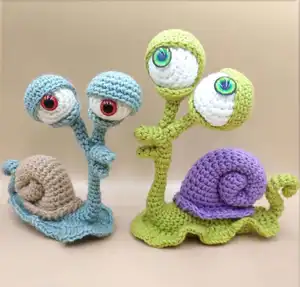
This enchanting snail pattern combines traditional amigurumi techniques with innovative wire armature construction to create a truly unique piece. The pattern features detailed instructions for creating realistic eyes with upper and lower eyelids, a textured shell using puff stitches, and a graceful mantle that flows around the body. The wire frame system allows you to pose your snail's neck and antennae, bringing Lizzie to life with personality and charm.

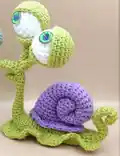
Adorable Snail Lizzie Amigurumi Pattern crochet pattern - detailed view of completed project

Working with craft wire and textile band-aids creates a sturdy internal structure while maintaining the soft, cuddly exterior. The combination of light green and purple yarn creates beautiful color contrast that makes this snail stand out as a decorative masterpiece.

Why You'll Love This Adorable Snail Lizzie Amigurumi Pattern

I absolutely love how this pattern challenges you to work with wire armature systems, which opens up a whole new world of poseable amigurumi creation! The detailed eyelid construction is so satisfying to complete, and watching the snail come together with its textured shell and flowing mantle is incredibly rewarding. I'm amazed by how the wire frame technique allows the finished piece to hold different poses, making each snail truly unique. This pattern taught me advanced assembly skills that I've used in countless other projects since.

Adorable Snail Lizzie Amigurumi Pattern step 1 - construction progress Adorable Snail Lizzie Amigurumi Pattern step 2 - assembly progress Adorable Snail Lizzie Amigurumi Pattern step 3 - details and accessories Adorable Snail Lizzie Amigurumi Pattern step 4 - final assembly and finishing

Switch Things Up

I love experimenting with color variations for this snail pattern! Instead of the light green and purple combination, try using pastel pink for the body with a lavender or mint green shell for a soft, dreamy look. You could also go bold with bright orange body and teal shell for a more vibrant, tropical feel.

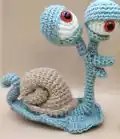
For a more natural garden snail appearance, I've used various shades of brown and tan for the body with a cream-colored shell decorated with brown spiral details using surface crochet. You could even try an ombre effect on the shell by gradually changing yarn colors as you work through the rows.

I've also made seasonal versions - a winter snail with white body and icy blue shell with silver thread worked in, and an autumn version with rust-colored body and a shell in warm golden yellows and oranges. The possibilities are truly endless!

If you want to make your snail extra special, consider adding small embroidered details like spots or stripes on the shell using duplicate stitch or surface crochet. I've even added tiny crocheted flowers attached to the shell for a whimsical garden theme.

For a completely different look, try using fuzzy or chenille yarn for the body to create a softer, fluffier texture that contrasts beautifully with smooth cotton yarn used for the shell. Just make sure your hook size creates tight enough stitches to hide the wire frame inside.

Common Mistakes & How to Fix Them

โœ— Not using tight enough stitches which creates visible gaps in the fabric allowing stuffing to show through the work โœ— Forgetting to stuff the body continuously as you crochet which makes it difficult to achieve proper shaping later on โœ— Wrapping the wire frame too loosely with band-aid tape causing it to shift inside the body during assembly work โœ— Not marking the beginning of rounds carefully especially during the shell construction leading to misaligned spiral pattern โœ— Inserting the wire frame for eyes at wrong position causing eyelids to sit incorrectly and eyes to appear misaligned

Adorable Snail Lizzie Amigurumi Pattern

Create your own charming snail companion with this delightful amigurumi pattern! Lizzie the Snail features a beautifully textured purple shell with puff stitches, expressive glass eyes with crocheted eyelids, and an adorable green body complete with a flowing mantle. This unique pattern includes a wire frame system that gives your snail realistic posability and structure. Perfect for intermediate crocheters looking to expand their skills with advanced techniques like wire armature construction and detailed assembly work. The finished snail measures approximately 13.5 cm by 11.5 cm and makes a wonderful decorative piece or special gift.

Advanced 6-8 Hours

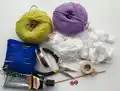
Materials Needed for Adorable Snail Lizzie Amigurumi Pattern

โ€” Main Fabric

  • 01
    YarnArt Jeans yarn (160m/174yds per 50g) in light green color 29 - 14g needed
  • 02
    YarnArt Jeans yarn (160m/174yds per 50g) in purple color 72 - 7g needed
  • 03
    YarnArt Jeans yarn (160m/174yds per 50g) in white color 62 - 3g needed
  • 04
    55% cotton and 45% polyacrylic blend yarn suitable for tight amigurumi work

โ€” Tools Required

  • 01
    Steel crochet hook size 1.75mm (US #4)
  • 02
    Fiberfill stuffing material
  • 03
    Wooden skewer with broken tip for stuffing
  • 04
    Toothpick with broken tip for stuffing
  • 05
    Tapestry needle (gypsy needle)
  • 06
    Scissors
  • 07
    2 glass eyes 14mm (0.55 inch)
  • 08
    Moment Crystal glue
  • 09
    Craft wire aluminum or copper 0.75-1mm thick - 115cm (45.28 inch) total
  • 10
    Round pliers
  • 11
    Wire cutters
  • 12
    Textile band-aid

Progress Tracker

0% Complete

โ€” Shell :

Info :

We knit in a spiral

Row 1 :

6 sc in MC

Row 2 :

6 inc = 12

Row 3-12 :

12 sc

Row 13 :

inc, 11 sc = 13

Row 14-23 :

13 sc

Row 24 :

inc, 12 sc = 14

Row 25-29 :

14 sc

Row 30 :

3 sc in 1, 13 sc = 16

Row 31 :

sc, 3 sc in 1, 14 sc = 18

Row 32 :

2 sc, 3 sc in 1, 15 sc = 20

Row 33 :

3 sc, 3 sc in 1, 16 sc = 22

Row 34 :

4 sc, 3 sc in 1, 17 sc = 24

Row 35 :

5 ps, 3 ps in 1, 18 ps = 26, fasten off, hide the tip of the thread

Info :

Fill the shell with fiberfill lightly

Info :

Make a tie from the narrow part of the shell and fix it at the first round

Info :

Fold the second round and stretch the ends of the pulling thread through the tip of the shell, make a knot on the inside of the shell, bend the side

โ€” Eye :

Info :

Make 2 pieces, we knit in a spiral with white yarn

Row 1 :

6 sc in MC

Row 2 :

6 inc = 12

Row 3 :

(sc, inc) * 6 = 18

Row 4 :

(2 sc, inc) * 6 = 24

Row 5-7 :

24 sc

Row 8 :

(2 sc, dec) * 6 = 18

Row 9 :

(sc, dec) * 6 = 12, fill with fiberfill

Row 10 :

6 dec = 6, pull the hole by the front loops, hide the tip of the thread inside the ball

โ€” Upper Eyelid :

Info :

Make 2 pieces, we knit in a spiral with light green yarn

Row 1 :

6 sc in MC

Row 2 :

6 inc = 12

Row 3 :

(sc, inc) * 6 = 18

Row 4 :

(2 sc, inc) * 6 = 24

Row 5-8 :

24 sc, fasten off, hide the tip of the thread

โ€” Lower Eyelid :

Info :

Make 2 pieces, we knit in a spiral with light green yarn, immediately leave the tip for sewing 20 cm (8 inch)

Row 1 :

5 sc in MC, we do not tighten the ring tightly - there should be a hole for the frame

Row 2-6 :

5 sc

Row 7 :

7 inc = 12 (the marker of the beginning of the row will shift by 2 loops)

Row 8 :

(sc, inc) * 6 = 18, sl st, cut the yarn leaving a tail for sewing

Info :

Fold the upper and lower eyelid and combine 8 sc in pairs

Info :

Pick up the eye in the 7th row for 2 columns on a long wire, align the ends of the wire and twist it under the eye, bend the ends of the wire

Info :

Stretch the ends of the wire through the tube of the lower eyelid, thereby inserting the eye into the socket

Info :

The eye does not need to be sewn in any way, it is remarkably fixed between the eyelids

โ€” Upper Jaw :

Info :

We knit in a spiral with light green yarn

Row 1 :

6 sc in MC

Row 2 :

6 sc

Row 3 :

inc, 5 sc = 7

Row 4 :

7 sc

Row 5 :

inc, 6 sc = 8

Row 6 :

8 sc

Row 7 :

3 sl st, sc, 4 hdc = 8, finish, hide the tip of the thread

Info :

Fold the wire with a loop, wrap it with a textile band-aid, insert it into the upper jaw, to add volume fill it slightly

โ€” Lower Jaw :

Info :

We knit in a spiral with light green yarn

Row 1 :

4 sc in MC

Row 2 :

(inc, sc) * 2 = 6

Row 3 :

6 sc, sl st, do not fill

Row 4 :

ch, rotate, 3 join sc with upper jaw on sl st, when knit on upper jaw: sc, 3 hdc, sc, on lower jaw: 3 sl st = 8

Info :

Insert the eye wires at the base of the first and last half double crochet of the 7th row of the upper jaw

Info :

Stretch the frame into the neck, wrap the wires with a textile band-aid

โ€” Body :

Info :

We continue to knit from the united jaws in a spiral around the frame

Row 1-2 :

8 sc

Row 3 :

dec, 6 sc = 7

Row 4 :

dec, 5 sc = 6

Row 5-7 :

6 sc

Row 8 :

inc, 5 sc = 7

Row 9 :

7 sc

Row 10 :

inc, 6 sc = 8

Row 11 :

8 sc

Row 12 :

inc, 7 sc = 9

Row 13 :

inc, 8 sc = 10

Row 14 :

(inc, 4 sc) * 2 = 12

Row 15 :

(3 sc, inc) * 3 = 15

Row 16 :

(4 sc, inc) * 3 = 18

Row 17-19 :

18 sc

Row 20 :

dec, 16 sc = 17

Row 21-23 :

17 sc

Row 24 :

dec, 15 sc = 16

Row 25-27 :

16 sc

Row 28 :

dec, 14 sc = 15

Row 29 :

15 sc

Row 30 :

dec, 13 sc = 14

Row 31 :

dec, 12 sc = 13

Row 32 :

dec, 11 sc = 12, fill the body with fiberfill lightly

Row 33 :

dec, 10 sc = 11

Row 34 :

dec, 9 sc = 10

Row 35 :

dec, 8 sc = 9

Row 36 :

dec, 7 sc = 8

Row 37 :

dec, 6 sc = 7

Row 38-51 :

7 sc, cut off the excess tip of the frame, complete, pull the hole by the front loops, hide the tip

Info :

Bend the body of the snail in the place of thickening with the letter L

Info :

Sew the shell to the body with invisible stitches, picking up the border between 34 and 35 rows, the stitch length is 1 column or 1 row, bend 35 row up

โ€” Mantle :

Info :

Make 47 loops on the body, mark 3 columns on the chest and count another 22 rows on the sides of them

Info :

For each row and for each single crochet, make 1 loop, the mantle line should be in 2 loops below the shell

Info :

The line does not have to be flat, the curves of the line will create the illusion of mobility of the mantle

Row 1 :

rotate, 10 sc, 7 hdc, 5 dc, 3 inc dc, 5 dc, 7 hdc, 10 sc = 50

Row 2 :

sl st on the body, rotate, skip 1, 10 inc, 7 inc hdc, 16 inc dc, 7 inc hdc, 10 inc, sl st, fasten off, hide the tip of the thread

โ€” Assembly and Design :

Step 1 :

Press a recess on the abdomen with your finger and sew it around the perimeter so that the snail stands more stable

Step 2 :

Glue the glass eyes into the white crocheted eye pieces

Assembly Instructions

  • Press a small recess into the bottom of the snail's body with your finger and sew around the perimeter to create a stable base that allows the snail to stand upright without tipping.
  • Insert the wire frame through the eye pieces at the 7th row, picking up 2 columns, then align and twist the wire ends together under the eye piece securely.
  • Thread the twisted wire ends through the tube of the lower eyelid to insert the eye into its socket, the eye will hold firmly between the upper and lower eyelids without sewing.
  • Attach the completed wire-framed eyes to the upper jaw by inserting the wires at the base of the first and last half double crochet of row 7, then stretch the frame down into the neck area.
  • Join the upper and lower jaw pieces together in row 4 of the lower jaw by working 3 single crochets that connect to the slip stitches of the upper jaw.
  • Bend the completed snail body at the thickening point into an L-shape, then sew the shell to the body using invisible stitches along the border between rows 34 and 35.
  • Create the mantle by making 47 loops around the body starting from 3 marked columns on the chest, working one loop for each row and single crochet, ensuring the line sits 2 loops below the shell.
  • Glue the 14mm glass eyes into the center of the white crocheted eye pieces using Moment Crystal glue for a secure and professional finish.

Important Notes

  • ๐Ÿ’กThe toy must be crocheted with very tight stitches to avoid small holes when the crochet fabric is stretched, use a smaller hook size if tiny gaps appear in your work.
  • ๐Ÿ’กStuff the body continuously as you crochet rather than waiting until the end, this ensures proper shaping and makes it easier to achieve the correct proportions throughout the project.
  • ๐Ÿ’กWrap all wire pieces thoroughly with textile band-aid before inserting them into the crocheted pieces to prevent the wire from poking through the fabric or causing damage over time.
  • ๐Ÿ’กUse stitch markers consistently to track the beginning of each round especially during the shell construction where the spiral pattern can become confusing without clear marking.
  • ๐Ÿ’กIf making this snail for a child under three years old, replace the glass eyes with safety eyes and ensure all wire is securely wrapped and hidden inside the body.
  • ๐Ÿ’กDon't use the stuffing material too sparingly as the snail needs firm stuffing to maintain its shape and allow the wire frame to function properly for posing.
  • ๐Ÿ’กRead the entire pattern carefully before beginning to understand the wire frame assembly process as this is crucial for the structural integrity of the finished snail.

This enchanting Snail Lizzie pattern combines traditional amigurumi techniques with innovative wire armature construction to create a truly poseable companion! The detailed instructions guide you through creating realistic eyes with layered eyelids, a beautifully textured shell using puff stitches, and a graceful flowing mantle. The wire frame system is a game-changer, allowing your snail to hold different poses and express personality in ways standard amigurumi simply cannot achieve. Perfect for experienced crocheters ready to level up their skills with advanced construction techniques! ๐ŸŒโœจ Happy crocheting!

You ask,

we answer.

FAQs

What makes this snail pattern different from regular amigurumi patterns?

This pattern incorporates a wire armature system throughout the body and eyes, allowing the finished snail to be poseable. The wire frame gives structure to the neck and eye stalks so you can adjust their position and create different expressions and poses.

What type of wire should I use for the frame and where can I find it?

You need craft wire that is either aluminum or copper, with a thickness between 0.75-1mm (0.03-0.039 inch). You'll need 115cm (45.28 inches) total. This type of wire is available at most craft stores in the jewelry-making or floral arrangement sections.

Why do I need textile band-aid and can I substitute it with something else?

Textile band-aid is used to wrap the wire frame before inserting it into the crocheted pieces. This prevents the wire from poking through the fabric and provides a softer surface. You can substitute it with medical tape, floral tape, or even strips of fabric wrapped tightly around the wire.

The pattern mentions puff stitches for the shell, are these difficult to learn?

Puff stitches (abbreviated as ps in this pattern) are made with 2 half double crochets worked together. While they require a bit more yarn manipulation than regular stitches, they're not particularly difficult and create beautiful texture. The pattern uses them only in row 35 of the shell for the decorative edge.

Can I make this snail without the glass eyes and use safety eyes instead?

Yes, you can use safety eyes, but you'll need to modify the construction slightly. Install safety eyes directly into the white crocheted eye pieces before closing them up. You'll still create the eyelids and attach them around the safety eyes, but you won't need the wire threading system described for the glass eyes.

How do I know where to attach the shell to the body?

The pattern specifies to sew the shell to the body along the border between rows 34 and 35 of the body. You'll bend the body into an L-shape at the thickening point, and the shell sits at this bend. Use invisible stitches with a stitch length of 1 column or 1 row for a seamless attachment.

What does it mean to work the mantle in loops on the body?

For the mantle, you create foundation loops by inserting your hook into existing stitches on the body and pulling up loops without completing the stitches. You make 47 loops total around the body, then work the mantle rows directly into these loops to create the flowing edge effect around the shell.

Is this pattern suitable for beginners?

This is an advanced pattern due to the wire frame construction, detailed assembly with multiple small pieces, and techniques like joining pieces while crocheting. It's best suited for crocheters who have experience with basic amigurumi and are ready to try more complex construction methods.