🧢 Beautiful ✨ Detailed πŸ’ Adorable

Adorable Pumpkin Amigurumi Pattern

Adorable Pumpkin Amigurumi Pattern
4.0β˜… Rating
3-4 Hours Time Needed
3.4K Made This
βœ‚οΈ

Intermediate Level

Ideal for those with basic knitting experience, featuring slightly more advanced stitches and techniques to expand your skills.

⏱️

Bite-Sized Project

Complete in under 2 hoursβ€”quick, fun, and perfect for a little creative escape.

πŸŽƒ

Holiday Cheer

Festive fun for the season, bringing handmade magic to celebrations and creating new family traditions.

About This Adorable Pumpkin Amigurumi Pattern

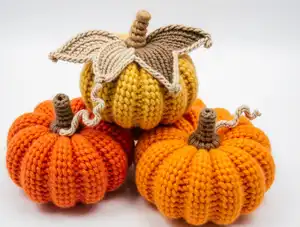
Adorable Pumpkin Amigurumi Pattern crochet pattern - detailed view of completed project

Standing at 12 cm tall when made with recommended materials, this pumpkin makes an ideal size for tabletop displays, seasonal centerpieces, or thoughtful handmade gifts. The combination of orange yarn for the body and brown accents creates a warm autumnal palette that captures the essence of harvest season.

Why You'll Love This Adorable Pumpkin Amigurumi Pattern

I absolutely love how this pattern teaches you professional sculpting techniques that elevate your amigurumi from simple to stunning. The moment you complete the sculpting and watch your crocheted ball transform into a realistic pumpkin shape is pure magic and incredibly satisfying. I'm especially fond of the creative details like the curled moustaches that add so much character and whimsy to the finished piece. The pattern strikes that perfect balance between being detailed enough to create something impressive yet manageable enough to complete in an afternoon. Every time I make one of these pumpkins, I'm amazed at how the simple technique of working in back loops creates such beautiful texture, and the combination of techniques keeps the project interesting from start to finish.

Adorable Pumpkin Amigurumi Pattern step 1 - construction progress Adorable Pumpkin Amigurumi Pattern step 2 - assembly progress Adorable Pumpkin Amigurumi Pattern step 3 - details and accessories Adorable Pumpkin Amigurumi Pattern step 4 - final assembly and finishing

Switch Things Up

I absolutely love experimenting with different yarn textures and colors when making this pumpkin pattern. While the pattern calls for orange, I've created stunning variations using burnt orange, golden yellow, or even white yarn to make elegant 'ghost pumpkins' that look incredibly sophisticated.

One of my favorite modifications is adding facial features to create jack-o'-lantern versions. I use black felt or embroidery thread to create different expressions from spooky to silly, and each one develops its own unique personality. Sometimes I'll add safety eyes before stuffing for an extra cute factor.

I also enjoy playing with the size by adjusting my hook and yarn weight. Using chunky yarn creates wonderfully huggable large pumpkins perfect as floor decorations, while thread weight yarn produces tiny miniature pumpkins that make adorable keychains or garland decorations.

For the moustaches, I sometimes skip them entirely and instead create multiple small tendrils or even replace them with raffia for a more rustic farmhouse look. You can also experiment with the leaf by making multiple smaller leaves or adding embroidered vein details with darker thread.

I love arranging groups of pumpkins in different sizes together to create a charming pumpkin patch display, mixing colors and sizes for visual interest. Adding cinnamon sticks as alternative stems or wrapping the base of the tail with twine adds rustic texture that enhances the autumn aesthetic beautifully.

Common Mistakes & How to Fix Them

βœ— Forgetting to work in back loops only for the pumpkin body which creates the essential ribbed texture that makes sculpting easier and more defined. βœ— Not leaving a long enough tail when finishing off the pumpkin making it difficult to properly secure the sculpting threads and achieve symmetrical grooves. βœ— Over-stuffing the pumpkin too firmly which prevents proper shaping during the sculpting process and creates an unnaturally rigid appearance instead of natural curves. βœ— Skipping the PVA glue solution step for the moustaches resulting in limp tendrils that won't hold their charming curled shape and look flat. βœ— Rushing through the sculpting process without checking symmetry between sections leading to a lopsided pumpkin that doesn't have evenly distributed grooves around the body.

Adorable Pumpkin Amigurumi Pattern

Create your own charming crochet pumpkin perfect for Halloween or autumn decor with this detailed amigurumi pattern. This delightful 12 cm pumpkin features realistic sculpting techniques that transform a simple crocheted ball into an authentic-looking gourd complete with curly moustaches, a textured tail, and an elegant leaf. Whether you're decorating for fall festivities or crafting handmade gifts, this pumpkin brings seasonal warmth and handcrafted charm to any space with its intricate details and whimsical personality.

Intermediate 3-4 Hours

Materials Needed for Adorable Pumpkin Amigurumi Pattern

β€” Main Fabric

  • 01
    GAZZAL BABY COTTON yarn 50g/165m in orange color for the pumpkin body
  • 02
    ALIZE FOREVER yarn 50g/300m in brown color for leaves (should be twice thinner than pumpkin yarn)

β€” Tools Required

  • 01
    Crochet hook matching your chosen yarn weight
  • 02
    Yarn needle for sewing and sculpting
  • 03
    Polyester fiberfill or stuffing of your choice
  • 04
    PVA glue for stiffening moustaches
  • 05
    Sewing thread in brown color
  • 06
    Scissors
  • 07
    Pencil or similar round object for wrapping moustaches

Progress Tracker

0% Complete

β€” Pumpkin :

Info :

Crochet in spiral rounds, work in back loops only

Round 1 :

8 sc in a magic ring (8)

Round 2 :

inc x 8 (16)

Round 3 :

(1 sc, inc) x 8 (24)

Round 4 :

(2 sc, inc) x 8 (32)

Round 5 :

(3 sc, inc) x 8 (40)

Round 6 :

(4 sc, inc) x 8 (48)

Round 7 :

(5 sc, inc) x 8 (56)

Round 8 :

(6 sc, inc) x 8 (64)

Round 9 :

(7 sc, inc) x 8 (72)

Round 10 :

72 sc (72)

Round 11 :

(8 sc, inc) x 8 (80)

Round 12-13 :

80 sc (80)

Round 14 :

(9 sc, inc) x 8 (88)

Round 15-25 :

88 sc (88) - 11 rounds total

Round 26 :

(dec, 9 sc) x 8 (80)

Round 27-28 :

80 sc (80)

Round 29 :

(dec, 8 sc) x 8 (72)

Round 30 :

72 sc (72)

Round 31 :

(dec, 7 sc) x 8 (64)

Round 32 :

(dec, 6 sc) x 8 (56)

Round 33 :

(dec, 5 sc) x 8 (48)

Round 34 :

(dec, 4 sc) x 8 (40)

Round 35 :

(dec, 3 sc) x 8 (32)

Info :

Stuff the part well, but not firmly

Round 36 :

(dec, 2 sc) x 8 (24)

Round 37 :

(dec, 1 sc) x 8 (16)

Round 38 :

dec x 8 (8)

Info :

FO, cut the yarn, leave a long tail

β€” Sculpting :

Step 1 :

Use a yarn needle and the finishing tail. Insert your needle inside the ball through the finishing hole. Pull the needle out through the magic ring

Step 2 :

Insert the needle in the stitch close to the magic ring and pull it out through the stitch close to the finishing hole. Tighten the yarn slightly, repeat that process 1-2 times, fasten the sculpting yarn thread

Info :

Make 8 sculptings around the ball in the same way, but do the 2nd step along the surface of the ball, passing the needle under the front loops of the rounds. Don't try to get absolutely symmetrical part, so that your pumpkin will look as real one

β€” Moustache (Make 2 pieces) :

Info :

Make 2 pieces that have different lengths

Step 1 :

Make a chain of 7 cm length (you can resize the chain fitting to your pumpkin size)

Step 2 :

Crochet sc-row along the chain

Info :

Moisten the moustaches with water solution of PVA glue (in proportion 1:1). Wrap the mustaches on a pencil (for example) and let them dry completely

β€” Tail :

Round 1 :

8 sc in a magic ring (8)

Round 2-5 :

8 sc (8) - 4 rounds total

Round 6 :

3 sl st, 5 sc (8)

Round 7 :

8 sc (8)

Round 8 :

3 sl st, 5 sc (8)

Round 9 :

8 sc (8)

Round 10 :

3 sl st, 5 sc (8)

Round 11 :

8 sc (8)

Round 12 :

(3 sc, inc) x 2 (10)

Round 13-14 :

10 sc (10)

Round 15 :

(4 sc, inc) x 2 (12)

Round 16 :

12 sc (12)

Round 17 :

(2 sc, inc) x 4 (16)

Round 18 :

(1 sc, inc) x 8 (24)

Round 19 :

24 sc (24)

β€” Leaf :

Info :

Work in back-and-forth rows, work in the back loops only

Row 1 :

Make 16 ch

Row 2 :

Starting in the 3rd stitch from the hook: 14 sc, 4 ch, in the back direction 14 sc, 1 ch

Row 3 :

Skip 1 st, 13 sc; make in the arch of the chains (of the previous row): 2 sc + 4 ch + 2 sc; 11 sc, 1 ch

Row 4 :

Skip 1 st, 12 sc; in the arch of the chains: 2 sc + 4 ch + 2 sc; 12 sc, 1 ch

Row 5 :

Skip 1 st, 13 sc; in the arch of the chains: 2 sc + 4 ch + 2 sc; 11 sc, 1 ch

Row 6 :

Skip 1 st, 12 sc; in the arch of the chains: 2 sc + 4 ch + 2 sc; 12 sc, 1 ch

Row 7 :

Skip 1 st, 13 sc; in the arch of the chains: 2 sc + 4 ch + 2 sc; 12 sc, 1 ch

Row 8 :

Skip 1 st, 13 sc; in the arch of the chains: 2 sc + 4 ch + 2 sc; 12 sc, 1 ch

Row 9 :

Skip 1 st, 13 sc; in the arch of the chains: 2 sc + 4 ch + 2 sc; 12 sc, 1 ch

Row 10 :

Skip 1 st, 13 sc; in the arch of the chains: 5 sc; 12 sc

Row 11 :

5 ch; starting in the 3rd from the hook (skip 2 sts): 8 sc, 1 ch, skip 1 st, 1 sc in both loops of the next stitch, 1 ch

Row 12 :

Turn, 1 sc in the chain of the previous row, 9 sc

Row 13 :

5 ch, skip 2 sts, 14 sc, 1 ch, skip 1 st, 1 sc in both loops of the next stitch, 1 ch

Row 14 :

Turn, 1 sc in the chain of the previous row, 15 sc

Row 15 :

4 ch, skip 2 sts, 19 sc, 1 ch, skip 1 st, 1 sc in both loops of the next stitch, 1 ch

Row 16 :

Turn, 1 sc in the chain of the previous row, 17 sc, 1 ch

Row 17 :

Skip 1 st, 18 sc, 1 ch, skip 1 st, 1 sc in both loops of the next stitch, 1 ch

Row 18 :

Turn, 1 sc in the chain of the previous row, 15 sc, 1 ch

Row 19 :

Skip 1 st, 16 sc, skip 1 st, 3 sc in both loops of the next stitch, 14 sc

Row 20 :

5 ch, skip 2 sts, 8 sc, 1 ch, skip 1 st, 1 sc in both loops of the next stitch, 1 ch

Row 21 :

Turn, 1 sc in the chain of the previous row, 9 sc

Row 22 :

5 ch, skip 2 sts, 14 sc, 1 ch, skip 1 st, 1 sc in both loops of the next stitch, 1 ch

Row 23 :

Turn, 1 sc in the chain of the previous row, 15 sc

Row 24 :

4 ch, skip 2 sts, 19 sc, 1 ch, skip 1 st, 1 sc in both loops of the next stitch, 1 ch

Row 25 :

Turn, 1 sc in the chain of the previous row, 17 sc, 1 ch

Row 26 :

Skip 1 st, 18 sc, 1 ch, skip 1 st, 1 sc in both loops of the next stitch, 1 ch

Row 27 :

Turn, 1 sc in the chain of the previous row, 15 sc, 1 ch

Row 28 :

Skip 1 st, 16 sc, 1 ch, skip 1 st, 1 sc in both loops of the next stitch, 1 sl st, FO

Assembly Instructions

  • Sew the two moustaches at the center of the pumpkin, positioning them attractively across the front or side of your pumpkin
  • Stuff the lower part of the tail slightly to give it some body and dimension
  • Attach the tail to the top of the pumpkin directly above the point where the moustaches meet
  • Sew the leaf securely next to or behind the tail to complete the classic pumpkin appearance

Important Notes

  • πŸ’‘Remember to work in back loops only throughout the pumpkin body as this creates the essential texture for sculpting
  • πŸ’‘Leave a long tail when finishing off the pumpkin for easier sculpting and secure fastening
  • πŸ’‘Don't overstuff the pumpkin as it needs to be pliable enough to shape during the sculpting process
  • πŸ’‘Mix PVA glue with water in exact 1:1 proportion for the moustaches to achieve the right consistency
  • πŸ’‘Allow moustaches to dry completely on the pencil before removing them to ensure they hold their curled shape
  • πŸ’‘The sculpting doesn't need to be perfectly symmetrical as natural pumpkins have organic irregular grooves
  • πŸ’‘Use a thinner yarn for the leaves than for the pumpkin body to create proper scale and texture contrast

This delightful pumpkin amigurumi pattern brings autumn charm right into your hands with realistic sculpting techniques and whimsical details. The combination of textured stitching, elegant leaf work, and playful curled moustaches creates a piece that's both sophisticated and fun to make. Perfect for seasonal decorating, thoughtful gift-giving, or simply celebrating your love of fall crafting. Whether displayed on a mantle, used as a festive centerpiece, or given as a handmade treasure, this pumpkin captures the cozy warmth of harvest season. πŸŽƒ Happy crocheting and enjoy creating your own pumpkin patch! 🧢✨

You ask,

we answer.

FAQs

What does 'work in back loops only' mean and why is it important for this pattern?

Working in back loops only (BLO) means you insert your hook only through the back loop of each stitch rather than under both loops. This technique is crucial for this pumpkin pattern because it creates horizontal ridges that give the pumpkin its characteristic ribbed texture and makes the sculpting process much easier and more defined.

Can I use different yarn weights for this pattern?

Yes, you can use different yarn weights, but this will change the final size of your pumpkin. The pattern specifies GAZZAL BABY COTTON for the body and a thinner yarn for the leaf. If you use thicker yarn, your pumpkin will be larger than the stated 12 cm, and thinner yarn will create a smaller pumpkin. Just make sure to use an appropriately sized crochet hook for your chosen yarn.

How do I achieve the curled moustache effect?

The curled moustaches are created by first crocheting a simple chain and single crochet row, then moistening them with a 1:1 mixture of PVA glue and water. While still wet, wrap them around a pencil or similar cylindrical object and let them dry completely. This stiffens the yarn and holds the spiral shape permanently.

What is the sculpting technique and is it difficult?

The sculpting technique involves threading yarn from the top of the pumpkin to the bottom and pulling it tight to create grooves that divide the pumpkin into segments. You'll create 8 sculptings around the ball by inserting your needle under the front loops along the surface. It's not difficult but requires patience, and the pattern notes that imperfect symmetry actually makes it look more realistic.

Can beginners make this pumpkin pattern?

This pattern is best suited for intermediate crocheters who have mastered basic stitches like single crochet, increases, and decreases. The sculpting technique and leaf construction involve more advanced skills. However, ambitious beginners with a good understanding of basic amigurumi techniques can certainly attempt it by following the detailed instructions carefully.