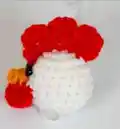
🧢 Beautiful ✨ Detailed πŸ’ Adorable

Adorable Chicken Baby Booties Crochet Pattern

Adorable Chicken Baby Booties Crochet Pattern
4.2β˜… Rating
5-6 Hours Time Needed
2.9K Made This
βœ‚οΈ

Intermediate Level

Ideal for those with basic knitting experience, featuring slightly more advanced stitches and techniques to expand your skills.

⏱️

Weekend Treat

Takes 5-7 hours, making it an enjoyable project to finish over a couple of days.

πŸ”

Charming Critter

Delightful animal designs with sweet details that capture the essence of your favorite woodland and farmyard friends.

About This Adorable Chicken Baby Booties Crochet Pattern

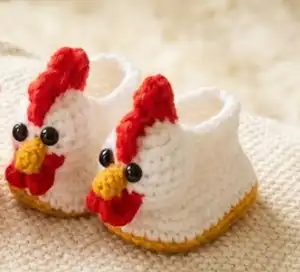
Adorable Chicken Baby Booties Crochet Pattern crochet pattern - detailed view of completed project

With detailed step-by-step assembly guidance, helpful positioning tips for multiple components, and clear photos throughout, you'll master the art of creating perfectly proportioned chicken features. The result is a pair of booties that are both functional and absolutely precious!

Why You'll Love This Adorable Chicken Baby Booties Crochet Pattern

I'm absolutely delighted by this chicken bootie pattern because it captures so much personality through clever little details! There's something incredibly rewarding about adding that bright red comb and watching the character instantly transform from simple head to recognizable chicken. I love the challenge of positioning multiple elements - the beak, comb, and waddles all work together to create an expressive face that makes me smile every time. The color combination of golden yellow or white with vibrant red accents creates such a cheerful, eye-catching look that's perfect for spring and Easter themes. What really wins my heart is how these booties tell a story - they're not just cute, they're full of barnyard charm that sparks imagination. The techniques you'll learn, especially working with multiple small attachments, build valuable skills while creating something truly special for baby's wardrobe!

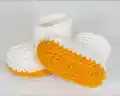
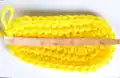
Adorable Chicken Baby Booties Crochet Pattern step 1 - construction progress Adorable Chicken Baby Booties Crochet Pattern step 2 - assembly progress Adorable Chicken Baby Booties Crochet Pattern step 3 - details and accessories Adorable Chicken Baby Booties Crochet Pattern step 4 - final assembly and finishing

Switch Things Up

I love experimenting with different chicken variations to create unique personalities! While classic white or golden yellow chickens are traditional, I've made stunning versions in soft cream, butter yellow, or even a combination of brown and tan for a more realistic hen look. For a fun twist, try creating a spotted chicken by changing colors every few rounds in the body.

One of my favorite seasonal variations is making Easter chickens with pastel-colored bodies - soft lavender, mint green, or baby blue chickens with traditional red combs create whimsical spring characters. You can also add tiny felt eggs near the feet or embroider small flowers around the ankle cuff for an extra Easter touch that's absolutely precious!

For a rooster transformation, I enlarge the comb by adding extra scallops, make the waddles longer and more dramatic, and sometimes add colorful tail feathers using yarn strands in red, orange, green, and blue. Attach these at the back of the bootie for that distinctive rooster pride! You could also embroider small spurs on the sides for authentic rooster details.

If you want texture variety, try using a slightly fuzzy or chenille yarn for baby chick versions to create that downy soft appearance. I've also experimented with adding tiny yellow pom-poms around the cuff for extra fluffiness, or creating a whole barnyard family by making these alongside the duck, pig, and cow patterns. For Christmas, make chickens in red and green with tiny bell charms attached - they become festive ornament-style booties that are perfect for holiday photos!

Common Mistakes & How to Fix Them

βœ— Positioning the beak too low on the face, leaving insufficient room for the waddles underneath and creating cramped facial proportions βœ— Overstuffing the beak before sewing, making it too rigid and causing difficulty achieving the proper triangular chicken beak shape βœ— Attaching the comb directly on top of the head without pulling it forward toward the eyes, resulting in poor visibility and unbalanced appearance βœ— Sewing only one waddle instead of two under the beak, or placing them too far apart and losing the authentic chicken chin appearance βœ— Forgetting to check all component placements together before final sewing, leading to misaligned features that require time-consuming corrections later

Adorable Chicken Baby Booties Crochet Pattern

Create the most charming chicken baby booties with this delightful crochet pattern! These sweet little barnyard booties feature an adorable stuffed beak, a bright red comb on top, and cute waddles under the chin that bring authentic chicken character to life. Perfect for keeping tiny toes warm while adding playful farmyard charm to any baby's wardrobe. Whether you're crafting a special gift for a baby shower, creating Easter-themed accessories, or building a collection of animal booties, these combine practical comfort with irresistible cuteness. The pattern includes four different sizes from newborn to 18-24 months, ensuring a perfect fit as your little chick grows through those precious early stages.

Intermediate 5-6 Hours

Materials Needed for Adorable Chicken Baby Booties Crochet Pattern

β€” Main Fabric

  • 01
    Red Heart Super Saver yarn in Gold or White for chicken head and body
  • 02
    Red Heart Super Saver yarn in Cherry Red for comb and waddles
  • 03
    Red Heart Super Saver yarn in Gold for beak
  • 04
    Worsted weight 4-ply yarn in coordinating colors (Yellow, White, or Cream variations work beautifully)

β€” Tools Required

  • 01
    Crochet hook size F (3.75mm)
  • 02
    Crochet hook size G (4.0mm)
  • 03
    Crochet hook size H (5.0mm)
  • 04
    9mm safety eyes (4 per pair of booties)
  • 05
    Yarn needle for sewing
  • 06
    Fiberfill stuffing
  • 07
    Stitch markers
  • 08
    Scissors
  • 09
    Pins for positioning multiple parts before sewing

Progress Tracker

0% Complete

β€” BASE BOOTIE (Make 2):

Info:

Choose size based on foot measurement: 0-3 Month (3.5" use G hook) or 3-6 Month (4" use H hook). For larger sizes see pattern pages 10-16.

β€” Sole (bottom of bootie):

Rnd 1:

Using Sole Color, CH 10, SC in 2nd CH from hook, SC in next 5 CH, HDC in next CH, 2 HDC in next CH, 5 HDC in next CH, working down opposite side of starting CH, 2 HDC in next CH, HDC in next CH, SC in next 5 CH, 2 SC in next CH. (24 Stitches)

Info:

This piece is worked in continuous rounds so do not SL ST to join. Use a stitch marker to mark the beginning stitch.

Rnd 2:

2 SC in first SC, SC in next 8 stitches, *2 SC in next stitch, SC in next stitch*, repeat from * to * 2 more times, SC in next 8 stitches, 2 SC in next stitch. (29 SC)

Rnd 3:

2 SC in next stitch, SC in next 9 stitches, 2 SC in next stitch, *SC in next stitch, 2 SC in next stitch*, repeat from * to * 2 more times, SC in next 9 stitches, 2 SC in next stitch, SC in next stitch, SL ST in next stitch. (35 SC)

Info:

Check gauge here. Sole should measure 3.5" with G hook or 4" with H hook. If gauge is off, adjust as needed.

Row 1:

CH 1, working in back loops only, SC in same stitch as joining and in each SC around, SL ST in first SC to join. (35 SC)

Info:

At this point you can change colors if desired to have the sole one color and the bootie a contrasting color. If changing colors, fasten off and attach new color in same stitch.

β€” Main Bootie:

Row 2:

CH 1, working in both loops, SC in each SC around, SL ST in first SC to join. (35 SC)

Row 3:

CH 1, SC in same stitch as joining and in each SC around, SL ST in first SC to join. (35 SC)

Info:

We will now begin shaping the toe.

Row 4:

CH 1, SC in same stitch as joining and in next 11 stitches, skip next stitch, HDC in next stitch, skip next stitch, DC in next stitch, DC DEC next 2 stitches together, DC in next stitch, skip next stitch, HDC in next stitch, skip next stitch, SC in next 13 stitches, SL ST in first SC to join. (30 stitches)

Info:

Use a stitch marker to mark the first stitch so there is no confusion what stitch to join at the end of the row.

Row 5:

CH 1, skip joining stitch, SC in next 10 stitches, skip next stitch, SC in next stitch, skip next stitch, SC in next 2 stitches, skip next stitch, SC in next stitch, skip next stitch, SC in next 10 stitches, skip last stitch, SL ST in first SC to join. (24 SC)

Row 6:

CH 1, SC in same stitch as joining and in next 7 SC, *skip next SC, SC in next SC*, repeat from * to * 2 more times, skip next SC, SC in next 8 SC, skip last SC, SL ST in first SC to join. (19 SC)

Row 7:

CH 1, using front loops only, SC in same stitch as joining and in next 7 SC, skip next SC, SC in each of the next 2 SC, skip next SC, SC in next 7 SC, SL ST in first SC to join. (17 SC)

Info:

The last 3 rows form the ankle cuff.

Row 8-10:

CH 1, using front loops only, SC in same stitch as joining and in each SC around, SL ST in first SC to join, at end of row 10, fasten off and weave in ends. (17 SC)

β€” HEAD (Make 2 - all sizes):

Info:

This head will work for all bootie sizes and uses an F hook. This piece is made in continuous rounds.

Rnd 1:

Using White or Gold and F hook, CH 2, 6 SC in 2nd CH from hook. Do not join. Use stitch marker if needed. (6 SC)

Rnd 2:

2 SC in each SC around. (12 SC)

Rnd 3:

*SC in next SC, 2 SC in next SC*, repeat from * to * around. (18 SC)

Rnd 4-7:

SC in each SC around. (18 SC)

Rnd 8:

*SC DEC in next 2 SC, SC in next SC*, repeat from * to * around. (12 SC)

Rnd 9:

*SC DEC next 2 SC*, repeat from * to * around, fasten off leaving approximately a 12" tail to sew. (6 SC)

Info:

Do not stuff yet.

β€” CHICKEN BEAK (Make 2 - all sizes):

Rnd 1:

With Gold and F hook, CH 2, 3 SC in 2nd CH from hook. (3 SC)

Rnd 2:

2 SC in next SC, SC in next 2 SC. (4 SC)

Rnd 3:

*1 SC in next SC, 2 SC in next SC*, repeat from * to * 1 time, SL ST to join, fasten off leaving a tail for sewing. (6 SC)

β€” COMB (Make 2 - all sizes):

Row 1:

With Red and F hook, CH 8, SC in 2nd CH from hook and in each CH across, CH 1, turn. (7 SC)

Row 2:

SC in first SC, CH 1, 2 HDC in next SC, CH 1, SL ST in same stitch, *SC in next SC, CH 1, 2 HDC in next SC, CH 1, SL ST in same stitch*, repeat from * to * 1 time, SL ST in last SC, fasten off leaving a long tail for sewing.

β€” WADDLE (Make 4 - all sizes):

Rnd 1:

With Red and F hook, CH 4, SC in first CH, 2 HDC in next CH, SC in last CH, fasten off leaving a tail for sewing.

Assembly Instructions

  • Stuff the head with fiberfill until it is round and to your desired firmness.
  • Insert 9mm safety eyes between Rnd 4 and 5 with a 1-2 stitch gap between the eyes. Do not attach the backs yet.
  • Lightly stuff the beak, shape it into a triangular form, and sew to the head between the eyes at Rnds 5-7, positioning it slightly high to leave room for waddles underneath.
  • Check the eye placement carefully and adjust as needed before securing.
  • Pull out the last round of the head (6 SC DEC stitches), remove stuffing carefully, and attach safety backs to the inside of the head with two clicks.
  • Re-perform the 6 SC DEC stitches and re-stuff the head to desired firmness.
  • Sew the comb to the top of the head in desired position, pulling it forward toward the eyes as the head will rest against the ankle cuff.
  • Take two waddles and sew each one under the beak in desired location, spacing them evenly for authentic chicken appearance.
  • Sew the completed head to the top of the foot with the back resting against the ankle cuff, securing with 3-4 stitches.

Important Notes

  • πŸ’‘Always measure baby's foot before starting to ensure the correct size, as individual growth patterns vary significantly
  • πŸ’‘Lightly stuff the beak and shape it as you sew to create the proper triangular chicken beak appearance
  • πŸ’‘Position the beak higher than you might initially think to leave adequate room for both waddles underneath
  • πŸ’‘The comb should be pulled forward when sewn so it's visible from the front, not hidden against the ankle cuff
  • πŸ’‘Pin all components (beak, comb, and both waddles) in place before final sewing to ensure balanced, symmetrical placement
  • πŸ’‘Stuff the toe of larger bootie sizes with tissue paper while sewing the head for a firmer, more stable working surface
  • πŸ’‘Secure all attachments with extra reinforcement stitches as baby items undergo frequent handling and washing

These delightful chicken baby booties bring cheerful barnyard character to every step! Perfect for Easter celebrations, farm-themed nurseries, or anyone who loves adorable animal accessories, this pattern creates booties that are both practical and photo-worthy. The bright red comb and sweet waddles add authentic chicken charm that makes these booties truly memorable. With four size options and detailed assembly instructions, you'll create treasured handmade pieces that keep tiny toes warm while bringing smiles to everyone who sees them! πŸ”βœ¨ Happy crocheting! πŸ§ΆπŸ’›

You ask,

we answer.

FAQs

What's the best way to shape the beak so it looks like a chicken?

The beak naturally forms a triangular shape due to the stitch increases in the pattern. When stuffing, use just a small amount of fiberfill and pinch it into a triangle as you sew. Position it so the point faces slightly downward and the wider end attaches to the face. Sewing it at Rounds 5-7 (slightly higher) creates the proper proportions and leaves room for the waddles.

How do I keep the comb from flopping backward?

When sewing the comb to the head, pull it forward toward the front and sew it at a slight angle rather than straight up. Since the head will rest against the ankle cuff, positioning the comb forward ensures it remains visible. You can also add a few extra stitches at the base to reinforce it and keep it standing upright.

Should the waddles be the same size and shape?

Yes, both waddles should match. They're small teardrop shapes that hang under the beak like a chicken's wattle. Position them symmetrically on either side below the beak, spacing them evenly. Pin them both in place before sewing to ensure they're balanced and create that authentic chicken chin appearance.

Can I make a rooster instead of a hen?

Absolutely! For a rooster look, make the comb slightly larger by adding an extra repeat in Row 2 of the comb pattern, or use a brighter, deeper red yarn. You could also make the waddles slightly longer. Some crafters add small tail feathers at the back of the bootie using colorful yarn strands for that distinctive rooster tail look.

What if I want to make an Easter chick instead?

For a baby chick variation, use bright yellow for the head and body, keep the orange/gold beak, but skip the comb and waddles entirely. You can add fluffy yellow hair on top (like the duck pattern) for that fuzzy newborn chick appearance. This creates an adorable Easter-themed bootie perfect for spring celebrations!