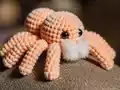
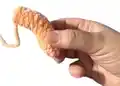
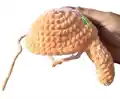
About This Low Sew Spider Amigurumi Pattern
This low sew spider amigurumi pattern creates an approximately 8-inch friendly creature with eight sturdy legs, multiple eyes, and fuzzy fangs that add character without being scary. The pattern uses continuous rounds and requires minimal sewing, making assembly straightforward and enjoyable. Each leg can be customized for either a stiffer standing pose or floppy posable movement, giving you creative control over your spider's final personality and appearance.
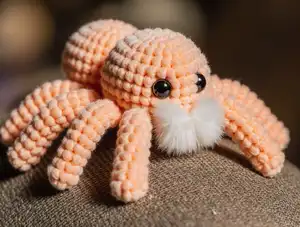
Working from the top of the head down, you'll attach the legs directly as you crochet the head, eliminating most finishing work. The combination of safety eyes in two sizes creates an endearing expression that transforms this eight-legged friend into an irresistible cuddle buddy.
Why You'll Love This Low Sew Spider Amigurumi Pattern
I absolutely love how this spider pattern brings together simplicity and charm in one delightful project! The low-sew construction means you spend more time crocheting and less time with a needle and thread, which makes the whole process so much more enjoyable. I'm particularly fond of how the legs attach directly during construction, creating a seamless look without tedious assembly work afterward. The combination of different sized safety eyes gives each spider such a sweet personality, and those fuzzy yarn fangs add just the right touch of whimsy without being scary. What really makes this pattern special is the flexibility it offers - you can create stiff legs for display or looser legs for posing, and the plush yarn creates such a wonderfully soft texture that makes these spiders impossible not to cuddle. It's one of those patterns that looks impressive but comes together more easily than you'd expect, making it perfect for gift-giving or starting your own collection of adorable arachnids!
Switch Things Up
I love experimenting with different yarn textures and colors to create unique spider personalities! Instead of traditional spider colors, try using bright pastels or rainbow variegated yarn for a whimsical, kid-friendly version. You could even use sparkly or metallic yarn for a glamorous spider that catches the light beautifully.
For the fangs, I've found that using eyelash yarn or even thin ribbon creates interesting textural contrasts. Some makers skip the fuzzy fangs entirely and embroider tiny fangs with black thread for a more subtle look. You could also add small felt details like spots or stripes on the body for extra personality.
The eye placement offers lots of creative freedom too! While the pattern calls for two different sizes creating a classic spider look, you could use all the same size for a more uniform appearance, or even add more eyes for a truly authentic spider vibe. I've seen makers use buttons instead of safety eyes for a vintage, handmade aesthetic.
Consider making seasonal versions by adding tiny accessories - a small crocheted witch hat for Halloween, a Santa hat for Christmas, or a flower crown for spring! The body could be stuffed with lavender or dried herbs to create a scented decoration. You might even add a small loop on top to turn your spider into a hanging ornament.
Playing with leg length is another fun variation. Making the legs longer creates a more dramatic, spindly appearance, while shorter legs give a chunkier, more compact look. You could also experiment with wire inside the legs for truly posable creations that hold elaborate positions!
Common Mistakes & How to Fix Them
✗ Forgetting to stuff the legs as you work them, making it nearly impossible to stuff properly later without distorting the shape
✗ Not securing leg tails with knots after attachment, which can cause legs to become loose or pull out during handling
✗ Placing safety eyes too early before checking leg placement, resulting in misaligned features that can't be easily repositioned
✗ Skipping the stitch marker when working continuous rounds, leading to lost track of round beginnings and uneven shaping
✗ Overstuffing the head or body too firmly, which creates a lumpy appearance and makes it difficult to close the final rounds neatly